
Innovation grows WA farm from 2500ha to 7000ha in five years
Western Australian cropping farmer Regan Ashley has transformed his family’s enterprise by incorporating artificial intelligence into everyday farming decisions.
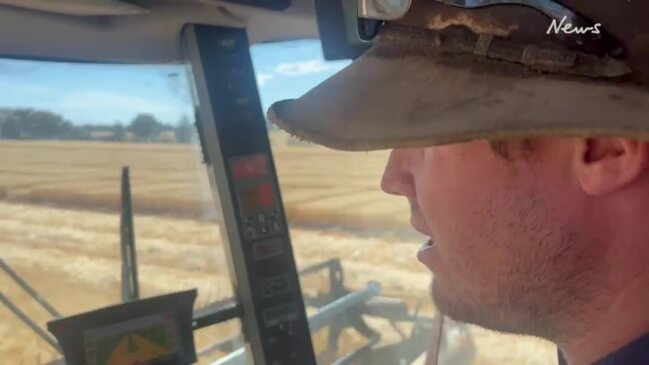
In just five years Regan Ashley has grown a 2500ha family farm at Kondinin in Western Australia into a 7000ha efficient modern cropping enterprise that combines advanced technology with long-term soil and ecological management.
Drawing on his corporate and digital experience in the medical and technology sectors where he managed global teams and applied artificial intelligence to streamline operations, Regan has brought the same precision and innovation to the farm while also hoping his journey as a gay man in agriculture inspires others from all backgrounds to see farming as a place where diverse skills and experiences can thrive.

The operation in the heart of Western Australia’s wheatbelt also incorporates 4000 hectares under a sharefarming agreement with Regan’s uncle as well as an additional 500 hectares purchased late last year.
Five years ago, Regan and his family made a long-term decision to move away from sheep production. It was driven not by controversies regarding Australia’s live sheep export industry, but by declining rainfall and the impact of livestock on the cropping business. Sheep compacted soil and required significant labour for relatively low returns.
Today the operation is focused on dryland winter cropping though some sheep are agisted over summer and during harvest.
The main crops include wheat, barley, canola, lupins and faba beans with oats planned next year primarily for grain production.
The farm’s soils are highly variable from sand and duplex profiles to heavier clays, non-wetting areas and patches affected by salinity each requiring tailored management.
Meanwhile, average annual rainfall across the holdings ranges from 300mm to 350mm. This year rain has arrived at what Regan calls “the right times” and has helped to keep yields on target. Wheat and barley were budgeted at 2.5 tonnes
a hectare but are now expected to coming between 3.5 and 4 tonne while lupins and
canola were tipped to yield around 1.5 tonnes a hectare.
CROP INNOVATION
This year marks the first time in 20 years the farm has grown canola. However, when Regan entered the sharefarming agreement with his uncle he made the crop a priority.
His father, John, had avoided canola in the past, citing high labour demands and limited long-term returns, particularly around soil health. However, when compared with lupins over a five-year rotation Regan said the benefits were clear.
Lupins deliver an average financial return but their real value lies in the nitrogen they leave behind in the soil, which lifts the yield of following cereal crops. The comparison Regan said was not between canola and wheat but between lupins and canola. Over time canola offered the stronger long-term return.
This year the focus has been careful weed management and monitoring crop performance.
“Continuous involvement is essential in any agricultural business,” he said.
“We’re observing how the crop responds and refining our approach. This was an ongoing process to maximise results and alongside agronomy Regan has adopted technology in a way few farmers have. He has built a digital ecosystem that integrates administrative and financial operational and agronomic data. A key aspect within this was AI which Regan said provides huge leaps forward in agricultural efficiency.
“If I’m in the paddock and need a quick answer I can upload a photo and get guidance immediately which I then confirm with our professional agronomist. AI is like a project officer on the farm. It helps me track budgets monitor crop performance and make decisions faster.”
The system spans the entire operation. Regan uses AI to map delivery timelines, monitor risk registers, optimise workflows and track inventory plus support grain marketing by analysing prices contracts and international trends. In relation to advice from AI Regan said he
didn’t take it as gospel.
“It gives me a ballpark assessment I can check against experience and expert advice. It’s about running the farm efficiently and freeing up time for the people and machinery that get the work done.”
Regan said AI was also being used regularly by his father and the team on the farm. Once the data had been entered by Regan it was then easy for others to use the system and have farm information close at hand. In simple terms the AI was an extension of what people can use on the well known ChatGPT platform.
HARVEST OPERATIONS
Managing operations across dispersed properties requires precision.
Regan schedules seeding, spraying and harvest to optimise machinery and labour. This year the farm ran two headers for the first time supported by three core harvest workers alongside Regan and his father, with his mother driving the chaser bin as needed. Additional logistics, including trucking grain to Bunge and CBH facilities up to three hours away, are outsourced where needed allowing the team to focus on on-farm operations.
Regan officially became managing partner at the start of this year after three years of hands-on involvement in operations and financial management while still working full-time in a corporate role. As an only child he said the succession plan was long-term giving him time to understand the farm’s complexities and also integrate his earlier corporate experience and career path.
This year’s harvest began with barley followed by canola, wheat and lupins. Faba beans were left out of the program this year due to a dry start in autumn. Regan’s target is 150 hectares a day balancing speed with careful oversight to keep machinery and staff safe.
Regan has also focused on soil health and ecology.
Detailed soil mapping guides nutrient management and builds soil organic carbon while about 2000 trees are planted each year to create green belts and infill native vegetation with the aim of strengthening biodiversity.
Plans are in place to introduce oats for grain and participate in a soil carbon project offering environmental yield and long-term financial benefits. Careful weed and pest management supports yields while keeping the operation resilient and sustainable.
The farm runs with a small co-ordinated team including seasonal staff and family members each with clear roles and autonomy.
Even as a family business, professionalism and standards were still essential.
Regan sees all of the farm’s team as essential and as having a key part in the overall business success.

“If I’m making a 50:50 call they’re just as likely to make that decision. Our success is their success” Regan says ensuring motivation and preventing burnout during peak periods.
Regan’s corporate experience managing global teams is evident in the farm’s structure. Every task from sowing schedules to risk registers is carefully mapped and tracked.
Safety and standard operating procedures are embedded in daily routines supported by the digital ecosystem. AI plays a central role in decision-making monitoring crop performance budgets and grain marketing allowing rapid informed choices and freeing up time for people and machinery.
Looking ahead Regan is deliberate about growth. While the farm has expanded rapidly he is holding off on additional land purchases or machinery until current operations are fully bedded down. Every task is scheduled like an airline operation with timelines risk registers and budgets closely monitored.
This year’s slightly below-average rainfall falling at the right times has reinforced the importance of careful planning and adaptability.
Through professional planning technological innovation and careful stewardship of people and land Regan ensures the farm remains resilient efficient and sustainable for the long term.


