
Australia’s winter crop harvest nears 20m tonnes as deliveries surge ahead
Australia’s winter-crop harvest has reached 19.39m tonnes as growers deliver strong early-season progress across all states despite weather interruptions.
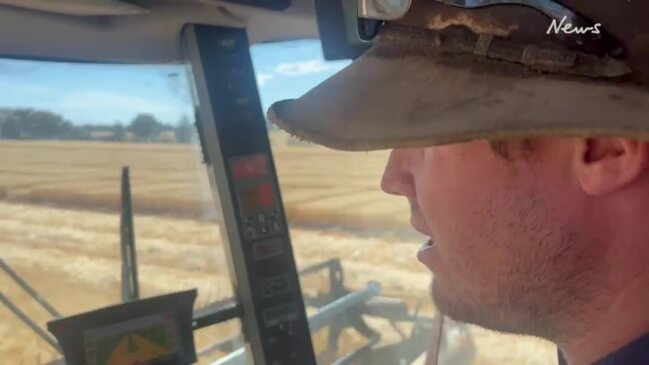
Australia’s 2025 winter-crop harvest is nudging towards 20m tonnes, as growers across Western Australia, South Australia, and the eastern states continue to make strong early-season progress.
Australia’s 2025 winter-crop harvest is nudging towards 20m tonnes, as growers across Western Australia, South Australia, and the eastern states continue to make strong early-season progress.
So far growers have delivered a total of 19.39m tonnes across the country.
Projections from the Australian Bureau of Agricultural and Resource Economics and Sciences estimate the national winter-crop at 62m tonnes, meaning farmers have already delivered around 30 per cent of the forecast total.
Eastern states grain growers have delivered more than 6.57m tonnes of grain so far this season.
GrainCorp receivals equated to 1.58m tonnes in Queensland, 4.26m tonnes in NSW, and 744,100 tonnes in Victoria.
A GrainCorp spokesperson said winter harvest activity was largely wrapped up across Queensland and northern NSW, although the Liverpool Plains region continued to make steady progress.
“Due to recent storm activity, we still expect grain to come in from that region over the coming weeks,” the spokesperson said.
In southern Queensland and parts of northern NSW, growers had already turned their attention to summer cropping opportunities.
Solid rainfall boosted soil moisture levels across many areas, particularly the Western Downs, Goondiwindi, Moree, and Werris Creek regions.
Harvest receivals in southern NSW progressed gradually. Storms and high winds caused interruptions last week, but growers remained optimistic about regaining momentum as conditions were forecast to improve in the coming days.
In Victoria, receivals continued at a slow pace due to frequent rain and cooler temperatures. While growers were keen to return to paddocks, forecasts indicated further rainfall across many areas.
Western Australian farmers continue to lead the way with the lion’s share of the tonnage and have so far delivered 11.31m tonnes. Of that, 3.46m tonnes was delivered in the past week.
Esperance leads the way with 2.62m tonnes for the season, followed by Geraldton (2.25m tonnes), Kwinana North (2.54m tonnes), Kwinana South (1.98m tonnes) and Albany (1.92m tonnes).
The biggest contributor to tonnages in the past week was Kwinana North with 814,000 tonnes.
A CBH spokesperson said harvest pace lifted across Western Australia despite early-week rain slowing progress in several zones.
The Albany Zone passed 1.9m tonnes after 709,000 tonnes were delivered, with Jacup, Pingrup and Wellstead setting new daily records.
In the Esperance Zone, receivals surged to more than 100,000 tonnes a day as conditions improved, with multiple sites breaking records. Geraldton topped 2.25m tonnes, highlighted by strong wheat and canola receivals and several site records. Kwinana North and South also regained momentum, delivering 814,000 and 681,000 tonnes respectively as growers moved from canola into wheat and barley.
Totals in South Australia from bulk handler Bunge show growers have delivered 1.51m tonnes for the season so far. Of that, 674,863 tonnes arrived in the past week.
Barley has made up the bulk of the harvest so far, accounting for 1.5m tonnes.
Bunge Western Region Operations Manager Nick Pratt said the Lock site had broken its daily receival record on Wednesday.
Tuesday November 25
Australia’s winter crop harvest is well underway, with around one-third of the national crop area harvested this week.
Figures from Digital Agriculture Services show Queensland leading the way, with 79 per cent of most major crops harvested, including canola, chickpeas, oats, lupins and wheat.
NSW has passed the halfway point at 49 per cent, with strong progress in pulses. Western Australia has harvested roughly 27 per cent of major crops such as canola, barley and wheat. Victoria and South Australia remain behind, at 5–6 per cent and 8 per cent respectively, affected by later seasonal timing and cloud cover over the Mallee, Wimmera, Western Districts and South Australia’s mid-north.
Chickpeas were the most advanced crop nationally at 74 per cent harvested. Other crop progress included canola 29 per cent, barley 27 per cent, faba beans 27 per cent, wheat 25 per cent, field peas 11 per cent, lentils 11 per cent, oats 22 per cent and lupins 18 per cent.
GrainCorp has reported total harvest tonnages of 5.79m tonnes across its eastern states depots. Farmers in NSW have delivered 3.82m tonnes, followed by 1.57m tonnes in Queensland and 401,700 tonnes in Victoria.
A GrainCorp spokesperson said winter harvest activity was easing across Queensland and parts of northern NSW, with decent rainfall boosting prospects for growers. Activity in Victoria built momentum late last week before rain again slowed progress.
Bulk handler Bunge reported deliveries of 398,171 tonnes for harvest in South Australia so far.
Bunge central region operations manager Jack Tansley said lentils remained a focus for farmers in that region. “More than half of the region’s deliveries last week were lentils,” he said.
In Western Australia, the harvest tonnages have ballooned to 7.86m tonnes, according to bulk handler CBH.
CBH chief operations officer Mick Daw said the Grain Industry of Western Australia crop report projected total season tonnages at 26.6m tonnes. He said harvest so far mirrored this forecast.
Wednesday November 19:
Australia’s winter grain harvest has now passed 10.97m tonnes, with Western Australia continuing to lead deliveries, South Australia gaining momentum, and the eastern states steadily progressing.
Grain receivals in Queensland, NSW and Victoria reached 1.24m tonnes last week, a 35 per cent increase, lifting the seasonal total to 4.78 million tonnes with NSW accounting for the bulk of deliveries.
GrainCorp reports that NSW is leading grain receivals with 3.05 million tonnes, followed by Queensland on 1.55 million and Victoria on 180,600.
A GrainCorp spokesperson said wet and cooler weather had slowed winter harvest progress in Victoria last week, with most activity concentrated in the northern Mallee, Swan Hill, and north-east regions, although harvest was expected to ramp up in the coming weeks.
Farmer Matt Curtis, west of Mildura, was harvesting wheat and barley this week and said crops were phenomenal given the small amount of rainfall this year.
He said wheat was yielding 1.7 to two tonnes a hectare, and barley was yielding two tonnes and more a hectare.

“This area has had about 110mm of rain for the calendar year so far and the crops have survived on subsoil moisture from last year,” he said.
Meanwhile, Western Australia’s grainbelt continued at full speed, with CBH reporting total harvest deliveries of 5.79 million tonnes, up from 3.18 million tonnes last week, representing an 82 per cent increase in just seven days.
At Esperance, farmers have delivered 1.67 million tonnes for the season so far, followed by Kwinana North 1.26, Geraldton 1.20, Albany 0.83, and Kwinana South 0.82 million tonnes.
CBH chief operations officer Mick Daw said several sites set records, including Chadwick, Narngulu, Mullewa, and Mingenew, while Eradu recorded 5848 tonnes in a single day.
South Australian bulk handler Bunge has reported total harvest receivals of 398,171 tonnes. Of that, 330,000 tonnes were delivered in the past week, representing approximately 82.9 per cent of the total and showing that harvest had ramped up in that state.
In the western region receivals hit 225,966 for the harvest so far, followed by the central region at 146,935 and the eastern region at 25,270.
Barley became the primary commodity delivered across Bunge’s South Australian network, followed by lentils and wheat.
Bunge Western Region operations manager, Mr Pratt, said the region received just under 200,000 tonnes for the week.
“Harvest kicked off at our Buckleboo, Elliston, Penong, Poochera and Warramboo sites with the first deliveries for the season coming in,” Mr Pratt said.
“Wednesday marked our busiest day so far, and we’re now starting to see deliveries of all commodities as some farmers finish harvesting lentils and move onto cereals.
“Thevenard received the majority of tonnes during the week, and deliveries to Wudinna, Lock and Port Lincoln also started to increase.”
In the Central region, Bunge operations manager Mr Tansley said lentils remained the focus for farmers.
“More than half of the region’s deliveries last week were lentils,” Mr Tansley said.
“This includes achieving our biggest day of lentil deliveries at Wallaroo since we started receiving the commodity in the 2023/24 harvest.”
Wednesday November 12:
Grain deliveries to bulk handlers have reached 4.96 million tonnes nationally, with farmers in NSW and Western Australia leading the harvest tallies.
Western Australian farmers have delivered more than 1.36 million tonnes to CBH during the 2025 harvest.
Of that total, 1.1 million tonnes were delivered in the past seven days, showing harvest activity in WA had reached a peak.
CBH’s general manager of marketing said early deliveries were excellent in quality, although rain in some southern regions had slowed activity slightly.
Esperance leads the tonnages with 654,100, followed by Kwinana North (276,200), Geraldton (238,100), Kwinana South (98,600) and Albany (95,000).

The Grain Industry of Western Australia’s crop report had predicted the state’s winter tonnage would reach 25.5 million tonnes, while the Australian Bureau of Agricultural and Resource Economics and Sciences forecast total national crop production at 62.8 million tonnes.
Meanwhile, South Australian farmers have also increased harvest operations, with Bunge receiving a total of 61,479 tonnes for the harvest so far.
Of that, 44,658 tonnes was delivered in the past week alone.
Western region farmers contributed 33,119 tonnes, central region 26,636 tonnes, and the eastern region 1742 tonnes during the starting weeks of harvest.
Bunge director of industrial management, Gavin Cavanagh, said weather had caused a slow start, but drier conditions were now expected to intensify deliveries.
Across the eastern states, GrainCorp has reported a seasonal total of 3.54 million tonnes, with NSW farmers leading at 2.03 million tonnes, followed by Queensland with 1.46 million tonnes, and Victoria, where harvest is just starting, at 45,500 tonnes.
A GrainCorp spokesperson said early deliveries in Victoria highlighted strong interest from domestic and export buyers, keeping grain prices firm. Cooler, wetter conditions had slowed harvesting in some areas but provided an ideal finish for late-sown crops.
“Farmers in northern Victoria are bringing in high-quality wheat and barley, supporting steady demand and firm bids across the region,” the spokesperson said.
Wednesday November 5:
Grain farmers across Victoria, New South Wales, Queensland, South Australia, and Western Australia have delivered a combined total of around 2.61 million tonnes of grain so far this season.
Victorian grain farmers have begun delivering the first wheat in the north-west, following early barley receivals from the Northern Mallee and Swan Hill regions.
Over the past week, GrainCorp’s Victorian sites have received 18,000 tonnes of grain, bringing total receivals for the season to 21,500 tonnes.
A GrainCorp spokesperson said receivals across the state were still in the early stages, with activity expected to build steadily over the coming week.
Northern NSW recorded strong deliveries of canola, barley, and wheat, particularly around Moree and Burren Junction, despite some intermittent rain.
Over the past week, GrainCorp’s NSW sites received 585,200 tonnes, taking total receivals for the season to 1,092,800 tonnes.
At the same time, Queensland sites recorded 223,700 tonnes, lifting total receivals for the season to 1,273,600 tonnes.
Nationally, GrainCorp sites received 826,900 tonnes of grain over the past seven days, bringing total receivals for the season so far to 2,387,900 tonnes. GrainCorp encouraged growers to stay in regular contact with their local site managers for the latest updates on deliveries and grain segregations.
Harvest has also gained further momentum in South Australia with grain handler Bunge saying activity was underway across the central, eastern and western regions.
In South Australia, farmers had delivered a total of 13,268 tonnes in the past week and 16,765 tonnes for the 2025 harvest so far.
A grain delivery to Inner Harbour a week ago marked the start of the season in the Eastern region; there were also 11 sites in the network that received their first deliveries for the harvest.
Bunge Eastern Region operations manager Andrew Cannon said the first “up country” load of lentils had been delivered at Pinnaroo.
“With most still a few weeks away from starting harvest, our local team is continuing to work closely with farmers to ensure sites are open when they are ready to deliver,” Mr Cannon said.
Meanwhile, sites in the Western and Central regions received the majority of tonnes during the week, with barley and lentils making up more than 80 per cent of deliveries.
Western Australian farmers have delivered 208,700 tonnes of grain to the CBH network for harvest 2025 so far.
The Esperance site leads the charge with 175,300 tonnes, followed by Kwinana North, 20,900 tonnes, and Geraldton, 7900 tonnes, Kwinana South, 2600 tonnes, and Albany 2000 tonnes.
Canola made up the bulk of the tonnage followed by barley and some small amounts of wheat.
Wednesday October 29:
Harvest is still in its early stages in Victoria and South Australia but grain is already rolling in with grain handler Bunge reporting 3498 tonnes delivered so far.
South Australia’s, Western region sites received 1569 tonnes, while the Central region recorded 798 tonnes.
Last Monday, the first Central region delivery arrived at Bunge’s Wallaroo site, with a load of barley from local farmer Gary Price.
Port Lincoln, Port Neill, and Port Pirie also welcomed the first deliveries this week, including barley, lentils, wheat, and canola.
Bunge Central Region operations manager Jack Tansley said the early receivals were a positive start.
Data Agricultural Services chief executive officer Anthony Willmott said harvest was now coming to life.
His company uses satellite feeds to track progress of harvest across 1.69 million paddocks to provide close to real-time updates.
“Queensland has already brought in around 40 per cent of its crop with chickpeas, barley and canola driving early momentum,” he said.
Meanwhile, northern NSW was moving into stronger harvest activity.
Mr Willmott said cutting crops for hay and silage continued and Western Australian farmers had now cut an estimated 200,000 hectares of oats for hay.
He said NSW had passed the 5 per cent mark of harvest with strong activity around Moree and Narrabri.
Grain Producers South Australia chief executive officer Brad Perry said the season was running late in South Australia due to the dry start.
“We are four to six weeks behind,” he said.
Mr Perry said there were some early lentils and barley that had been delivered.
“We have also had quite a bit of cereal cut for hay and that is because the prices dropped and the season was tough and hay was looking like an attractive option for many,” he said.
Mr Perry said the hay cut provided a double-edged sword with some farmers wanting drier conditions for baling and fodder making, and then there were others who would benefit from rain for grain fill.
Tuesday, October 27:
Harvest has also continued in the eastern states with GrainCorp recording 3500 tonnes delivered across the state, compared with 507,600 tonnes in NSW and 1,049,900 tonnes in Queensland.
A GrainCorp spokesperson said harvest activity in Queensland was continuing at pace, with southern regions now in full swing.
“The Goondiwindi region recorded strong receival volumes of barley, wheat and some chickpeas last week, all underpinned by consistently high quality,” the spokesperson said.
In northern NSW, deliveries of canola, barley and wheat had increased around Moree and Burren Junction, with the broader region expected to move into full swing over the coming week.
Further south, harvest was only just getting underway, with early canola and barley receivals reported in northern parts of southern NSW as most areas prepare to start.
In Victoria, early deliveries of barley have begun in the Northern Mallee and Swan Hill regions, while recent rainfall has provided a valuable late-season boost to crops elsewhere across the state.

Harvest has also started in South Australia with Bunge receiving 1131 tonnes across the state for the opening weeks.
The first load of lentils arrived on October 13, followed by barley at Arno Bay later during the same week.

Richie Kelly who farms at Pira, near Swan Hill started harvesting barley on Thursday and Friday last week before rain came through on the weekend.
“We had rain on Saturday, then just a shower on Sunday,” he said.
Conditions started to dry up and he was back on the header by mid-morning on Tuesday.
“It’s dry enough now to get going again,” he said.
Mr Kelly said harvest was about a week earlier than usual in his area.
Australia is set to harvest a 62.8 million tonne winter crop this year, up 6.4 per cent on last year and 6.1 per cent above the five-year average.


Join the conversation

Harvest is two-thirds complete
Read more

Why bumper crops may not mean a bumper payday
Read more