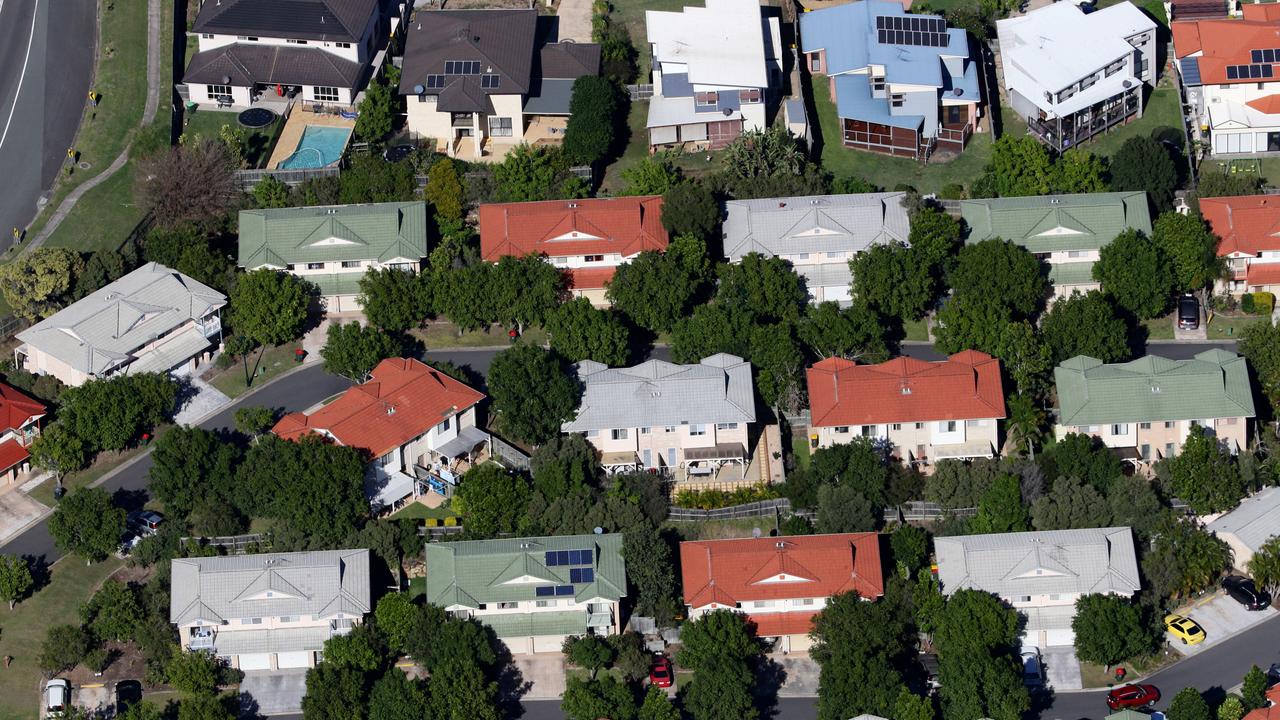
How much you need to earn to buy a home in each Qld suburb
Homebuyers will need to earn more than $100,000 a year to afford a home in more than 700 Queensland suburbs. Find out how much you need to earn to buy in your area.


Households earning less than $100,000 a year have been priced out of buying a home in nearly three quarters of Queensland suburbs, as housing affordability continues to worsen.
Exclusive new research reveals a staggering 722 suburbs across the state now require a yearly household income of more than $100,000 after tax to afford a home, even in once affordable locations like Gympie, Toowoomba, and Ipswich.
More than 200 suburbs now require households to earn $200,000 or more to buy an average home, including the outer Brisbane suburbs of Aspley, Banyo, Coopers Plains, and Runcorn.
There were also 70 suburbs across the state which now require a household income of more than $300,000 a year to afford an average home, including Sunshine Beach, New Farm and Ascot.

The figures show the situation has deteriorated sharply since the start of the year, with the cost of living outpacing wages growth and home prices still rising in many suburbs.
Nine months ago, only 391 suburbs required a household after-tax income of $100,000, and just 65 needed a household income of more than $200,000 a year.

It comes as the Reserve Bank increased rates for the seventh straight month on Tuesday.
Comparison site Finder.com.au crunched the numbers using home price and loan data and revealed the household incomes needed to buy a typical house or unit in every Queensland suburb.
It assumed the buyer purchased at the median price, was given an average loan rate and wanted to avoid “mortgage stress” — defined as spending more than a third of their income on repayments.

Tax office and Australian Bureau of Statistics data varied on exactly what constituted the “average” Queensland income, but it was in the realm of $105,000 a year for a household.
Finder.com.au head of consumer research Graham Cooke said the salaries required to purchase property in many areas painted a “grim” picture of deteriorating affordability.

“The costs of living are increasing faster than people’s salaries and housing is the biggest component of that. A lot of households are struggling,” Mr Cooke said.
“Australia escaped the global financial crisis to a degree, so this is really the first time it’s in this kind of situation.
“These figures may be pretty shocking to some, with the average price increase across all suburbs sitting at 13 per cent. This has added thousands of dollars to the average salary required to afford a home in most cases.”

Soaring lending costs are also a risk for households who fixed their interest rates at rock bottom levels over recent years and are set to see their fixed term expire sometime in the next 18 months.
“So far we haven’t seen the full impact of rate rises, but when the fixed rates expire that’s when the floodgates will open,” Mr Cooke said.
He suggested homeowners on fixed rates pay down as much of their principal as possible before their rates rise or save aggressively to build up a cash buffer.

Households who spent more than 30 per cent of their income on housing costs were said to be in mortgage stress — a position where repaying their loans was difficult, Mr Cooke said.
He pointed to Finder.com.au surveys that showed the proportion of households who reported their repayments or rents were causing them “stress” had risen from 25 per cent a few years ago to nearly 50 per cent.
“It’s made a huge impact,” Mr Cooke said.
“It’s unclear what the path out of this situation is for most households. The only positive is that the Reserve Bank may pause rising rates for a while to evaluate their impact.”

The Queensland suburbs where the highest incomes are needed to buy a home start with the exclusive Noosa suburb of Sunshine Beach, with households there needing to take home $606,449 a year after tax to afford monthly mortgage repayments on a house of $15,161.
That’s followed by the inner Brisbane suburb of New Farm, with $528,333 after tax needed to buy a house — that’s $163,000 more than only nine months ago.
The average household in the beachfront Gold Coast suburb of Mermaid Beach needs to earn $506,260 a year to afford to own a house, compared to only $342,728 in January this year.

Ascot, in Brisbane’s inner north, is also high on the list of Queensland’s most unaffordable suburbs, with an annual household income of $487,707 required to own a house there.
But that did not deter more than 500 would-be buyers from flocking to two open homes for a new build at 110 Massey Street in the past week.
Marketing agent Tyson Clarke, of Queensland Sotheby’s International Realty, has just sold the Palm Springs-inspired home for $4.45m.

Property Investment Professionals of Australia (PIPA) chair Nicola McDougall said many borrowers were “stuck on the sidelines” due to an inability to secure lending because to a servicing buffer of 300 basis points still being applied to lending applications.
“Of course, there is an element of deja vu about this situation, with a similar circumstance occurring when caps on investment lending as well as higher rates more generally for investors wiped out lending possibilities for many during the 2010s,” Ms McDougall said.
Celebrity builder Graya’s mansion snapped up in just hours for record price
Revealed: How much you have to earn to buy a house on the Gold Coast
“The flow on effect from that decision was the continued reduction in investment activity — especially from 2017, which hit rock bottom at the start of the pandemic, when the percentage of investors active in the market was just 22.9 per cent compared to a long run average of nearly 35 per cent.”

Lance Goodman, CEO of personal finance marketplace Compare Club, said it was only going to get harder to refinance a home loan, especially in the wake of another interest rate rise.
“This cash rate increase will be significant for many homeowners who took advantage of cheap loans two years ago,” Mr Goodman said. “People who got an ultra-low 1.79 per cent mortgage in 2020 will be moving onto a much higher variable rate and will be looking to refinance.
“The problem for these homeowners is that any cash rate increase in November takes them past their initial serviceability buffer.
“The main thing is not to panic. Speak to a broker as soon as possible if your fixed term is about to expire.”
First look: New Coast shopping centre for surprise site