
Experts fear spike in spontaneous haystack fires as high-sugar crops are baled
Farmers face heightened risk of devastating haystack fires as drought-stressed crops with high sugar content are cut for hay across southern Australia.
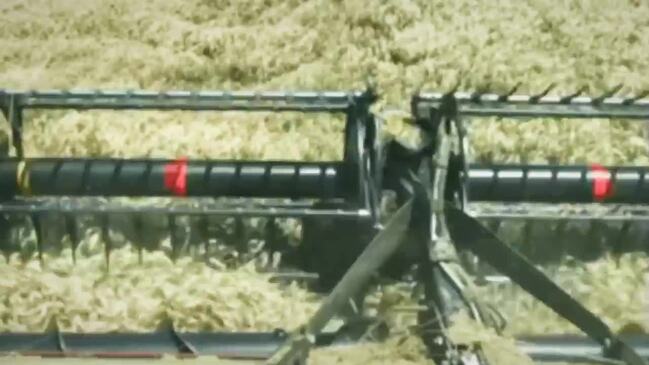
Drought-stressed, high-sugar cereal crops are raising the risk of spontaneous haystack fires this season, with experts warning that poorly cured bales could ignite easily.
So far, an estimated 235,000ha of crop has been cut for hay and silage across all major crop types in southern NSW and Victoria, as farmers choose not to harvest it due to dry seasonal conditions. Digital Agriculture Services, which uses satellite imagery to track crop areas, reported that this was double the area cut last year.
However, farmers say that while the area cut was large, the tonnage of hay and fodder was lower than expected due to light crops.
Adding to the concern was the fact improperly cured hay could increase the risk of haystack fires this year.
Moama, NSW, hay producer Bryce Riddell said traditional monitoring probes only measured conditions in individual bales, leaving the possibility that the one bale, likely to ignite, could go unnoticed.

He developed his own system to track temperature and humidity in the apex of a shed roof, detecting environmental changes that could signal a potential fire.
There was no single temperature or humidity threshold; it was the change in conditions that alerted to danger.
Mr Riddell said the system, which he has now commercialised called Hayshepherd, compares roof readings with a control device outside the shed to give a reference point for what was normal versus what was happening inside.
Data was recorded automatically, with a user interface accessible via smartphone, allowing farmers to monitor conditions remotely.
He said that it was not a “silver bullet” but it was the best solution he could devise after more than 20 years in the hay industry.
“The risk of hay fires is highest when hay is high in sugar, drought affected, or not fully cured before baling,” he said.
Mr Riddell said the roof monitoring system was born out of necessity to meet insurance requirements while he was working in the export hay industry.
Agriculture Victoria dairy industry development officer at Maffra, Andrea Henry said spontaneous combustion in hay occurred when internal heat built up to a point of ignition as a result of microbial activity and chemical reactions.
She said that unlike fires caused by lightning or machinery, spontaneous combustion was insidious, starting deep within a haystack and smouldering unnoticed until it erupted into flames.

Australian Fodder Industry Association chairman Louis Kelly from Jerilderie in the NSW Riverina said there was always potential for a haystack fire.
However, there were certainly concerns when drought-affected hay was cut.
“Fires shouldn’t be a problem if you have the hay right, and it has been cured,” he said.
But moisture-stressed hay, like much of the cereal cut this year, could heighten the risk.
“We have seen paddock after paddock cut this year, and there’s a lot of acres, but there isn’t a lot of quantity in it,” he said.
The latest AFIA hay report shows that demand for high-grade hay remains steady, but prices fell in many districts due to sheer volumes.
The biggest drop was in southeast South Australia, where cereal hay prices fell $70 a tonne to range from $345 to $450 a tonne. In other regions, cereal hay declined by $5 a tonne: in Gippsland, prices ranged from $315 to $465 a tonne; in South West Victoria, $305 to $445 a tonne; and in the Goulburn/Murray Valley, $285 to $405 a tonne.


