
Morrison puts politics over sound economics
They say a week is a long time in politics, and this week may well prove the truth and wisdom of those words.
The government has lagged behind Labor for almost every week since the election last July. Having used the negative Newspoll results as his chief weapon in his war with Tony Abbott, Malcolm Turnbull must be squirming every time a new Newspoll is published.
Being consistently behind is not good for political longevity and there comes a time when you become unelectable. When the mob has stopped listening to you, it is almost impossible to get up off the floor and be competitive. Conventional wisdom has it that when the electorate has had enough of you, there is no coming back.
This week Scott Morrison sought to turn that logic on its head.
I spent a couple of hours with the Treasurer just a couple of weeks ago. The one point he hammered home to me was that the government’s poll position was definitely not irredeemable. He knew the budget he was about to bring down was make-or-break for his own career, let alone that of the government of which he is a key member.
On Tuesday night Morrison set about this task with relish and he went well enough to get the government back in the game. Don’t worry about the next few Newspolls because the government will no doubt get a sugar hit from the budget.
The question yet to be answered is: can that boost in the polls be sustained?
To get the politics right, which he most certainly did, Morrison also showed us he has no shame. He managed to ditch all that he and his party were supposed to believe in. Gone is the rhetoric about debt and deficit. Gone is the entire Abbott victory in 2013. The spendthrifts were in Labor while the Liberals were the picture of financial rectitude.
This budget abandoned good economics and adopted Keynesian solutions to our country’s problems. Morrison didn’t even wave goodbye to his heritage, he just embraced expediency and dressed it up as if it had some respectability.
Having railed against the excesses of Gonski Mark I, the government kidnapped the man himself, tied him to a chair and, although he did not have much to say, David Gonski’s mere presence gave some legitimacy to the government’s U-turn on education funding. Neither of the major parties seems concerned at the lack of evidence that throwing money at education improves results. In practically every area of the school curriculum, our kids are still falling behind the rest of the world.
If the education results don’t matter, the poll ratings certainly do. The government needs to clasp the education sector close to its bosom and hang on for dear life. Labor has had the wood on the Liberals in health and education for as long as most of us can remember.
When the surgeons went on strike in the 1980s I took a delegation of them, led by Bruce Shepherd, who had become Labor’s bete noire, to see Bob Hawke at the Lodge. I could see that Hawke and Neville Wran were losing the war and that the health minister at the time, Neal Blewett, was more interested in continuing the fight rather than finding a solution. The main point I made to Hawke is that you can’t run a health system without doctors. This time around it was the GPs who were feeling aggrieved and Morrison finally moved to get them back onside with his health package.
I wrote yesterday about bashing the banks around the ears and squeezing $6 billion out of them. As you may have suspected, no one has sprung to their defence. Big business will let this one go through to the keeper. If this money were being used to pay off debt, it would look so much better than using it to fuel even more spending.
Funding the National Disability Insurance Scheme with an increase of 0.5 per cent in the Medicare levy strikes me as a confluence of good politics and good policy. Given that the levy as it stands funds only a paltry fraction of Medicare expenses, an allocated position specifically going to NDIS funding makes sense. This was one for the ratings agencies that are breathing down Morrison’s neck. With infrastructure spending not really beginning for a couple of years, the Treasurer no doubt figures he has bought some time to sort out a proper policy response to the threat of losing the AAA rating.
For the life of me I can’t figure out just why Morrison dropped the so-called debt and deficit levy. Those who are paying it have largely forgotten about it. The revenue it was raising would be very handy over the next few difficult years. Dropping the zombie budget measures that appear to be permanently blocked in the Senate would seem like a belated acknowledgment of a harsh reality.
Labor has come out all guns blazing over tax decreases for the rich and increases for the poor. It is also solidly backing the Catholic education system and its complaints about the new plan for school funding. A few days ago I wrote that the litmus test on this would be what happened to St Luke the Evangelist School in Melbourne’s Blackburn South. Given that this school does better under Simon Birmingham’s plan, I am going to find it very difficult to back Labor in the battle.
The Catholics appear to have no answer to the government’s claim that successive administrations have given the Catholics special deals. So far Birmingham has done very well on this and is a mile in front.
While Bill Shorten is declaring that the government is waging a class war with this budget, he should look at his own stance first. Even if Donald Trump does not get his way on a business tax rate of 15 per cent, he will come up with a number that is far lower than Australia’s rate of 30 per cent. Labor must drop its resistance to business tax relief. Investment in our country will dry up if we fail to get competitive in this area.
As the song says, “wouldn’t it be loverly” if the Prime Minister and the Opposition Leader could sit down and agree on some budget areas to cut? Then there would be no need to rely on over-optimistic Treasury figures to give us a wafer-thin surplus in four years. But there might be some chance of selling the idea of those cuts to an electorate tired of wage packets that never increase, and very unwilling to accept any government pruning.
It would indeed be loverly but, sadly, it is not going to happen.
Add your comment to this story
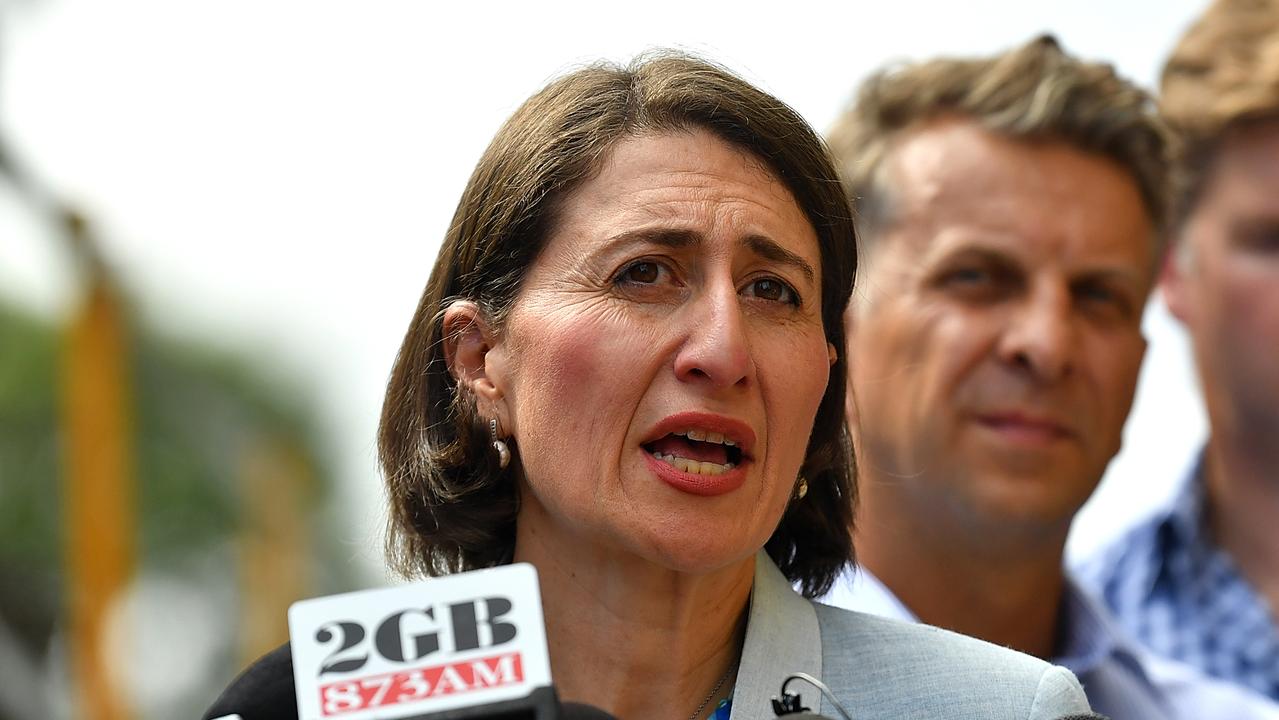
Berejiklian fires up aggression
In a close election race, the winner is almost always the one finishing strongly.

PM faces a rude awakening
The Coalition simply has not given voters enough to ensure their continued loyalty.
To join the conversation, please log in. Don't have an account? Register
Join the conversation, you are commenting as Logout