Australia still puts lives on line for US: Malcolm Fraser
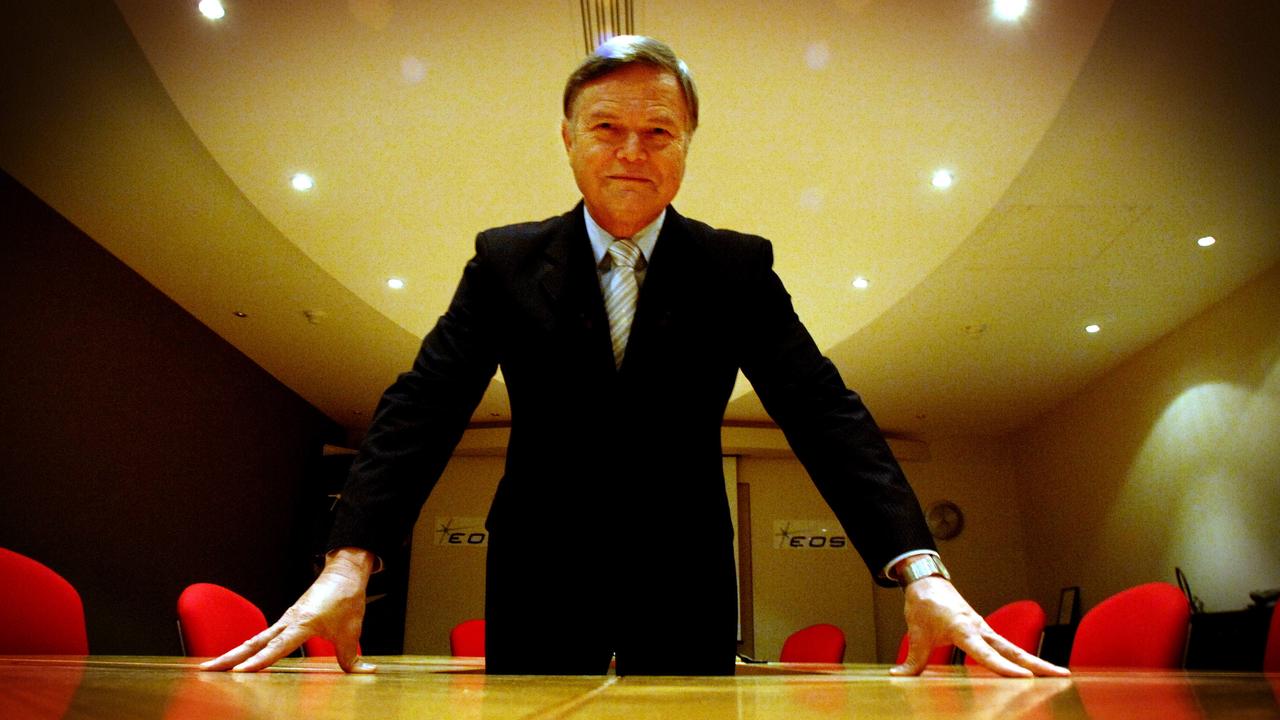
MALCOLM Fraser says the lessons of Vietnam have not been heeded.


MALCOLM Fraser was once a Cold War warrior. From the 1950s to the 80s, he advocated policies that kept Australia in lock-step with the US against the downward thrust of communism.
Today, he argues that our alliance with the US is no longer a guarantor of our security; it imperils it.
In his controversial new book, Dangerous Allies (MUP), Fraser presents a history of Australian dependence on foreign powers for defence and security, analyses the geopolitical world since the end of the Cold War and makes the case for a new foreign policy based on strategic independence free of binding alliances.
No Australian prime minister has written a book like this before. Critics will dismiss Fraser’s views as akin to the reckless, ill-informed, far-left political fringe occupied by the Greens. But the book is a serious and considered contribution to foreign policy debate that advances challenging, albeit unsettling, ideas.
At the height of the Vietnam War, when Australia had about 8000 troops engaged in that ultimately doomed conflict, Fraser was army minister and later defence minister. He viewed the maintenance of the US alliance as essential in the fight against communism.
But as the prospects for victory in Vietnam looked increasingly grim, Fraser’s views began to change. Like John Gorton and Billy McMahon, he advocated a phased withdrawal of Australian troops.
Although Fraser’s book contains several revealing anecdotes about his involvement in making foreign policy as a minister and prime minister, it does not deal at length with the catalyst for his journey from ANZUS enthusiast to ANZUS critic.
But interviewing Fraser for this article, coupled with insights from his book, it is clear that the seeds of his contemporary views were sown during the searing experience of prosecuting the Vietnam War.
“Vietnam was a busted flush by the time we made our major commitments to it,” Fraser tells Inquirer. “CIA analysts, who were right about Iraq, were right about Vietnam. But they were ignored by the Kennedy and Johnson administrations.
“We (Australia) weren’t told about those CIA reports. They were, in part, saying that the bombing won’t work, that it’s a pretty hopeless task and that we weren’t going to succeed.
“(Lyndon) Johnson wanted political comfort from getting an ally like Australia to join him in a war.”
There is plenty of evidence to support these views. Former US defence secretary Robert McNamara’s book In Retrospect: The Tragedy and Lessons of Vietnam was published in 1995.
McNamara conceded that the war was “terribly wrong”. He noted the CIA reports from the time, which Fraser has seen only in recent years.
“In the fall of 1967, the CIA’s most senior analysts believed we could have withdrawn from Vietnam without any permanent damage to US or Western security,” McNamara wrote.
That year, CIA director Richard Helms told Johnson the risk of defeat was high. But McNamara says Johnson was persuaded by the views of the military chiefs and congress, who could not countenance defeat.
Peter Edwards is Australia’s official historian of the Vietnam War. In his compelling new book, Australia and the Vietnam War (NewSouth), he argues that the decision by Robert Menzies’ government to send combat troops to Vietnam in 1965 was based on “blind faith” in US military supremacy.
“Menzies believed that in making the commitment he was simply repeating a winning formula that would achieve military success in Southeast Asia, strengthen the alliance with the United States, and divide the Labor Party’s right and left wings,” Edwards writes.
Although Menzies said that the decision to send combat troops was made in response to a request from the South Vietnamese government, cabinet papers from the time show that the decision was made before this request was received.
Fraser broadly agrees with Edwards’s assessment but says the government supported the war based on the information then available to it.
“We accepted, as so many people did around the world, the monolithic view of communism: worldwide, thrusting, controlled by Moscow and Beijing,” Fraser says. “But it was a flawed judgment. Menzies wanted, in part, to keep the US engaged in the region. But the US was always going to be involved in our region given the rise of China.
“It made no difference whether we were involved in Vietnam or not.
“We underestimated the nationalistic element in the North Vietnamese and the incompetence, the corruption and the stupidity of the South Vietnamese governments.
“And we didn’t understand the extent of the differences between Russia and China.”
Fraser says he became concerned because Australia was not privy to US strategy in Vietnam. He is troubled by the decision of Harold Holt’s government to escalate Australia’s involvement in the war.
“When Holt committed three battalions in 1966-67, the CIA (was) saying that it didn’t matter what we did, we can’t win. If Holt had seen the CIA assessments, he wouldn’t have sent three battalions. He hated sending conscripts to war but he believed it was the right thing to do.”
In Dangerous Allies, Fraser writes that the lessons of Vietnam were not heeded. Australia followed the US into two further wars — Iraq and Afghanistan — that have not proved successful.
“Our policy of strategic dependence dictates that we must follow the lead of the Americans, to make sure that they know we are on their side,” he writes.
If Australia can disentangle itself from the US, Fraser says we can play a more constructive role in our own region, particularly with ASEAN countries. We do not need to rely on powerful friends for security. We can be free to advocate what is in our interests with no risk to our own security.
Some readers will bristle at Fraser’s interpretation of events and disagree with his policy ideas. The book, however, is well-researched, respectful of the challenges governments have faced and offers a thoughtful, if heterodox, view of future foreign policy.
These ideas are far removed from Fraser’s realpolitik world view of an earlier era. It could never have been imagined when he was prime minister.
But Dangerous Allies reflects views that had started to form a decade earlier, amid the quagmire in Vietnam.