
Reporters also on frontline of trauma


Death, tragedy and grief are constant companions for many reporters.
Many become inured and phlegmatic, others scarred for life, and my bet is that all, at least in a quiet moment, would confess to being deeply affected by certain encounters for life.
The journalists’ code of ethics demands “respect private grief” but the line between public and private is often ill-defined and must be left to personal judgments and individual cases. Last week in Sydney there was a case of very public grief, shared by the bereaved families and millions of strangers through the media.
The case of four children killed as they walked to the shops when a car driven by an allegedly drunk driver ran on to the footpath has been viscerally unsettling for many of us who have no connection to the victims, their families or their communities — we struggle to comprehend the grief for family and friends.

The strain on journalists covering this tragedy would have been immense, seeing the impact and sharing the repercussions up close and personal. Yet who could question the worth of media sharing this grief — with the family’s consent — and allowing communal support?
Antony, Angelina and Sienna Abdallah and their cousin Veronique Sakr were aged between nine and 13 and were robbed of the rest of their lives. Yet in unspeakable grief, their families have shown levels of dignity, courage and strength that have inspired and comforted many.
When Leila Abdallah visited the scene where her three children had been killed, people whose stomachs were knotted by her loss were staggered by her composure, talking about the qualities and characters of her children, the strength of her family’s faith and her refusal to hate the man allegedly to blame for their deaths. “I can’t hate him, I don’t want to see him,” said Leila from under an umbrella on a fittingly dismal day. “I don’t hate him, I think in my heart, I forgive him.”
Media teams attended the funerals later in the week and, again, the wider world was able to see and share in personal and community grief. We heard the priest say how Leila’s forgiveness had reverberated around the world.
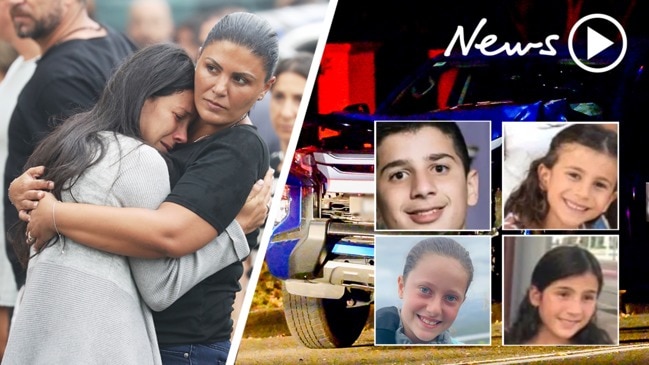
This is a terrible story and the pain has only begun for these families. But I mention it because it shows how the media can be a respectful conduit for grief; without intruding on the family, journalists can share events with the broader community, allowing people to show support for the victims or at least share a communal sense of grief and concern.
Families are not always so open and those struck by tragedy must always have the choice of privacy. One of the most difficult challenges for young journalists is the so-called “death knock” where you approach people who have lost loved ones, perhaps in a murder or an accident, and ask them for interviews, photos and the like.
There is no training for such a task, reporters rely on their own instincts and empathy. The first time I did this as a young newspaper reporter I was shocked to be welcomed by the mother of a teenage girl lost in a car crash.
The discussion was obviously therapeutic for her as she was able to convey her love and admiration for her daughter, which turned into a heartfelt article from me about the senseless waste of young lives.
But I can still feel the dark weight in that lovely family home 35 years ago and will never forget the look on the father’s face when he peered in through an open doorway, so clearly incapable of speaking about what his family was dealing with.
Perhaps avoiding tragedy and anguish was one of the reasons I focused on political reporting. Still, sure enough, you find yourself at car crashes with bodies still on the ground, horrific murder scenes or excruciating tragedies.
MORE CHRIS KENNY: Ignorance is blissfully rewarding | Media Watch host fans flames, dodges climate facts | Bushfires: the Green New Sequel | Murdoch hysteria baseless, bizarre | Hurt, but PM still a cut above | Facts blurred in climate coverage
One hot summer’s day I joined news crews outside a house on the northern plains of Adelaide where neighbours had noticed a bad odour. Police revealed a junkie mum had left her baby with her father and gone off on a bender for a few days, during which the babysitting grandfather died unexpectedly from a heart attack, leaving the baby in a cot where it died from thirst and heat exhaustion.
The distraught mother returned while we were there. A detective interviewed at the scene said all the police and ambulance officers involved would be offered counselling. As we were packing up one of the television cameramen quipped, “What do we do for counselling?” We all agreed our regular catch-ups at the pub amounted to our therapy.
That is how media workers coped with tragedy and grief in those days.
Modern human resources practices ensure professional counselling is offered widely across media companies now, especially after major traumas such as the Christchurch massacre or our bushfires.
In my time as a political adviser in foreign affairs I saw grief and tragedy from other angles. Dealing with terrorist attacks in Bali, Jakarta and elsewhere, natural disasters such as the Boxing Day tsunami and deadly threats in war zones such as Iraq and Afghanistan.
Holding it together in the face of heartbreak and horror is sometimes vital and never easy. If we are to act or communicate effectively, a veil of stoicism needs to mask how we might truly feel.
There will be many death knocks where journalists have a door slammed in their face and skulk away. And there will be times when aggressive or insensitive media intrudes on private grief and deserves rebuke.
But we should spare a thought for journalists who expose themselves to physical and emotional trauma, dealing directly with people facing gut-wrenching pain. It is only through them that citizens get to share grief as a community, drawing strength and inspiration from each other, leading to outpourings of support or donations to charities, and just allowing us to empathise with our neighbours.

Optus tops distrust rankings as telcos trail social media

Like first responders and medicos, journalists are constantly confronted by the harsh reality that life is, indeed, a vale of tears. For all our well-founded complaints about reporters and their behaviour, we ought sympathise with them for the horrors and grief they confront in order to inform us.