
The vet who cares for canines in people and their pets
Vet Peter Bradbrook likes to joke that the dental surgery called him in when they were short-staffed. But he’s one of few people in the world qualified to deal with canines in both people and pets.

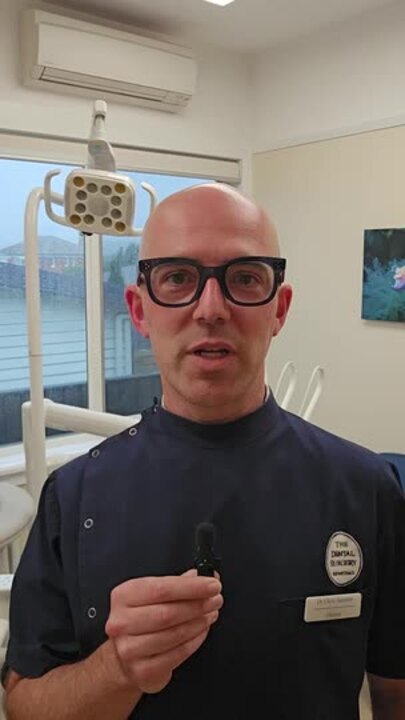
He likes to joke with patients that he is a vet the dental surgery called in because they were short-staffed.
But Peter Bradbrook is quick to reassure those ready to leap from his chair at the Rosebud Dental Group on the Mornington Peninsula that he is dual-qualified. He is both a vet and a human dentist; one of the few in the world to hold degrees in both.
His degree in veterinary science came first, but Dr Bradbrook’s passion for dentistry was always there.
“My aim was to specialise in animal dentistry, but because we had limited studies in that field at university I did my vet degree first and then worked as a vet to pay my way through a Bachelor of Dental Science,” he said.

In all it was a total of 11 years of study that allows Dr Bradbrook to work on the canines of people and their pets – yes, he does have patients from the same family.
His preference?
“I enjoy both,” Dr Bradbrook said. “With animals it’s all under general anaesthetic, but you get to speak with your human patients, find out what the problem is, and I can extrapolate that to the animals and bring that knowledge across.”
He said working four days on humans and one on animals each week gives him more compassion.
“I guess to be able to know what’s painful, what’s not; that makes it a bit easier to talk with the (pet) owners, too.”
He laughed there were times he has read out the wrong numbers when looking at human teeth.
“Humans have a different numbering system (of their teeth), they’re similar but different and the nurses are like, ‘what are you talking about?’”

Dr Bradbrook has also started a mobile vet dental business, Melbourne Animal Dentistry, which gives him the flexibility to enjoy the best of both worlds.
“Pets do get toothaches,” he said. “They just don’t show the signs like people do, they tend to just get on with it, still eating and drinking; it has to be pretty significant for them to go off their food,” he said.
“Typically pets show subtle signs like changes in behaviour, it depends on how astute the owners are but a lot of the time the owners aren’t aware that they’ve got a tooth issue until we have a look.”
The mobile service allows him to do specialised animal dental work for other vets and even zoos that call on him to sort a sore tooth for gorillas, orang-utans and monkeys.
“I’m bringing across what I’ve learnt with the human side of dentistry,” Dr Bradbrook said. “I do root canals and fracture repairs, crowns and orthodontics on animals.
“Moving teeth for pets is for practical reasons, not aesthetics. It’s less invasive than having to extract the tooth or cut the tooth down.
“I guess like humans, animals also need to have healthy teeth.”
So will there be a day when pets or people win out?
“I’m enjoying the mix at the moment,” Dr Bradbrook said. “I can’t see it going one way or the other totally.”
More Coverage


Originally published as The vet who cares for canines in people and their pets

Secret to Dick Van Dyke turning 100 as demons revealed
