
Liberal recruit Frank Pangallo used AI for allegedly fake sources
Liberal Party star recruit Frank Pangallo has acknowledged using AI which fabricated academic sources for a parliamentary inquiry, sparking backlash from state leaders.

State Liberal Party star recruit Frank Pangallo has admitted using artificial intelligence to craft allegedly fake academic sources submitted to an algal bloom inquiry.
In a doorstop interview at his parliamentary office on Wednesday, The Advertiser asked Mr Pangallo to confirm its investigation suggesting AI had been used to prepare the sources controversially provided to a parliamentary committee.
In response, Mr Pangallo confirmed he had used AI and “got the wrong information”.
“Well, the list right? I’d already researched the paperwork. I’ve already had them (the reports cited), I’d seen them, and all I was doing was asking: ‘Okay, can, I have a list of authors or whatever’, and I got the wrong information,” he said.
Asked by The Advertiser to confirm this was through using AI, Mr Pangallo said: “Yeah, and I’ve got the wrong information.”

Asked if he would continuing using AI, he said: “Yeah, well, I will, but what I’ll do is I’ll verify it, so it’s a lesson for you guys (journalists) as well.”
Mr Pangallo insisted he would table relevant source documents to the Budget and Finance Committee on Monday, including one concerning US algal blooms and desalination.
Senior Labor minister Tom Koutsantonis seized on The Advertiser’s revelation, arguing a “serious or professional researcher” would be sacked and called on Opposition Leader Vincent Tarzia to dump Mr Pangallo.
“For the Liberal Party’s star candidate to be generating phony sources using AI and then submitting them as parliamentary ‘evidence’ to promote conspiracy theories is absolutely gobsmacking,” he said.
But Mr Tarzia said Mr Pangallo “obviously undertook some research” and had “made a mistake”, but still had the party’s support.
Mr Tarzia said he had explained to Mr Pangallo that the Liberal Party “expects better of him”, but insisted he was “very fit” to remain on the committee.
Professor Anton van den Hengel, the chief scientist at the University of Adelaide’s world-renowned AI study centre, the Australian Institute for Machine Learning, did not comment on the politics but likened AI’s challenges to the internet’s early days.
“When the internet was first introduced it took a while for people to get used to the idea that not everything it said was true. We learned how to use it, though, and now we all rely on it every day,” he said.
“The challenge with AI is similar. It will take a while for people to learn that not everything AI says is true, but we will quickly reach the point where we rely on it every day.
“AI is the most important technology of our time, it is bound to take some getting used to.”
Earlier on Wednesday, The Advertiser submitted Mr Pangallo’s sources list, which he controversially provided to a parliamentary committee, to OpenAI GPT, Google Gemini and Anthropic Claude models.
The AI models were asked if the sources would have been generated in response to a query to AI “about sources for desalination plants causing algal blooms”.
All three models suggested the sources were generated in response to an AI query, with OpenAI GPT saying “these references likely would have been generated in response to a query to an AI like ChatGPT, Gemini, Claude, or similar systems”.

“In summary, these references exhibit characteristics typical of AI-generated citations: plausible formatting and relevance to the query but with inaccuracies or unverifiable details,” OpenAI GPT said.
Google Gemini said, in part, “these references very likely would have been generated in response to a query to an AI”.
Anthropic Claude said: “These references show hallmarks of AI-generated citations – they contain elements of real research (real authors, appropriate journals, plausible topics) but with significant inaccuracies in titles, dates, and specific content.
“This is a common pattern when AI systems generate references without access to actual databases, creating plausible-sounding but inaccurate citations.”
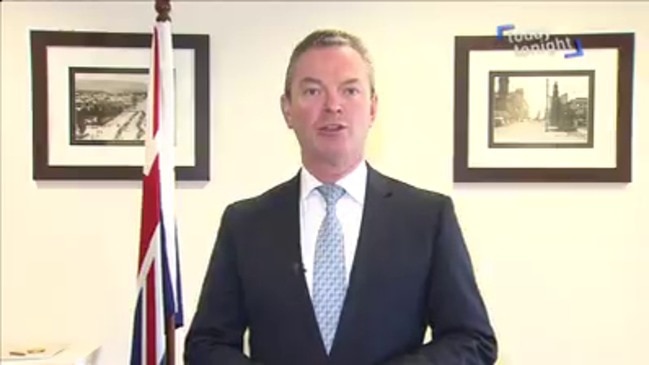
On Tuesday, Mr Pangallo was urged to “apologise and resign” from a parliamentary committee over alleged false academic sources he provided during a hearing into the algal bloom.
Senior Labor minister Tom Koutsantonis argued the Liberal candidate had “misled” parliament and that his actions were “unforgivable”.
Mr Pangallo and Liberal spokesman Ben Hood both blamed an “administrative error” for the false sources, with Mr Pangallo later apologising in a speech to the upper house on Tuesday afternoon.
The government attacked Mr Pangallo and Liberal leader Vincent Tarzia, saying Mr Tarzia should either stand by his colleague or order him to stand down from the committee.
More Coverage


Read related topics:Vincent Tarzia
Join the conversation

Starick: ‘Accidental’ Ashton turns Batty in slow-mo Libs coup
Read more

Hurn counts on Hood for top gig on Libs new front bench
Read more