
Wool clip in century low as farmers sell sheep
A perfect storm of high meat prices and weak wool returns has triggered the most dramatic collapse in Australian sheep numbers since Federation.
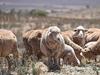
Australia’s sheep flock will dive to a century low as a tough season, lacklustre wool prices and high meat values conspire to decimate numbers.
The latest estimates from the Australian Wool Production Forecasting Committee, released on Monday, predict the number of sheep shorn in the current financial year will drop to 57.9 million, back 8.1 per cent on the previous financial year.
It’s the lowest number of sheep shorn since 1904, when numbers tallied 56.8 million, and represents a 20 per cent fall in the past two years alone.
While the impact of the end of live sheep exports has seen the predicted Western Australian clip to drop almost 11 per cent year-on-year, production is down in every state, and worst hit in South Australia (down 16 per cent).

AWPFC chairman Stephen Hill said fewer sheep were expected to be shorn in all states as producers “take advantage of the current strong sheepmeat prices”.
“This remains a key downside risk to a recovery in shorn wool production despite the favourable seasonal outlook in key wool producing regions,” Mr Hill said.
“Rainfall from now leading into spring and pasture feed availability will be key factors influencing producer decision making.”
Wool Producers Australia president Steve Harrison said wool remained at the bottom of the commodities, with cattle, mutton and lamb at base rates.
He said wool prices were “well below” any incentive for growers.
“There is commentary and rightly so about the dry conditions, they have been ongoing however it does come back to the wool price as well,” he said.
“The wool price is the elephant in the room.”
He said many producers were joining to terminals, with “whole flocks” of ewes going to terminals, which would have an effect on future wool production.
Mr Harrison believed there would be a finer clip until there was a full recovery from the dry seasons.
“The wool market has snuck up marginally, it has to keep going. It needs a full head of steam to keep going up and up,” he said.
“At some stage with low supply, you’d think the price would rise.”
On a state-by-state basis, NSW will remain the major wool producer and the only one to have a predicted wool cut above 100 million kilograms. Forecasts put Victorian wool production in second place, at 54.3 million kilograms, WA in third place at 40.1 million kilograms, edging out SA with 39.8 million kilograms.

In Western Australia, Coromandel Poll Merino stud principal Michael Campbell felt “quietly optimistic” about the sheep and wool industries’ future, depending on the upcoming spring.
“We’ve started to see price signals in the sheep meat industry and a significant uplift in prices which is significantly improving profitability, so that should be a good stimulus,” he said.
“We’re hoping in Western Australia that we’ve hit the bottom of the decline in sheep numbers, and it’s too early to tell sheep producers’ intentions for the coming mating but I think there are opportunities to make more towards maternals and sustain the base of the ewe flock in WA going forward and to rebound off that.
“There are a lot of positives now that are becoming a reality and I think we’ll sustain a profitable sheep and wool industries going forward.”
The AWPFC forecasts have credence in the industry, drawing on advice from state committees which include growers, brokers, private treaty merchants, sheep pregnancy scanners, government agriculture representatives and the Australian Wool Testing Authority.
Information from the Australian Wool Exchange, wool exporters, the Australian
Bureau of Statistics, ABARES and Meat and Livestock Australia is also included when making predictions.
Meanwhile, the wool market closed up after last week’s sales, with the benchmark Eastern Market Indicator gaining 8c/kg to close at 1247c/kg clean.
The EMI has risen 57c/kg since the start of the year where it was 1190c/kg in January.
In the same time frame, the national mutton indicator tracked by the National Livestock Reporting Service has lifted from 447c/kg carcass weight to 715c/kg carcass weight, encouraging some growers to sell off numbers.

Join the conversation

Ballarat ewe sale sets strong $400 floor
Read more

Meet one of the best maternal Merino breeders in the country
Read more