
How sperm will be given two attempts at fertilising an egg to boost baby chances
Couples battling infertility may boost their chance of having a baby by this new approach being trialled which involves giving the sperm two attempts to fertilise an egg.

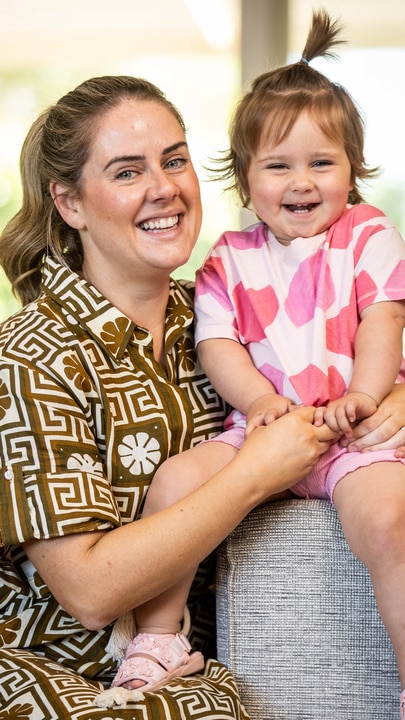
Sperm is getting a second chance to do its job in a unique fertility trial that has already successfully achieved pregnancies for several Victorian couples.
Called the Rescue ICSI trial, it is being led by Professor Wan Tinn Teh and Dr Michelle Emerson at Melbourne’s Royal Women’s Hospital.

The fertility researchers are looking at the technique that rescues eggs that failed to fertilise during a standard IVF cycle.
These eggs get a second go when a single sperm is injected using the same batch, but up to a day later when fertilisation may be more optimal.
While this technique has been around for more than three decades, this is the first time its safety has been tested in a clinical study.
Professor Teh said when couples do an IVF cycle, if the sperm is normal it is better to let it do its job more naturally, even when it is in a laboratory, and allow the sperm to enter the egg by itself.
“Unfortunately, in about 2 to 3 per cent of couples when they do standard IVF, for some reason the sperm that day is unable to fertilise the egg,” she said.
Until now that has meant couples had to put their baby dreams on hold and undergo another gruelling fertility cycle.

This trial, run at the Moyna Fox Fertility Research Centre at the Women’s, has successfully used Intracytoplasmic Sperm Injection, or ICSI, to inject a single sperm directly into the egg a day after the failed attempt.
There are 10 couples on the trial and several are now half way through their pregnancy and more than 50 per cent of the eggs have been successfully fertilised by rescue ICSI.
“Traditionally when the sperm has not fertilised an egg during an IVF cycle we have to give up and collect new eggs the following month,” Professor Teh said.
“This protocol gives that batch of eggs or sperm another chance within the same month instead of having to start again with a new cycle. We used the same batch of sperm because it has already been prepared in the lab for an IVF cycle.”
She said this protocol was important in public IVF as couples have two cycle limits.
“And this would help maximise their chance,” Professor Teh said. “If it shows that it is safe and successful, we will include this as part of the clinical protocol.”
The team hopes to publish the research next year.

“This is not a new technique,” Professor Teh said. ‘It is a tweak to the protocols using the current technique. ICSI has been around for a long time. It is just the use of the technique in a clever way to give eggs a second chance.”
She said the Women’s was constantly trying to improve its fertility services.
“With the establishment of the Moyna Fox Research Centre, the aim is to make IVF more successful, make it safer and more accessible. This trial is about giving hope where there previously was none.”
Since it opened the Centre, created in partnership with the Stafford Fox Medical Research Foundation, has undertaken eight research projects looking at repeated IVF failure, recurrent miscarriage, male infertility, fertility loss and improving the safety and success of fertility treatments.
More Coverage


Originally published as How sperm will be given two attempts at fertilising an egg to boost baby chances

TV reporter: ‘My world fell apart before this miracle’
