
BHP says its will consider its future in Queensland if extreme coal royalties persist
BHP's five Queensland coal mines face an uncertain future as the mining giant fires a warning shot over the state's controversial royalty regime which lifts the tax take on coal production to 67 per cent.
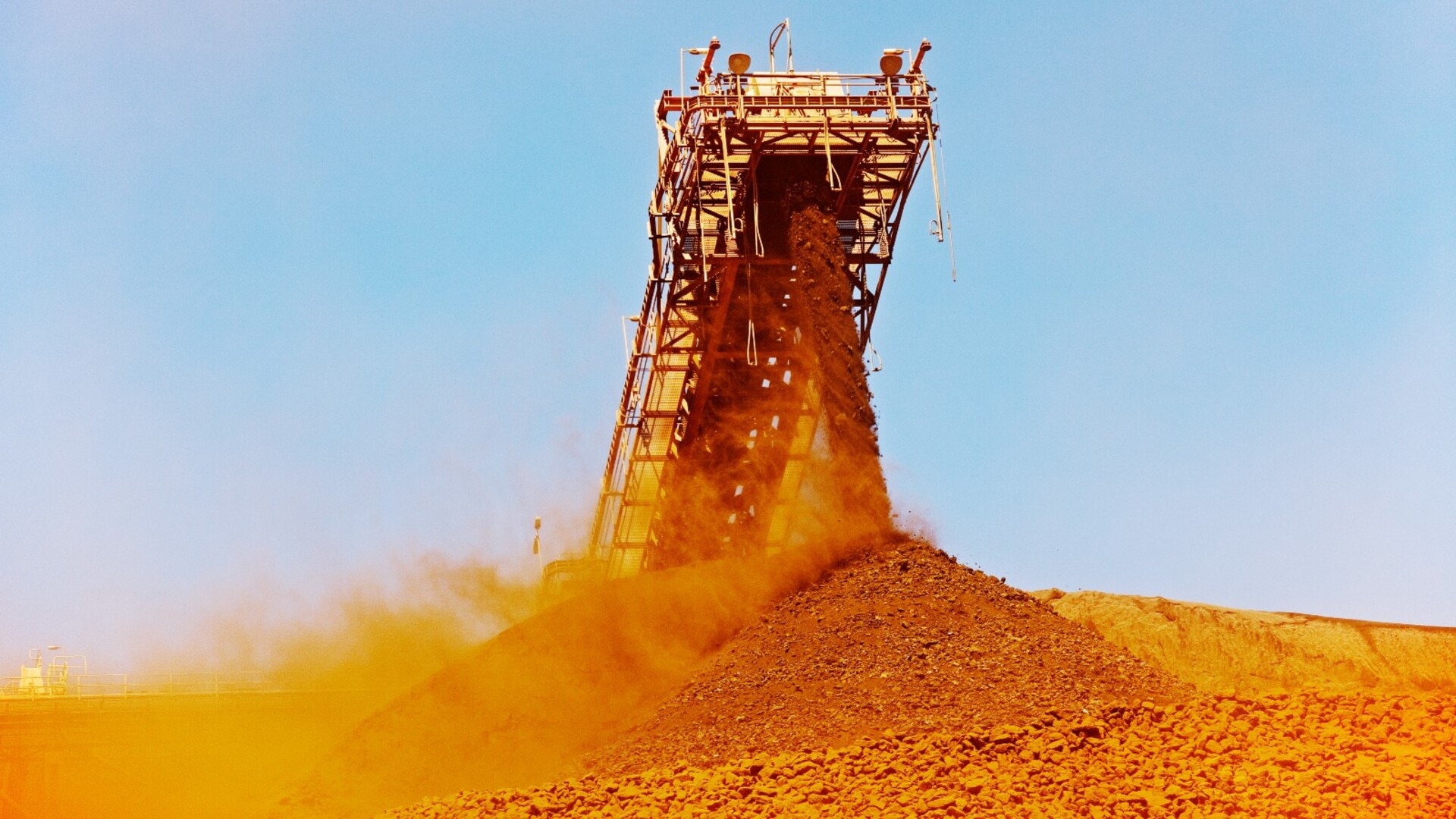
BHP is willing to mothball some of its Queensland coal mines if prices don’t improve because the state’s crippling royalty regime has exposed its operations and staff to unacceptable commercial risk.
The warning on Queensland coal’s future came as BHP said the Albanese government’s industrial relations changes were creating uncertainty in workforce planning, with consequences for labour costs and Australia’s international competitiveness.
Queensland treasurer David Janetzki immediately shot down any hope of relief for BHP and other embattled coal miners, saying the royalty regime was entrenched until at least 2029-30.
“There will be no changes across the forwards (forward budget estimates), as we committed to before the election, which is in contrast to Labor, which promised 26 times not to introduce new or increased taxes and broke it repeatedly,” he said on Tuesday.
BHP will press on with boosting iron ore exports from Western Australia, where chief executive Mike Henry said Chinese steel demand was holding up for longer than anticipated.
Mr Henry said the situation was much more grim in Queensland where its BMA joint venture paid an effective tax rate of about 67 per cent in 2024-25, making it harder to justify keeping coal mines open through commodity downturns.
The Queensland coal operations are Australia’s largest producer and supplier of seaborne metallurgical coal, and employ about 9000 people including contractors.
Underlying earnings before interest, taxes, depreciation, and amortisation at BMA plunged $US1.3bn ($2bn) to $US600m. BMA paid $US1.1bn in royalties and taxes in the 2025 financial year.

Mr Janetzki said the Queensland government “respects” the resources sector and is supporting it with “faster decisions and streamlined approvals”.
BHP is not alone in questioning its presence in the Bowen Basin. Peabody Energy is looking to back out of a $5.8bn deal to buy Anglo American’s Queensland coal mines, and the Nick Jorss-backed Bowen Coking Coal is in the hands of receivers.
Coronado Global Resources last week reported a half-year loss of $US172.4m.
The steep fall in BMA earnings was driven by much lower coal prices, which slid by 27 per cent, and the sale of the Blackwater and Daunia mines. BHP’s partner in BMA is Mitsubishi.
“With no change to the ongoing negative impacts of extreme royalty rates, we will maintain our existing position of not investing in any further growth at BMA,” BHP said.
“We will sustain and optimise our existing operations. However, if low coal prices persist, options to pause lower margin areas of our operational footprint will be considered.”
Asked about the prospect of mine closures, Mr Henry said partial shutdowns are under consideration.
“What’s happened is due to the changes that were made to the royalty regime a few years ago (under the former Labor government), the benefit of any upswing in coal prices has been seriously eroded from a BMA perspective,” he said.
“And so, in the face of tougher times, like we see currently, there’s less ability or willingness on the part of the business to see through those tough times and perhaps carry some negative cash flows.
“We have to act even more expediently to shut loss-making production because we don’t get the benefit on the other side of the equation when prices rise.”
Coal Australia chief executive Stuart Bocking said the Queensland royalty regime was the most punishing in the world and the Queensland Liberal National government needed to act to save mines and jobs.
“Circumstances have changed, and miners are battling with production costs that have risen sharply and prices that have fallen dramatically. The current regime is unfit for purpose,” he said.
BHP declared a final dividend of US60c a share, a 60 per cent payout ratio, to be paid on September 25.
The better-than-expected final payout took total dividends for the year to $US1.10, from $US1.46 in FY24.
A 26 per cent slide in full-year earnings from lower iron ore and coal prices was partly offset by higher copper premiums.
Revenue fell 8 per cent to $US51.3bn with underlying net profit down 26 per cent to $US10.2bn, from $US13.7bn.
Barrenjoey analyst Glyn Lawcock said the result was largely in-line with estimates. And Macquarie analysts said BHP had a strong finish to FY25 with an 18 per cent beat on the final dividend. “The re-prioritisation of capital and net debt increase were a key positive; we think this supports higher returns in the future,” Macquarie said.
Mr Henry rejected suggestions that a move to increase BHP’s net debt target range to between $US10bn and $US20bn (from $US5bn and $US15bn) was linked to renewed interest in mega-mergers.
“We’ve been quite clear that M&A is but one of our levers for growth. And frankly, in current markets, it’s hard to see the right combination of the commodities that we like, the asset qualities that we like at a price where we can still unlock attractive value for BHP shareholders,” he said a year on from BHP’s failed £39bn pursuit of Anglo American.
The 2024-25 results came on the back of record iron ore and copper production for BHP.
BHP produced 290 million tonnes of iron ore in the Pilbara in 2024-25 and made record shipments. The mining giant continues to weigh up plans to boost production to 330 million tonnes a year and sees a pathway to 305 million tonnes in the meantime.
Getting to 305 million tonnes involves building a sixth car dumper – used to unload iron ore from railcars – at a cost of about $US900m. It expects the investment to pay for itself within three years.

BHP shares rose 65c to $42.12.
The BMA operations produced just a 1 per cent underlying return on the capital employed compared to 43 per cent for the WA iron ore business and 6 per cent for copper in South Australia.
BHP showed last year that it had no appetite to cross-subside loss-making operations, shutting its nickel mines, smelter and refinery in WA amid thousands of job losses in the sector.
The company has flagged trying to divest the business, which carries with it closure and rehabilitation provisions of about $US900m.


Originally published as BHP says its will consider its future in Queensland if extreme coal royalties persist

Before they were Ashes stars: The first jobs of Aussie cricketers
