
IOC bans biological males from competing in women's category at Olympic Games


The landmark decision comes not after a shower of common sense befalling the Lausanne organisation under new president Kirsty Coventry, but a scientific review of the permanent physical advantages of being born male.
Why it required an academic to tell of the obvious advantages men, those with XY chromosomes, have over women and girls, is one of the mysteries of the 21st century.
Let’s rattle off a few: bigger heart and lungs, more oxygen carrying capacity, stronger muscles, 60 per cent increased upper body power, a taller and leaner physiology, let alone not having to deal with monthly hormonal fluctuations and menstruation.
It only took:
— Emma Hilton (@FondOfBeetles) November 10, 2025
Eight years of notebooks of tracking stats.
Six years after presenting my findings for the first time. @fairplaywomen@sharrond62
Five years after writing the first peer-reviewed paper that established an evidence base for policy making. @TLexercise@Scienceofsport… https://t.co/2DEdjWsQxN
For years the IOC has been captured by the trans activists, with the former president Thomas Bach prioritising his (failed) bid for a Nobel Peace prize by encouraging “woke” attitudes to allow men to compete in the women’s category.
The issue was highlighted at the Tokyo Olympics in 2021 when New Zealand weightlifter Laurel Hubbard, formerly known as Gavin until his mid 30s, competed in the 86kg class against women at the Games at the age of 43, one of the oldest lifters in the history of Olympic competition.
Bach and his acolytes could only sigh in relief when Hubbard failed in the competition, although the Olympic masters were quite happy for an 18-year-old female lifter from Nauru, Roviel Detenamo, to miss her chance at the Games because of Hubbard’s inclusion.
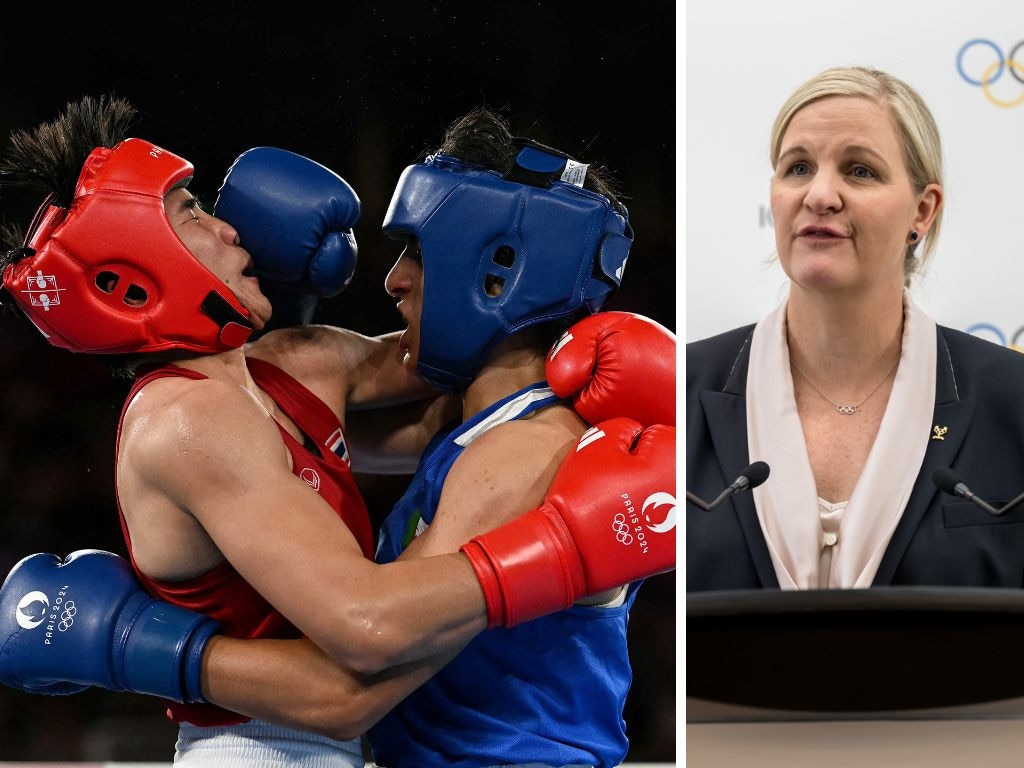
Then there was the chaos at the Paris Olympics last year when Algerian Imane Khelif, in the 66kg class and Chinese Taipei ’s Lin Yu-Ting in the 57kg division won boxing gold medals, both winning every round of every bout, and both having failed the gender tests of the International Boxing Association a year earlier.

Bach tried to blame boxing officials for imposing this “arbitrary test” and insisted their competing was “justice” because women, including those who have a passport saying they are women, must be allowed to take part in women’s competitions.
Now that the new body, World Boxing, has introduced a cheek swab for sex testing, it is not a coincidence that both Khelif and Lin Yu-ting are missing from the ring.
Both will not be allowed to compete until they have taken the swab and are shown to have XX chromosomes.
All the while, Bach’s baloney has been exposed but it came at the expense of two other female boxers who missed an Olympic experience, as well as a distorted medal allocation, while the opponents of Khelif and Yu-Ting had to endure punches three times the power produced by a biological female.
Thankfully Bach’s 12-year presidential term has expired and Coventry, the Zimbabwe star swimmer who campaigned for fairness in women’s competitions, is now in charge.

Interestingly this latest scientific study was conducted by the IOC’s medical director, Jane Thornton, from Canada, who had appeared to be an ally of trans athlete participation in the women’s category.
Back in 2021 Dr Thornton co‑authored a peer‑reviewed article titled “A Scoping Review of Transgender Policies in the 15 Most Commonly Played UK Professional Sports” noting how the IOC policy at the time said “athletes should not be excluded solely on the basis of their transgender and gender diverse identity”.
Maybe even Dr Thornton, a former rower at the Beijing Olympics, has read the room on this one with both world athletics and world swimming banning athletes who have been through male puberty from competing in the women’s category.
Maybe she can start with her own sport of rowing, which still has a lopsided policy of allowing males with reduced testosterone levels of 2.5 nmol/L for 24 months to compete in the female category, a level which is more than double the median levels of testosterone found in a biological female.
If the IOC introduces this blanket ruling, as they have indicated, and protect the women’s category for XX athletes by the time of the Milan-Cortina Winter Olympics in February next year, it will send gender identity to the sidelines, and all Olympic sports will have to fall into line. And about time too.
More Coverage



Putin warns Russia ‘ready’ for war with Europe as Moscow talks end

The International Olympic Committee will finally ban biological men from competing in women’s sport.