
NSW Police cite ‘public safety concerns’ in effort to block Opera House rally
A Supreme Court justice has said it could spell ‘disaster’ if thousands of ‘strongly motivated people’ attempted to press towards the centre of the Sydney Opera House on October 12, as police attempted to relocate a rally.

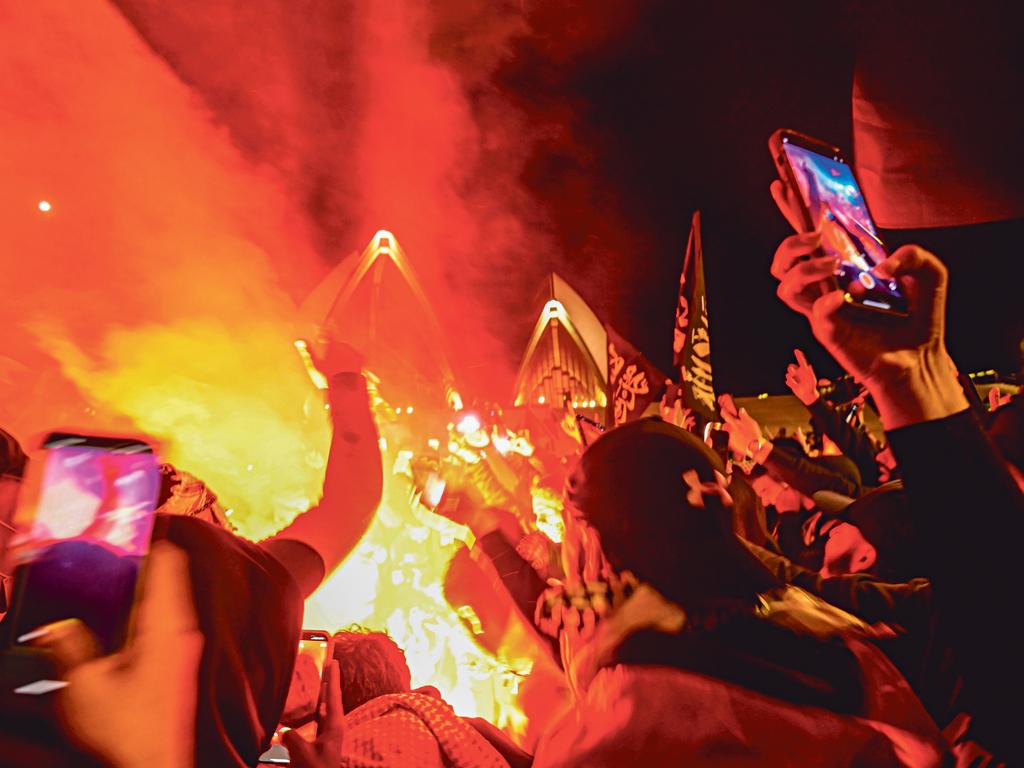
A Supreme Court judge says it could lead to “disaster” if thousands of “strongly motivated people” attempt to converge on the Sydney Opera House, as police work to relocate a pro-Palestine rally planned for the weekend following the second anniversary of the October 7 attacks.
Police have referred the proposal for the rally to the NSW Supreme Court, citing “heightened public emotion” as a factor in their request to have the protest moved.
Palestine Action Group said it expected upwards of 10,000 people to join the march on October 12 from the CBD to the Opera House forecourt.
However, at a last-minute summons before the Supreme Court on Friday afternoon, police said there could be anywhere between 10,000 and 100,000 people attending the protest, and there were “engineering concerns” about whether the Opera House forecourt could even hold that many people.
Duty judge, Justice Desmond Fagan said the Harbour Bridge march, where a “broad proportion of the community” came out to express sentiments of “distress and outrage about the events in Gaza”, created “difficulties of its own”.

He said the October 12 protest would see people essentially “go to a cul-de-sac” and asked the lawyer representing the Palestine Action Group whether that would be “practical”.
Mahmud Hawila for the Palestine Action Group said it would be practical if there was appropriate crowd management.
Justice Fagan responded that if there were “large numbers of very strongly motivated people” trying to “press themselves to the centre of the Opera House, you’ll have a disaster”.
A two-hour hearing will be held on Tuesday before a different judge.
Palestine Action Group has run protests in Hyde Park every Sunday for the past two years, but rose to national prominence when it led more than 90,000 people across the Harbour Bridge during the March for Humanity.
Assistant Police Commissioner Peter McKenna on Friday said public safety was a major factor in police refer the matter to court.
“We understand that this is a significant anniversary for probably both sides … there’s heightened public emotion around this and we understand it,” he said.
“We’re not anti-protest, we facilitate thousands of protests and, in fact, with this particular group, we’ve been facilitating protests and public assemblies for the last two years.”
He said the Opera House’s position and layout meant large groups would have to exit via “pinch points” which would be exacerbated in the event of an emergency.

Protest organisers will face an “extra hurdle” in their attempts to overcome the state’s objection to the march, because of laws banning trespassing on Sydney Opera House grounds, administrative law specialist Mark Robinson SC told The Australian.
“The Opera House is a completely different ballgame to the Harbour Bridge. It’s not a public place, it’s a private place,” he said.
“If you trespass with intent to cause damage or disrupt the operations of the Opera House, you run the risk of being imprisoned.”
NSW Premier Chris Minns said of the hundreds of protests that take place in NSW each year, the “vast, vast majority” go off without a hitch, thanks, in part, to police efforts.
“They’re peaceful protests. Police facilitate, often a march or a protest taking place, but you have to appreciate they’re in a difficult situation and when people break the law, even if it started off as a peaceful, lawful protest, they’ve got to take action,” he said.
“They don’t do that easily and they don’t do that in a way that’s ... arbitrary. They do it to keep the rest of the public safe.”

Federal Opposition Leader Sussan Ley said the protest would be “completely counter-productive”.
“(Pro-Palestinian protests) do come from a place of division and hatred, and that is not acceptable, and it certainly isn’t acceptable for the Sydney Opera House to be used as a backdrop for protests,” she said.
Executive Council of Australian Jewry president Daniel Aghion said “attacks on the Jewish community” would be “celebrated and affirmed” if the Opera House protest went ahead.


To join the conversation, please log in. Don't have an account? Register
Join the conversation, you are commenting as Logout