Hate criminal sentenced to house arrest for anti-Semitic attacks motivated by money not hate
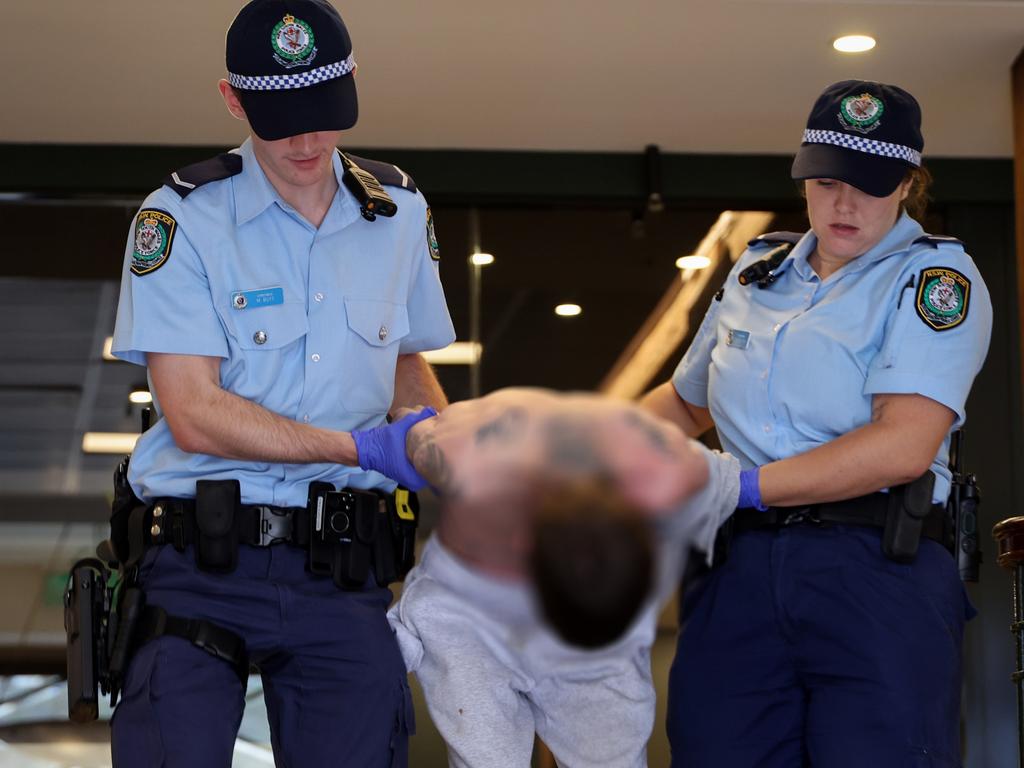
Thomas Stojanovski left court sentenced only to house arrest, after a Sydney judge found his part in an anti-Semitic crime spree was motivated by money rather than hate.

An arsonist involved in setting fire to cars and plastering anti-Semitic slurs across a Jewish neighbourhood in Sydney’s eastern suburbs has been sentenced to 11 months of house arrest.
Judge Scott Nash, at Sutherland Local Court, found Thomas Stojanovski held no anti-Semitic beliefs and his crimes were not motivated by racial hatred.
“(I cannot find) beyond reasonable doubt the offending was partially or wholly motivated by a hate towards a group of people to which the defendant believed the particular racial or ethnic origin belonged,” said Judge Nash.
“Although there was a degree of planning and organisation … I cannot find beyond reasonable doubt Stojanovski had any prior knowledge of the nature of the attacks.”
The 21-year-old’s face fleetingly broke into a seemingly wry smile when his sentence was handed down as he sat beside family members and his legal counsel.
Executive Council of Australian Jewry co-chief executive Alex Ryvchin said on Tuesday: “There will be much commentary on whether tougher sentencing is needed to punish and deter racially motivated crimes, given their impact far beyond those directly affected and the potential for such attacks to result in serious injury or death.
“The Woollahra attack had a devastating impact on the local community and on Jewish Australians. It introduced the crime of anti-Semitic firebombing to our shores culminating in the horrific summer attacks by the Iranian regime and organised crime that targeted businesses, synagogues and homes.”
The court cited Stojanovski’s substance abuse disorder, lack of criminal history and positive rehabilitation prospects as mitigating factors on his sentence, originally proposed to be 14 months imprisonment, saying there was compelling evidence he held a “high degree of remorse”.
Stojanovski appeared relaxed upon leaving as he shook hands with his lawyer.


Stojanovski must regularly report to a police station, undertake 84 hours of community service and pay a $750 penalty to his victims as part of his 11-month “intensive corrections order”.
While Judge Nash found no dispute or doubt the “abhorrent” graffiti depicting the phrases “f..k Israiel [sic]” and “PKK coming” were anti-Semitic and anti-Israeli, the court ruled he was not motivated by hate but by money.
“I accept his reason was financially motivated … and was not to fund an extravagant lifestyle but to fund illicit drugs,” said Judge Nash.
Stojanovski was promised a financial reward of $1000 by his co-accused and was experiencing financial difficulties, the court heard.
Judge Nash acknowledged the significant public and community interest in the case and said Stojanovski’s case served as a reminder “there is simply no tolerance for this type of offending”.

His co-accused Mohammed Farhat was sentenced earlier this month to one year and eight months in prison, but his imprisonment was commuted to end on December 6.
Judge Nash found Mr Farhat was the primary instigator behind the attacks committed in Woollahra, pulling the strings and accordingly received a heavier sentence.
Stojanovski’s crimes form one part of a slew of anti-Semitic attacks that rocked Sydney over the summer.
NSW Jewish Board of Deputies chief executive Michele Goldman said on Tuesday: “During the ‘Summer of Terror’ of 2024–25, our community woke to the most horrific scenes. Buildings were graffitied, cars were burned, and people were terrorised in their own streets. No Australian should ever fear for their safety in their own country.
“Holding perpetrators accountable sends a clear message that racist hate acts like anti-Semitism will not be tolerated.”