
Carbon capture is the key to smoothing out our energy transition

Carbon capture, utilisation and storage, or CCUS, is not a rival to renewables. These technologies can and should operate side-by-side, providing heavy industry with a credible, alternate route to deep decarbonisation. In simple terms, carbon capture works by separating CO2 from industrial exhaust gases, then compressing this gas into a dense liquid for use or storage.
Wind and solar are essential for electrifying our economy, but they cannot directly eliminate emissions from making steel, cement, chemicals or fertilisers. In these hard-to-abate sectors, the carbon comes not just from burning fuel but from the industrial processes themselves. In a renewables-only plan, these industries are left with two choices: purchase carbon credits to offset their emissions, draining capital away from operations and jobs, or shut down here and move offshore, taking the emissions – and the jobs – elsewhere.
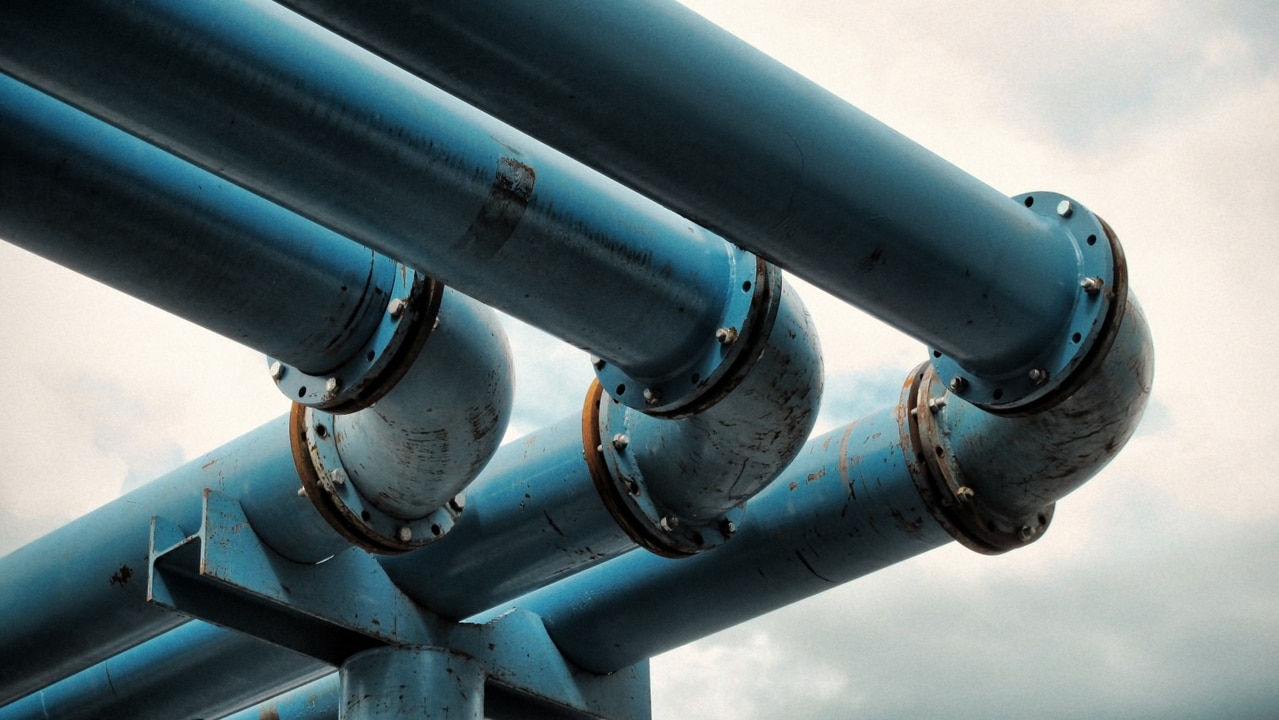
CCUS offers a third way by capturing carbon at its source while storing it safely underground or using the carbon to create new materials such as bricks or plastics. For heavy industry, it is the only scalable, commercially viable way to slash emissions while keeping our factory lights on.
Ernst and Young’s analysis, commissioned by Low Emission Technology Australia, makes clear that there is an enormous opportunity for Australia’s east coast to capitalise on this technology. One we can’t afford to ignore.
The east coast hosts the bulk of our industrial base but it lags far behind in CCUS deployment. Western Australia has Gorgon. South Australia has Moomba. The east coast has no large-scale operational CCUS hub. That absence matters because the Safeguard Mechanism’s declining baselines are bearing down. Without CCUS, east coast industries will be forced to rapidly decarbonise without the right tools to get this important job done.
EY’s modelling highlights an alternative path forward: a fully networked CCUS industry on the east coast could capture up to 50 million tonnes of CO2 annually by 2050 – the equivalent of taking 12 million cars off the road.

That level of deployment could deliver $66bn in additional GDP and more than 15,000 more jobs. Beyond domestic benefits, Australia could also export CCUS services to countries such as Japan and South Korea, which have the industrial need but lack the geological storage capacity.
There are three major barriers holding CCUS back on the east coast. The first is storage capacity. While we have suitable geology, it needs to be proven and certified. This takes time and will require governments to co-ordinate on issues with permits and approvals. The work being undertaken by Murray Watt in his role as Minister for the Environment and Water shows positive steps in this direction are under way.
The second barrier is infrastructure. CCUS needs a backbone of CO2 pipelines and shared storage hubs. Without it, projects remain stranded and smaller emitters are excluded.
The third is policy. Queensland’s ban on onshore CO2 storage is the single biggest obstacle to development. Overturning this ban will require heavy emitters to work closely with technology providers, governments and local communities to undo misconceptions about the safety and effectiveness of underground CO2 storage.
None of these challenges is insurmountable. Governments should treat CO2 storage exploration as strategic infrastructure, funding and fast-tracking site appraisal and certification in the same way we map and assess mineral deposits.
There is another reason to back CCUS as an alternate pathway. Heavy industry’s rapid adoption of the technology could take a significant chunk out of Australia’s emissions profile, easing immediate pressure on sectors such as agriculture, where abatement options are technically harder and slower to commercialise. In that sense, CCUS acts as a national emissions shock absorber, making the journey to net zero smoother, less disruptive and more economically sustainable.

This is not a question of choosing between renewables and CCUS. Renewables will decarbonise electricity. CCUS will decarbonise the industries renewables cannot reach. Together they can deliver net zero without hollowing out our industrial base. If we stick to a renewables-only mindset, we risk shutting down industries that could otherwise thrive in a low-carbon world. We would be swapping one dependency for another and weakening our sovereign capability in the process.
By embracing CCUS as an alternate pathway for heavy industry, we can keep making the steel for our wind turbines and cement for our transmission towers, all while driving down emissions in line with our climate commitments. But the clock is ticking. Other countries are moving fast to integrate CCUS into their industrial strategies. The east coast has the resources, the industrial need and the potential for billions in economic upside. What’s missing is the political will to make it happen. It’s time to broaden the net zero conversation. The real choice is between a narrow path that leaves heavy industry behind, and a diversified strategy that gets us there with our economy, jobs and sovereignty intact.
Mark McCallum is chief executive of Low Emission Technology Australia.


The debate on net zero is too often presented as a binary choice: you are either for renewables or for fossil fuels. That framing leaves out a third option, one that could cut emissions at scale without dismantling the industries that build our homes, our infrastructure, our energy projects and our defence capabilities.