
Burke and Wills monument banished from Melbourne city square, sparking condemnation
The decision to remove Melbourne’s historic Burke and Wills monument from the city square amid concerns over a First Nations and colonial clash has sparked outrage.


The decision to banish Melbourne’s historic Burke and Wills monument from the city square amid concerns about a conflict over First Nations and colonial imperatives has sparked condemnation and demands for its return.
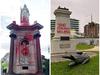
Former Victorian premier Jeff Kennett has blasted the decision to send the grand statue to the CBD’s outer edge after it was removed from the square to enable the construction of part of the Metro Tunnel project.
It will instead be sent to relative obscurity, amid a debate in Melbourne about the number of colonial statues and particularly those of white men.
Mr Kennett said it was “fundamentally wrong” to cancel the memory of Burke and Wills, the monument to them having been one of the most significant in Australia and located at the heart of the city.
“It’s not only absurd, it’s wrong and it’s a reflection that sadly this government is not respectful of our history,’’ he said.
A high-profile urban designer this week said the statue would be moved because the older iterations of the city square had been focused on colonial matters.
The statue, which has been in mothballs for several years, will eventually be shifted to the Royal Society of Victoria on the edge of the CBD, with the society still discussing what to do with it.


There is no timeline for the Burke and Wills statue to be installed, meaning it could be a lengthy period before it is returned to the public’s view.
RSV president Rob Gell said the shifting of the statue had created issues for the organisation and local Indigenous groups would be consulted about what would happen next.
One plan is to commission a First Nations sculpture depicting the Indigenous group that saved John King, the only one of the 19 explorers to survive the expedition, that could stand next to the Burke and Wills monument.
He said the Burke and Wills statue would, however, be welcomed back to the society, which sponsored the expedition, but any new statue near it would be likely to mark the role of the Yandruwandha people of South Australia who helped save King.
“We would rather have a sculpture celebrating this,’’ Mr Gell said.
He added: “We’re looking forward to the installation of Melbourne’s oldest monument on our land, but first there is critical work to do with the Wurundjeri people in Victoria and the Yandruwandha people of South Australia.
“The Yandruwandha people played a vital role in supporting Burke and Wills before they died, and importantly John King the sole survivor of the expedition for another three months.
“Alfred Howitt, a member the Royal Society of Victoria’s council, found King on 15 September 1861 and returned with him to Melbourne to a hero’s welcome”.
Robert O’Hara Burke, William John Wills, John King and Charles Gray were the first Europeans to cross Australia south to north when they reached the Gulf of Carpentaria in 1861.
Burke, Wills and Gray died during their return, becoming symbols of the dangerous struggle to explore and tame Australia, their mission sponsored at the time by the RSV, where the statue is expected to be placed outdoors in a comparatively obscure location, a 20 minute walk from the city square on the of the CBD.


The monument was made of bronze and granite by artist Charles Summers in 1865.
The government referred questions to the City of Melbourne.
Mangubadijarri Yanner, a Gangalidda man from Burketown in the Gulf of Carpentaria, was aware of the decision and said the removal of the monument was a “complicated scenario” but he tended to agree with it. Burketown was named after the explorer.
He said it was sometimes good to remind people of the history but being a long way from Melbourne it was not for him to judge.
Opposition MP David Davis said the permanent removal of the Burke and Wills statue was a disgrace. “There is every reason that the Burke and Wills statue should be in pride of place in our city square. Our British and European heritage … is a part of the state’s history that can’t be airbrushed out or willed away by a politically correct focus by Labor,’’ he said.
Lord Mayor Nick Reece said the RSV was the right place for the artwork. “The Burke and Wills monument is the oldest piece of public art in Melbourne – the City of Melbourne has managed and maintained it since 1865,” he said.
“Burke and Wills were heroes of Melbourne in the 1860s – and they remain an important part of our city’s history to this day.
“This would be a fitting home for our famous explorers, who were laid to rest at this very site in 1863, and reflects their longstanding connection with the society.”
The Age reported one of the architects of the new city square, Craig Guthrie, saying the removal of the Burke and Wills statue would sharpen the focus on First Nations history in the square.



To join the conversation, please log in. Don't have an account? Register
Join the conversation, you are commenting as Logout