
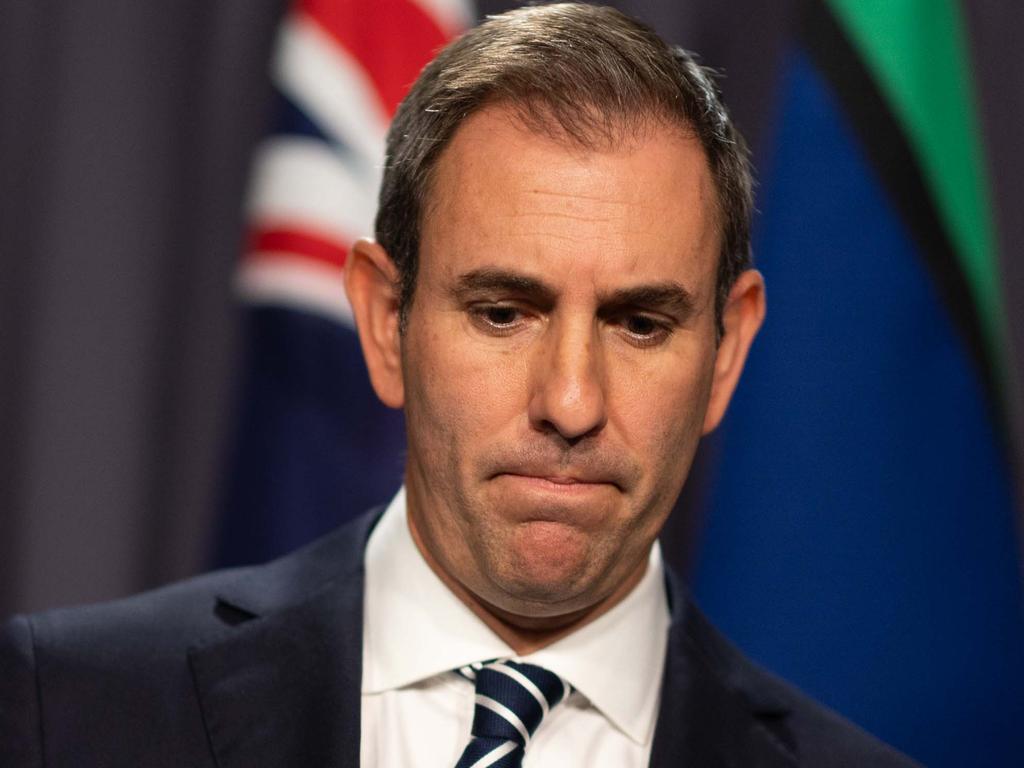
Our L-plate Treasurer: why Chalmers is out of his depth
High-taxing and interventionist, he’s not the man we need in these troubling times.


As it turned out, they were ready only for another term of opposition. Nonetheless, four years later they are in government, Anthony Albanese (who was excluded from that glamour portrait in 2019) is prime minister, and instead of opposition finance spokesman, Chalmers is Treasurer.
But were they ready?
None of this group has private sector experience; all have lived and worked in the cloistered world of politics and the labour movement since their university days. The closest any of them has been to the real world was a short public service stint for Plibersek, and brief stop-offs for Shorten and Wong in Labor-aligned law firms.
Chalmers was employed by the Labor Party as a researcher while he completed his PhD – a thesis on Paul Keating – en route to working for Wayne Swan. From the cradle to the grave, ALP career progression can resemble the human centipede. Still, having worked as Swan’s chief of staff in government – “the four years of surpluses I announce tonight” – Chalmers posed for the picture in 2019 apparently “ready” to be finance minister. Obviously this was wrong, because three years later, ready-or-not, he became Treasurer, and it transpires he is not up to the task.
The high-taxing and interventionist agenda Chalmers advocated in the 2019 campaign was eschewed at the 2022 election, although it has re-emerged since. If Chalmers wants to model himself on Keating, he will have to find some core beliefs and conviction. Ideological and ambitious, he is an L-plate Treasurer with no real-world experience confronting a difficult set of economic challenges. Yet he is trying to impose a grandiose but poorly formulated idea to remodel capitalism itself.
In his essay about “Capitalism after the crises”, Chalmers emulates the indulgence of Kevin Rudd in 2009, over-interpreting economic challenges to turn his back on capitalism and announce the resurgence of democratic socialism. (You get the impression this bloke spends too much time writing about progressive politics and not enough time learning about economics.)
“How do we build this more inclusive and resilient economy, increasingly powered by cleaner and cheaper energy?” he asked in The Monthly piece.
“By strengthening our institutions and our capacity, with a focus on the intersection of prosperity and wellbeing, on evidence, on place and community, on collaboration and co-operation.”
While he was writing this, Australian families were battling increased electricity prices driven up by renewable energy policies, high inflation caused largely by rampant government spending, and a real wages crunch fuelled by cost of living pressures and soaring interest rates. Heaven forbid we had a Treasurer who was prosaic enough to encourage affordable and reliable energy, productivity improvements and fiscal discipline.
Instead, Chalmers and Labor (who encouraged even more spending during the pandemic) are doubling down on the renewables push, expanding the reach of government, and increasing union power while removing the construction industry watchdog. The Treasurer speaks soothingly idealistic and progressive words out of one corner of his mouth to the green-left elites who read The Monthly, while from the other corner he appeases unions and inflicts pain on working families.
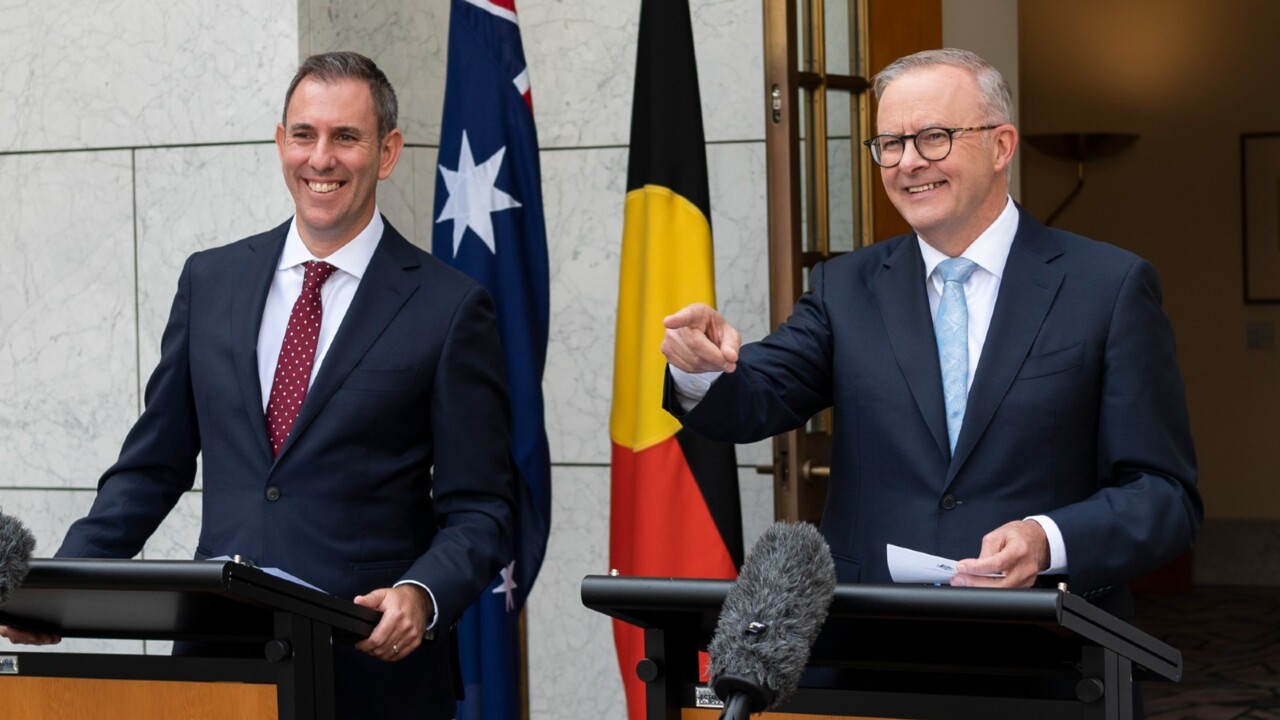
The thing with these Keating acolytes is that they look to emulate the rhetorical flourishes and grand narratives of the reformist treasurer, but they forget that the boy from Bankstown did the hard yards and hoed his own row. Not for Keating a politics doctorate and the formulation of lofty plans in treatise form. Keating left school early and got a job. Sure, he was politically active in his teens, moved to a union position and entered parliament at 25, but he was sufficiently wise and practically minded to learn how politics and the economy worked, from the ground up. By the time he became treasurer, he not only knew what needed to be done, he had the political skills set to make it happen.
You do not get to inherit that insight and those skills by writing 100,000 words about the man. In his thesis, Chalmers observed; “The Keating experience tells us the media and the electorate are two powerful domains which must be carefully nurtured, for both are willing and able to turn on a prime minister, with dire consequences.”
It makes you want to channel Basil Fawlty: “Next contestant, Jim from Logan – Special subject, the bleeding obvious.” Rather than acquiring a doctorate on Keating, Chalmers would have been better served trying to re-enact his apprenticeship.
He should have listened to Keating after the 2019 loss. “I think, if you’re talking about the Labor Party and why it lost the election, it failed to understand the middle-class economy that Bob Hawke and I created for Australia,” Keating told the ABC in August 2019.
Albanese, Chalmers and the gang seemed to understand this, at least in a campaigning sense, getting rid of tax increases and interventionist policies for the 2022 tilt. The trouble is that this turns out to have been pretence, and post-election Labor has turned its back on aspiration and reverted to its high-taxing, collectivist agenda.
This is why the government’s fortunes are likely to plunge dramatically. The repercussions from any economic damage will be amplified exponentially by voter dismay at electoral fraudulence.
Chalmers is emerging as Albanese’s weakest link – which is saying something, given what a mess Bowen is making of energy policy. As Albanese and Chalmers celebrated their shared birthday on Thursday (Albo is 60, Chalmers 45), the PM must have wondered what he did to deserve a Treasurer who was willing to announce plans to remake global capitalism before he had delivered a proper budget – bloody Gen Xers.
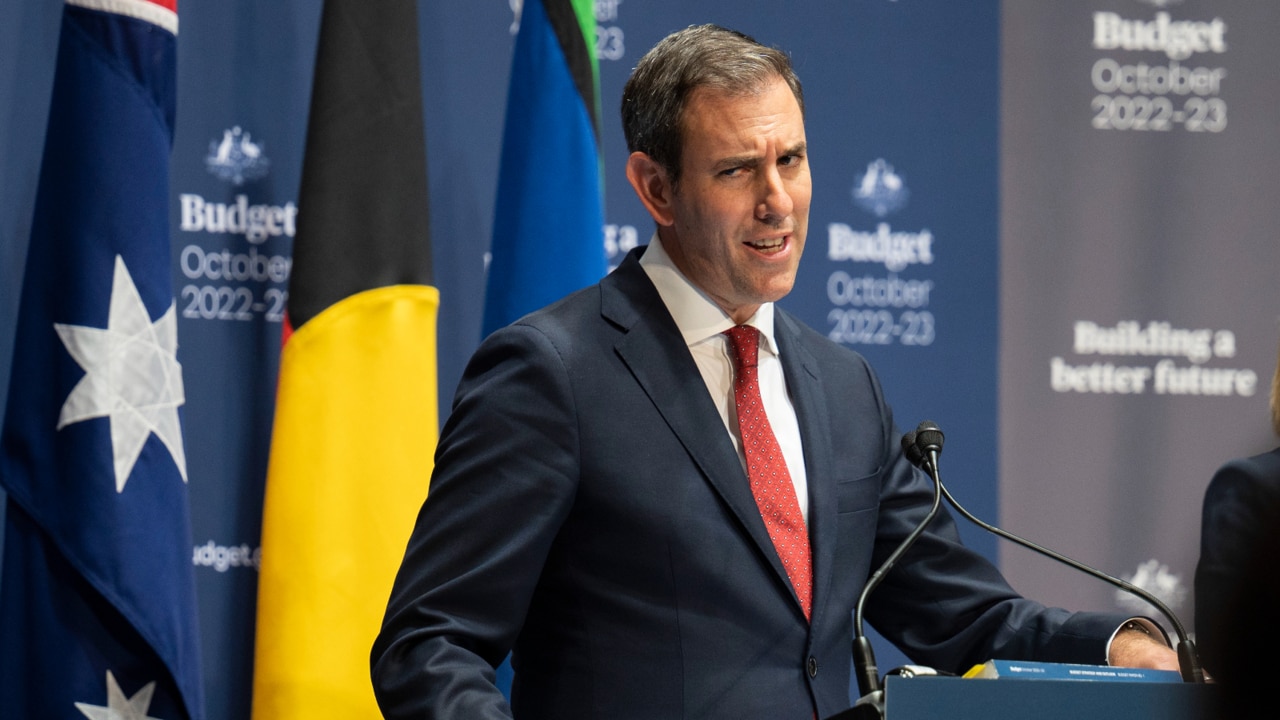
The Treasurer can now fairly be described as accident prone. A couple of times he has had to try to clean up incorrect or alarming answers to journalists by claiming, later, that he misheard the question. This week he left open, over four questions on live television, the option of imposing capital gains taxes on the family home. Within hours he had to match Albanese’s unambiguous and unavoidable position, ruling out any changes.
It was an unimaginably clumsy episode that might haunt Labor till the next election, especially given hard left advocates such as the Australia Institute have long advocated taxing the great Australian dream. Last month, Chalmers was caught out claiming the Reserve Bank “independently” decided to remove the monarch from our $5 note when FOI documents revealed the decision had been referred, explicitly, to the Treasurer.
After Labor lost government in 2013, Chalmers wrote Glory Daze lamenting how a “world-beating nation got so down on itself”. He seemed to be in denial about Labor being defeated. Chalmers saw the carbon tax, mining tax and prolific spending under his boss, Swan, as the markings of a “very successful government achieving in the economic sphere what almost no other developed country” had done. Rather than reflect on Labor’s profligacy, over-reaction and broken promises, he blamed “hyper-partisan attacks” and an “increasingly skewed media landscape”.
Clearly, Chalmers thinks voters got it wrong in 2013, and made a similar mistake in 2019. So rather than change its plans, in 2022 Labor just kept them secret. Like Rudd before him, Chalmers wrote a lengthy critique of capitalism and neoliberalism (in the same magazine) and prescribed a remodelling in his own green-left, net-zero and redistributionist image. Yet ungrateful voters seem unimpressed.
In his Keating thesis, Chalmers is fascinated by the former PM’s media dealings. “His (Keating’s) relationship with the media … can be seen as one characterised by reward and punishment; carrots and sticks,” wrote Chalmers.
He also focused on the role of the Canberra Press Gallery: “A leader’s relationship with this institution is a valuable determinant of political success.” This pushy Queenslander, too, has carefully cultivated the gallery since his time working for Swan; he even married a gallery journalist, which means his social and political circles overlap between media and politics, not an uncommon situation for ALP operatives.
About two years ago, I saw Chalmers complain about the media not giving Labor’s economic arguments a fair hearing, so I editorialised on my Sky News program that his whinge was hypocritical because he always rejected my interview requests. An hour or so later he called me, not to complain, but to concede I made a fair point. We had a cordial chat and I suggested he should follow through and join me on air sometime, issuing an open invitation. But curiously, I have never been able to interview him since. Perhaps he has played at being Keating all his life and now is overwhelmed by his responsibilities.
By imposing an ill-considered tax increase, and threatening to use people’s super to fund Labor’s policy priorities, Chalmers could do serious harm to the compulsory super system that Keating sees as one of his greatest legacies. It is not as though reform is not required, it is just that Chalmers seems to have spent more time writing for The Monthly than considering superannuation changes.
More Coverage
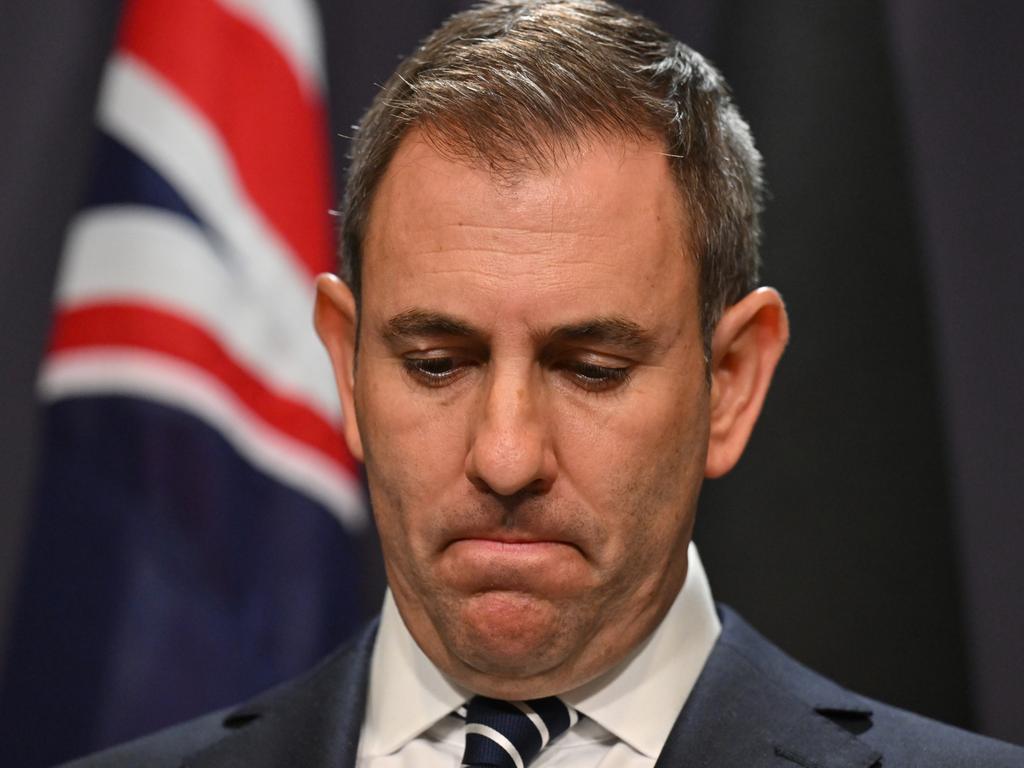



Who could forget Chris Bowen’s social media post before the 2019 election that stands now as the very picture of hubris. “We’re ready,” posted Bowen alongside a staged and stuffy photo of himself, Bill Shorten, Tanya Plibersek, Penny Wong and, seated at the front, Jim Chalmers.