
Anthony Albanese shows Labor open for business
Australia is going to change as a country. This is the real lesson of the two-day Jobs and Skills Summit.


Summits are about legitimising new policies with collective imagery. Albanese and his Treasurer should be satisfied with the outcome. The summit displayed Albanese with a refined sense of how to build his authority – he cultivated the great and the good in a talkfest delivering outcomes that give momentum to Labor’s cause.
This was a cleverly orchestrated event. Albanese is a more sophisticated practitioner of prime ministerial influence than many people anticipated. He seeks to seduce business, reward the trade unions, elevate women, champion a better skilled workforce, promote a more caring and inclusive society, cloak policy in the ethic of fairness and back a more decarbonised, more hi-tech economy. But as the summit proved, Albanese is a deal-maker with his senior ministers fixing the details.
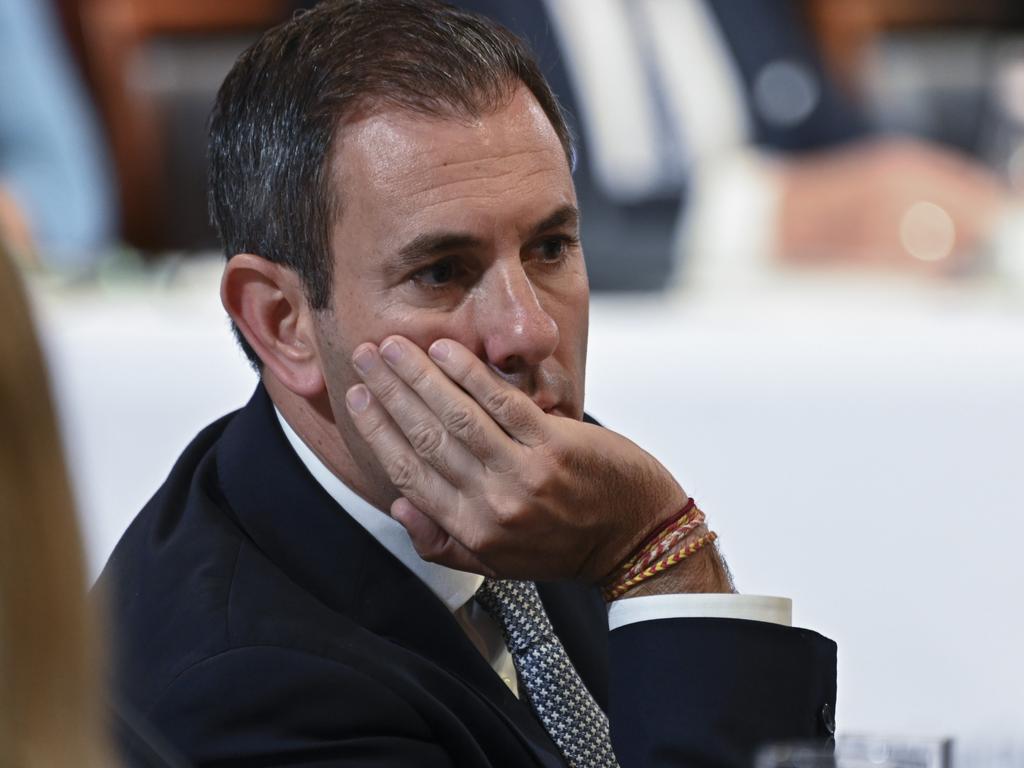
Chalmers hailed the summit as the beginning of a “new era”. Indeed, the entire purpose was to foster a new culture of Labor government far different from the rejected Morrison model. In its optics, the summit has been a political success for Labor.
The results are modest. Their ultimate significance depends on Labor’s ability to build on these policy foundations. The main announcements are an extra $1bn for free TAFE places, mobilising an extra $575m for housing by tapping into superannuation funds, lifting the migrant intake by 35,000 to 195,000 and principles for further changes to workplace bargaining laws.
Albanese has picked the mood of the country. Having waged a relentless pre-election campaign to destroy Scott Morrison’s standing, Albanese all but told the summit he became PM because the people were sick of “conflict fatigue”. Having sabotaged from opposition Morrison’s effort to reform enterprise bargaining, Labor has become the advance party for this essential change.
Delegates came in good faith. They accepted Albanese’s challenge in his opening comments: “We have not gathered here to dig deeper trenches on the same old battlefield.”
The summit has been a political success for Labor. It has a natural affinity with this brand of politics. The power realignments have been gripping.

Women were front and centre, symbolising a new order and a new tone. The Liberals should take heed. On display was a new, once unlikely, bond of co-operation between the Business Council of Australia chief executive Jennifer Westacott and ACTU secretary Sally McManus (the days of Bill Shorten’s “big end of town” diatribes are lost in time); there were differences among the business lobbies that allowed the ACTU to peel off the Council of Small Business Organisations Australia and prise open the door to multi-employer bargaining; and there will be a growing disenchantment between the Liberals and corporate Australia given the manner of BCA support for Albo’s summitry along with the Prime Minister’s seduction of corporate chiefs at the BCA annual dinner in Sydney the night before the summit.
The union movement should be well pleased with several markers it has laid down and its ability to exploit differences among the employer bodies.
But amid the success comes the reality. Whether economic reform can be delivered to lift living standards remains a highly dubious proposition. Australia’s pathway to lifting productivity is a long and complex road. For Albanese, there is no quick solution to inflation, cost-of-living pressures and busted productivity.
The pivotal politics came in industrial relations. The workplace agenda now looks far different from Labor’s election campaign. Workplace Relations Minister Tony Burke moved fast, announcing the government, in addition to its campaign policies, will legislate to make enterprise bargaining simpler, fairer and flexible. Burke then said there was “enough agreement” to begin consultations on changes to allow multi-employer bargaining, a potentially decisive shift.
That ignited a political trip-wire. Australian Industry Group chief executive Innes Willox warned there was “no detail” on the ACTU proposal or the government’s thinking. He said multi-party bargaining and industrial action had “the potential to shut down key parts of our economy” – a judgment Chalmers said the government did not accept. For Chalmers, this is an overriding test: will a proposal lead to stronger wages via agreement? Like the ACTU, he believes this will meet that test.
Australian Chamber of Commerce and Industry chief executive Andrew McKellar expressed concern about multi-party bargaining, the fear being it will degenerate into sector-wide bargaining and undermine the enterprise concept devised by Paul Keating and Bill Kelty. McKellar warned the ACTU was engaged in a “veiled push for a return to industry-wide bargaining” and expressed the alarm this could “unionise small business leading to increased industrial action”.

But the ACTU, confronting huge real wage losses, is driven by urgency. McManus said: “Multi-employer or sector bargaining makes sense for funded services, small business and other employers who have been effectively locked out of a system designed for large enterprises.” She played down fears over strike action. She sees bargaining across employers as essential in the care economy, with its high ratio of female workers and weak wage levels – and the government has come on board.
This debate goes to the pivotal question: what is the policy character of the Albanese government? Will it facilitate a modern economy or regress to failed policy nostalgia? The summit endorsed 36 concrete decisions plus longer-run proposals but, unsurprisingly, left serious doubts about how much Labor will follow the ACTU over industrial relations changes.
Summit agreement was reached on increasing women’s workforce participation, providing an income credit to allow senior Australians the option of working more, boosting childcare, increased investment in the two million strong care economy, putting more emphasis on permanent migration, delivering a more skilled workforce and repairing the apprenticeship system.
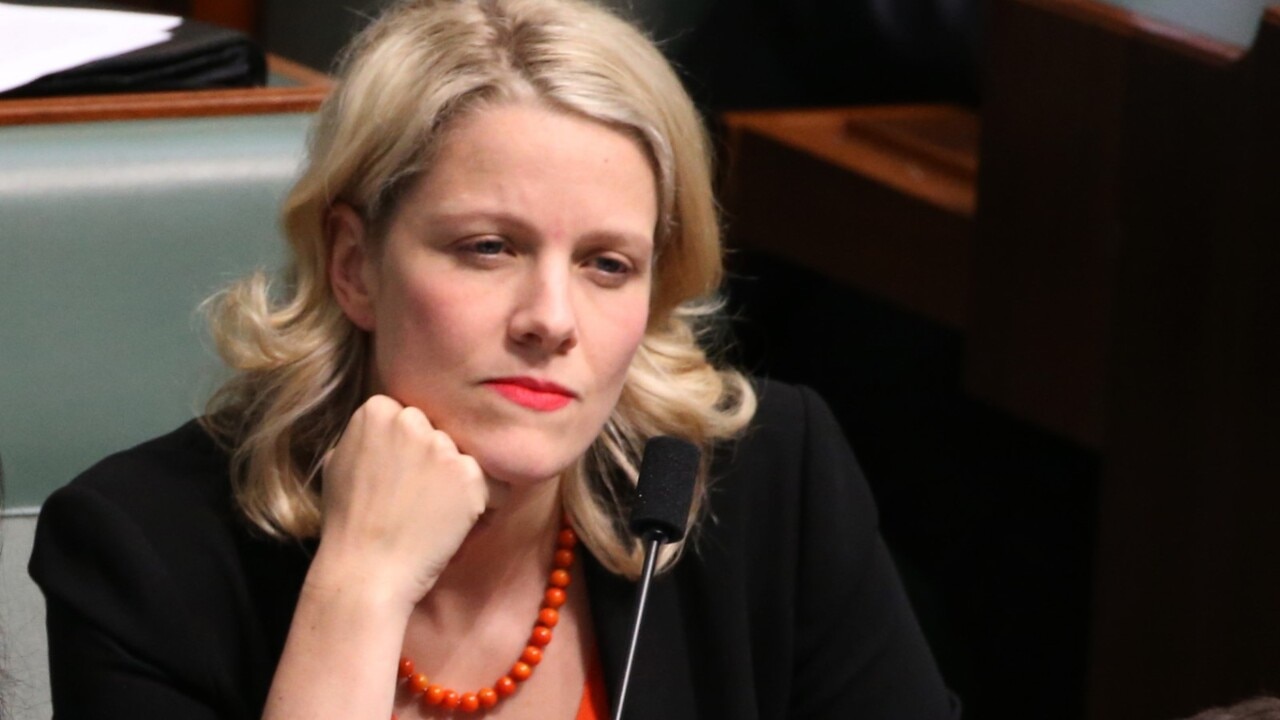
Home Affairs Minister Clare O’Neil said the higher migration intake meant thousands more nurses and engineers. State and territory-sponsored visas will lift from 11,000 to 31,000.
The summit opened with Grattan Institute chief executive Danielle Wood offering a diagnosis of the nation’s productivity malaise and putting the core question: when the current hot demand dissipates, can Australia move forward with low unemployment, or will it succumb to the secular stagnation and poor income gains of the previous decade?
Wood probed the reasons for Australia’s weak performance on living standards. She said poor productivity was a global issue, not just an Australian concern. Saying there was “broad agreement” on the causes, Wood nominated the expansion of the service sector with its lower productivity, a declining contribution from technological advances (contrary to so many predictions), smaller gains from education (a reality many people still do not grasp) and a reduction in economic and market dynamics tied to greater concentration and less competition.
In a message Labor will surely embrace Wood saw full employment as the lodestar for the future. “Maintaining a full employment economy will require a prioritisation of pro-growth investment,” she said. “It will require a substantial upgrade of the policy scaffolding from government, especially from the enablers – the climate policy, digital policy, industrial relations and human-capital boosting policies – to provide a positive ecosystem for this investment.”
This mirrored the message from Westacott at the start of the summit saying: “We want to see the big resets” – on migration, skill shortages, apprenticeships, the vocational system, women’s participation and a simpler IR system to promote enterprise bargaining. BCA president Tim Reed told the summit business wanted to see higher wages and higher productivity and “was here to try and find solutions”.
The BCA strategy was to engage and influence. In a remarkable move Albanese spent the opening minutes of his speech to the BCA dinner on Wednesday night discussing the proposed Indigenous voice to parliament, confident that corporate Australia shared his referendum commitment and would help to fund the Yes case. He then gave the business chiefs a ride in his jet to Canberra for the summit’s start early the next morning, a trip for which they paid. Albanese seeks to maximise his links to business while delivering for the unions. Bob Hawke revealed this can become a brilliant political strategy but it depends on a policy structure that actually delivers for both constituencies. That’s the hard part.
On Friday morning Albanese was remarkably frank about the summit’s dynamics. “There are differences within the business community,” he told the Nine Network’s Today show. He said it was a “good thing” that because of these differences, the ACTU had been able to reach separate agreements with COSBOA on multi-party bargaining and with the BCA on enterprising bargaining.
The Albanese-Chalmers game plan is apparent. The government doesn’t expect everybody to agree but it seeks to expand the common interest. That means seizing whatever agreements it identifies. Indeed, that’s what the summit was designed to generate.
This two-day meeting highlighted Labor’s determination to entrench its support among women, a decisive factor in its election victory. A central theme was how women were the most under-utilised sector of the economy. Industry and Science Minister Ed Husic told the summit: “Women are over 50 per cent of the population yet make up only 16 per cent of people who possess STEM qualifications.”
Wood offered the jolting observation that “if untapped women’s workforce participation was a massive iron ore deposit, we would have governments falling over themselves to give subsidies to get it out of the ground”.
There is one certainty: Labor will operate on the nexus between female participation and economic renewal. It will become a theme of this parliament.
A critical test of the summit’s success is whether it delivers the revival of enterprise bargaining. There was near universal agreement the current system was “broken”. Yet the inability to reform the IR system has plagued the country for a decade and is central to poor wage outcomes.
Action on enterprise bargaining was driven by the Westacott-McManus agreement of the core principles, notably a simplification of the bargaining system, reform of the test to ensure workers are not disadvantaged and the promotion of enterprise agreements to replace awards. If wages are to be revived, action on this front is imperative.
It is in the interests of employers and unions to fix it, yet this common interest has succumbed to sectional politics for years. Burke said the government would consult and legislate but the devil will lie in the detail.
Long-time adviser to the Hawke government, professor Ross Garnaut from the University of Melbourne, issued a stark challenge to the Albanese government – reform the tax system, including a mining tax to redistribute the benefits of the commodities surge and confront the budget realities. “In this successful Australia rising standards of living will rely less on regulated wages and more on fiscal transfers,” Garnaut said. He warned that Australia must “recognise the need for policies that we now think impossible”.
Garnaut’s position is in policy and intellectual defiance of the agenda on which Albanese and Chalmers were elected.
“We don’t have a policy for a mining tax,” Chalmers said. It is a repeat of his stance on the stage three tax cuts. The government has no policy to remove them. But the issue of deeper tax reform won’t disappear. The campaign to simply get rid of the stage three tax cuts is dumb and dangerous – the debate should pivot into a broad-based discussion about tax reform.
The summit is a modest start, nothing more. Its success will depend on what happens next. The incremental progress it represents is dwarfed by the magnitude of the problems Australia faces – rising inflation, negative real wages and weak productivity. But the political system has been in logjam for years, preventing necessary reform.
Albanese’s future will be determined by whether his “new culture of co-operation” can break this stalemate.
More Coverage


Australia is going to change as a country. This is the real lesson of the two-day Jobs and Skills Summit. It saw Anthony Albanese and Jim Chalmers chasing a new political culture as the Prime Minister declared he was pro-business and pro-worker – a useful optic for policies designed to boost wages and give trade unions extra leverage.