
Sally Dowling’s battles are no good for justice


Too many questions remain unanswered. The guiding principle for any state prosecutor’s office is to ensure the proper administration of justice. Yet, unless it is satisfactorily explained, the loser from this latest scandal involving NSW’s most powerful prosecutor is our trust in that critical bulwark of our democracy.
Importantly, there have been enough troubling questions raised about prosecution policy and procedure in other NSW cases, and about the relationships between the chief prosecutor and judges, to justify a forensic look at this particular case, too.
Last week, Dowling admitted during a NSW parliamentary inquiry that her office leaked information to Radio 2GB about District Court Judge Penelope Wass permitting a young Indigenous offender to perform an acknowledgment of country in the courtroom. Dowling denied she was in any way involved in the leak.
Radio presenter Ben Fordham called Wass a “shocker” and the judge was embroiled in an uproar so foreseeable that it raises this question: Is stoking controversy about a sitting judge part of the job description of staff within the ODPP?

The timing of the leak is critical and raises other questions. Fordham aired the leak from Dowling’s office the day after The Australian put questions to Dowling’s office about the details of a formal complaint Wass had made with the state legal watchdog accusing Dowling of trying to exert influence over the judiciary by speaking to the District Court’s chief judge about Wass.
Was there an element of revenge in this leak? Was the leak about Wass deliberately timed to counter news that the judge had made a complaint about Dowling?
It was perhaps silly of Wass to allow the performance of a cultural ceremony during a criminal proceeding. But it occurred in closed court in a matter concerning a child, and Wass says she sought and obtained consent from all parties.
Dowling says she had conversations with her media managers about the issue but did not instruct them to leak the information to the media. That means we are effectively being asked by Dowling’s evidence to the parliamentary committee to believe that, after conversations that involved Dowling, a junior media officer made the decision to take screen shots of the ODPP’s internal office intranet containing details of the Indigenous child performing an acknowledgment of country in Wass’s courtroom.
And that the other media manager in Dowling’s office made a decision on her own – with not so much as wink, wink from Dowling or anyone on her behalf – to leak material to 2GB that, after Fordham aired it on his hugely popular program, would necessarily lead to public censure of the judge.
We really do need to hear from both media officers.
The Australian understands they may be called to appear at the upper house committee in mid-December. According to Wass’s 68-page submission to the upper house, where she laid out her complaint about the leak, NSW police described the junior media officer who gave them a statement as “the brave young woman”. Why did police say she was “brave”?
Wass’s submission includes a file note from her lawyer, John Laxon, indicating that Nine Radio’s Tom Malone had approached Laxon in May this year because a “friend of his” – a media officer at the ODPP – might need legal advice.
“About six months ago, she leaked some information to the media on the instructions of Sally Dowling,” said the lawyer’s note, apparently recording what Malone had said.

We need to know if that is true. We deserve answers to other questions, too. The focus so far has been on the leak of possible restricted information in breach of section 15A of the Children (Criminal Proceedings) Act 1987, which prohibits the publication of the name of a child who is involved in a criminal matter. There was no “publication” of the child’s name here so section 15A does not appear to be the central issue.
We do need to know, however, whether Dowling’s media officers breached section 62 of the Privacy and Personal Information Protection Act 1998, which makes it a criminal offence for a public official to intentionally disclose or use any personal information about another person where it’s not done in the lawful exercise of their official functions.
It is also a criminal offence to induce a public officer to do this. Further, we need to know whether leaking details about what happened in a closed court concerning a child breached the ODPP’s own prosecution guidelines. The Prosecution Guidelines, issued under s13(1) of the Director of Public Prosecutions Act 1986, are taken very seriously by courts.
The first guiding principle is that the ODPP will provide information to the media to “support the administration of justice and the integrity of the criminal justice system”.
How did the leak of this brouhaha over an Indigenous child performing an acknowledgment of country serve the administration of justice in NSW?
Section 16.3 of the Prosecution Guidelines makes clear that the ODPP can provide information that is of “an uncontroversial nature” and already in the public domain. It mentions, by way of example, responding to media inquiries about run-of-the-mill stuff: providing information that confirms charges already referred to in open court or a plea entered in open court.
The same section says other media inquiries – ones that concern controversial matters about matters not in the public domain – require “the approval of the Director or a Deputy Director”.
Given the seriousness of what happened – an apparently deliberate leak to cause public ridicule of a judge – plenty of people are asking privately why these two staff members were only counselled. And whether they were spared more severe consequences because someone higher up in the ODPP – whether Dowling or someone else – was involved in orchestrating the leak to damage Wass. Dowling’s contention last week that the NSW upper house committee engaged in a “disgraceful” ambush of her, denying her procedural fairness, was a bit rich. Dowling is accountable to parliament. The upper house inquiry’s general terms of reference include inquiring into existing identity protections for children appearing in court and “any examples in the previous two years where proceedings conducted pursuant to Children (Criminal Proceedings) Act have been made public”.

Dowling has known about this scandal engulfing her office for many, many months. There was a police investigation. She says her office conducted a review into the behaviour of the media officers. They were counselled, she says. She was asked about matters that surely she should have expected, and she was given a chance to answer. What more does she want?
This scandal is an abysmal look for a chief prosecutor. Sadly, it’s one of many others. Dowling has been highly critical of judges who have claimed that, under her, sexual assault cases are coming to court where there is no real prospect of a conviction. The judges’ claims, some of them scathing, were in written judgments when awarding costs orders to reimburse defendants for the financial costs of the legal actions.
Very senior lawyers, who declined to be named out of concern for the consequences, told The Australian this week that more and more judges, when handing down costs awards, will do so without a written judgment to avoid getting into a fight with the chief prosecutor. That can’t be good for the proper administration of justice. Judges may want a quiet life, but the public needs to know when prosecutors are bringing cases that should never have seen the inside of a courtroom.
The next question is for the NSW government. How much longer will NSW Premier Chris Minns countenance a chief prosecutor – and her office – being at the centre of a war with sections of the NSW judiciary? And do let us know if the rumours are true. Does the Labor government really think it can solve the Dowling problem by promoting her to the NSW Supreme Court?
More Coverage



Behind the scenes of the surprise retail spending rush

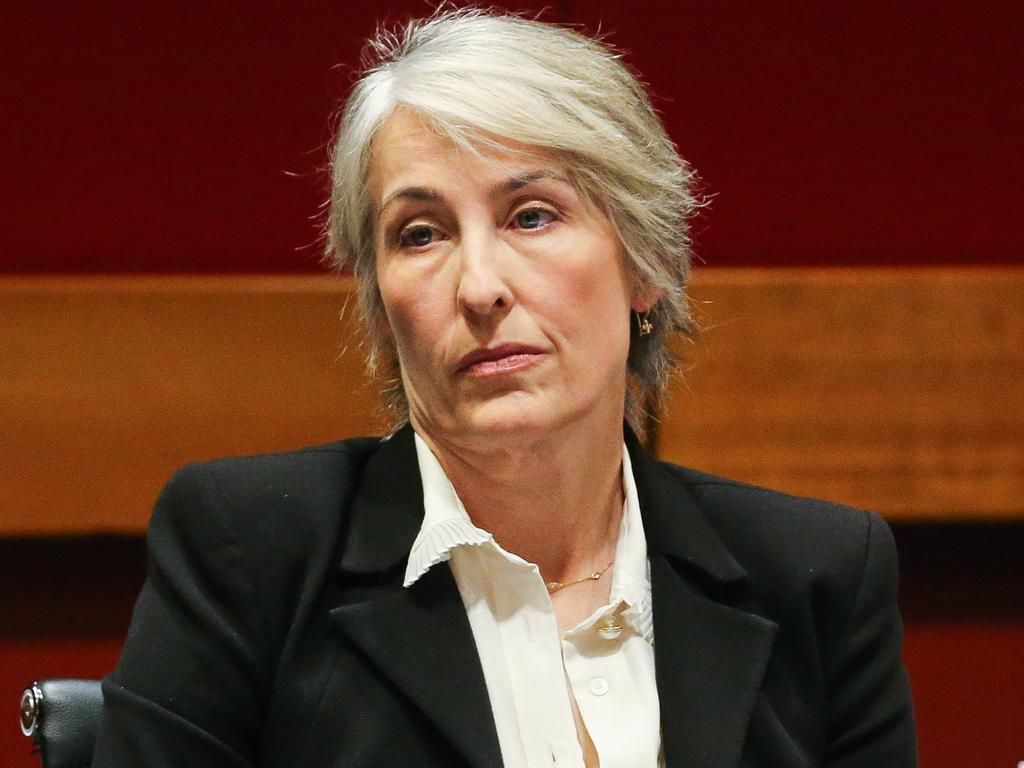
Citizens deserve to know the full details about the role Sally Dowling played, or did not play, when her staff in the NSW Office of the Director of Public Prosecutions leaked information to the media that was, to an objective observer, clearly done to embroil a sitting NSW judge in controversy.