
Inside Ukraine’s daring Operation Spiderweb attack on Russia
A Ukrainian couple living in Russia helped orchestrate one of the war’s most audacious operations, smuggling more than 100 drones in fake hunting cabins to devastate Moscow’s bomber fleet.

One of the most audacious covert operations in modern warfare almost fell apart when a Russian truck driver placed a panicked call to the Ukrainian who had hired him.
The roof of the prefabricated cabin on the back of his truck had slid off, the driver said, revealing an unexpected and illicit cargo. “This is some kind of bulls—,” the driver told the transport manager, Artem Tymofeyev. “There are drones under the roof.”
“What the f—?” replied Mr Tymofeyev, feigning ignorance.
In fact, the drones were part of a clandestine operation planned by the Security Service of Ukraine, or SBU, targeting Russia’s massive bomber fleet, which was terrorising Ukrainian cities. Mr Tymofeyev, a 37-year-old Ukrainian based in Russia, was the main on-the-ground co-ordinator.

Back in Kyiv, the operation’s planners were sweating, according to people involved in it. What if the trucker couldn’t get the roof back on? What if Russian security services were watching him? What if he told his wife, and she told friends?
They came up with a just-about-plausible explanation to relay back to the driver: The cabins were hunting lodges with drones used for tracking animals across large areas.
The driver soon texted Mr Tymofeyev with a photo of the roof placed back atop the cabin and a single word: “Closed.” Operation Spiderweb was back on.
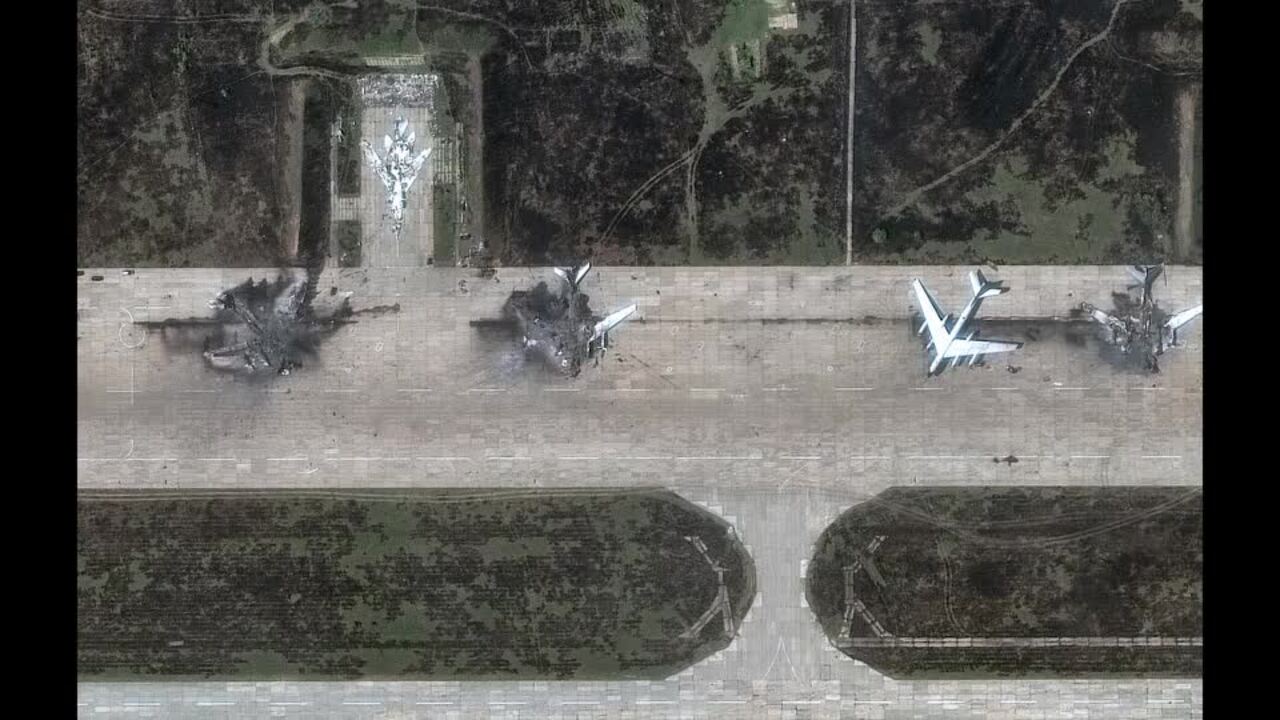
Five days later, on the morning of June 1, more than 100 drones emerged from cabins on the back of four trucks and swooped toward four Russian airfields. For the drone pilots hundreds of miles away in Kyiv, the defenceless warplanes were like fish in a barrel. An hour later, dozens of Russian warplanes had been destroyed or damaged.
The operation elevated the global standing of the SBU, long maligned as a corrupt successor of the Soviet KGB shot through with traitors. Lieutenant General Vasyl Maliuk, a gruff and muscular career security officer, took charge of the agency soon after Russia invaded in 2022. He went on to reinvent it, winning acclaim for innovative operations such as blowing up Russia’s Kerch Bridge to Crimea with a truck bomb and killing a Russian general with an exploding scooter.
Spiderweb was the SBU’s most ambitious operation yet, and this account is the first to detail its planning and execution. Pulling it off required 18 months of meticulous planning, daring subterfuge, hi-tech gadgets, cool nerves — and a dollop of luck.
‘It’s not enough’
It was fall 2023 when Ukrainian President Volodymyr Zelensky called Lieutenant General Maliuk into his office. Russia was targeting Ukrainian cities with missiles fired from warplanes beyond the range of Ukraine’s air-defence systems. Kyiv was strapped for interceptors to shoot down the missiles. So Mr Zelensky instructed Lieutenant General Maliuk to target the planes on the ground.
The SBU had started using long-range drones, but they had limited range, accuracy and explosive power, and were vulnerable to Russian air defences.

The operation would need to be launched from inside Russia. A hastily drawn-up plan envisaged smuggling a handful of drones into Russia through a network of agents and launching them from concealed locations near an airfield, such as long grass, according to the people involved in the operation. But the damage to Russia’s bomber fleet, one of the world’s largest, would be minimal.
“It’s not enough, damn it,” an SBU planner recalled thinking.
They would need to go bigger. That meant a more complex operation that would deliver more drones to several airfields. But they needed a Trojan Horse to bear them.
The SBU planner had an idea: Pre-fabricated cabins the size of shipping containers, transported on the back of trucks, could serve as launch pads for the drones.
A dash of electrical and design wizardry created custom locks for the roofs, which were constructed to slide open when triggered remotely. The houses were equipped with batteries and solar panels to maintain communications with Ukraine and keep the drones charged.
The drones themselves were a more straightforward challenge. The SBU needed a bespoke machine of the kind that Ukraine’s war industry, which is at the forefront of drone technology, was well placed to produce. The device that emerged was a quadcopter about the size of a large dinner plate, with four rotors that could carry four pounds of explosives that would detonate on impact. The explosive mixture was tailor-made to penetrate the aircrafts’ outer layers and cause the fuel in their tanks to ignite.
The drones were designed to fly autonomously toward the target airport, where a pilot in Kyiv would take over control using connection via local cell towers, guided by a feed from a camera on the drone.

To prepare for the operation, the SBU brought in some of their best drone pilots to train on the machines, flying all day long to develop muscle memory. They weren’t told what they’d be targeting, leading some of them to grumble about being pulled off the front line.
Only a handful of people knew the full details of the operation, preventing details from leaking.
“The cabin manufacturers didn’t know that they would go near the airports, and the drone makers didn’t know that they would fly at these specific planes,” Lieutenant General Maliuk said in emailed comments.
Next, the drones and cabins needed to be moved covertly into Russia. That’s where another of the SBU’s functions came in handy. In its efforts to combat contraband, the agency had learned how smugglers moved goods across the border, taking advantage of corruption in the ranks of Russian customs authorities. This time, though, the SBU was the smuggler. The drones were broken down into parts to be assembled later. The cabins had documents that falsely identified their provenance.
Once the equipment was in Russia, the SBU needed someone who could be trusted to reassemble it meticulously and co-ordinate its dispatch toward airfields in far-flung corners of Russia. A map of the routes with arrows arching across the country gave the operation its arachnid moniker.
They couldn’t use a dupe or someone of questionable reliability for an operation of this magnitude. So they turned to a former DJ and his tattoo-artist wife.
The couple
There was little to suggest what Artem Tymofeyev and his wife, Kateryna Tymofeyeva, were really up to in a nondescript warehouse in the industrial Russian city of Chelyabinsk this spring.
Artem, who sported a bushy goatee and used to spin discs in Kyiv clubs, had moved to Chelyabinsk in 2018 on an invitation to go into business with his father, who ran a flour mill there. Kateryna, whose social-media pages are lined with pouty photographs, worked as a tattoo artist.
The Tymofeyevs had taken part in street protests in Kyiv in 2014 that ousted a pro-Russian president. But Moscow’s subsequent annexation of Crimea and covert invasion of eastern Ukraine tanked its neighbour’s economy, and the couple joined a Ukrainian diaspora in Russia numbering millions. These Ukrainians are largely indistinguishable from the natives due to their cultural similarities, including fluent Russian.

For the SBU, the Tymofeyevs ticked all the boxes. But the agency had to be sure, so it brought them to Lviv in western Ukraine for a lie-detector test. Convinced of their loyalty, the SBU placed them at the heart of the operation. The couple lived and breathed their mission, quickly learning how to assemble the drones and the cabins.
When they returned to Russia, they were questioned at the border by officers from the Federal Security Service, the FSB. The couple had Russian passports, but their place of birth was listed as Ukraine, drawing suspicion. After three hours, they were allowed through.
Back in Chelyabinsk, Artem set up a logistics company and rented a large warehouse and office in an industrial part of the city not far from the FSB’s local field office.
Mr Tymofeyev set about buying trucks and hiring drivers. He placed an ad on a Russian website and interviewed more than 20 candidates. The drivers needed to be reliable but not inquisitive, passing not only Mr Tymofeyev’s screening but also, secretly, the SBU’s, which included checks for any links to Russian law-enforcement agencies.
Kateryna kept inking while she helped out on the operation. As the equipment began to arrive, the couple spent hours in the warehouse assembling 150 drones and eight cabins under guidance by phone and video calls from Ukraine.
The drones took about a week, but the cabins were more awkward to put together. The roof of one kept coming off its delicate hinges. They remounted it under instructions from their SBU handlers.
By late April, everything was ready. The SBU wanted to strike its blow around Russian Victory Day on May 9, a day celebrated with fervent military pomp. But the operation ran into an unexpected issue: Excessive liquor consumption laid low several drivers over an extended holiday period for Orthodox Easter, Labour Day and Victory Day.
Finally, from May 23 to 26, five trucks set out from Chelyabinsk in different directions carrying eight houses on journeys that would last several days. The drivers were oblivious to their real cargo.
‘Everything is flying’
The Tymofeyevs were asleep at home in Chelyabinsk when the driver called in shock at discovering drones. The roof of the cabin on his truck had slid off 130km into the 3200km drive, revealing the drones inside.
It was a heart-stopping moment for the couple. One wrong word and their cover could be blown and the FSB racing to their door. After calming the driver, Mr Tymofeyev called the SBU planner, who consulted with Lieutenant General Maliuk. The SBU chief came up with the hunting lodge story. One factor worked in the Ukrainians’ favour: The driver couldn’t see the explosives, which were concealed within the bodies of the drones.
The driver bought the story. He fixed the roof with the help of a local tractor driver.

It was the one point the SBU worried most that the FSB might get wind of the operation. The SBU planner said he over-estimated his foe, but also that he saw an element of divine guidance that helped them through tough moments, as he and Lieutenant General Maliuk would regularly pray together.
The SBU had to overcome other headaches along the route, such as finding a replacement truck after one of them suffered a mechanical issue.
The Ukrainian team gathered at the operational headquarters in Kyiv at dawn on June 1. The trucks were set to arrive at inconspicuous locations near the airfields, such as gas stations, to release their cargo.
Lieutenant General Maliuk stood in front of the pilots and finally revealed the targets of their mission: Russia’s bomber fleet. He displayed maps and schematics of the planes with their weak spots marked, so the pilots knew where to strike.
The pilots, accustomed to the high pressure of frontline combat, reacted with sangfroid.
In 2015, I met a scrappy Ukrainian volunteer unit learning to drop bombs from drones.
— Saint Javelin (@saintjavelin) June 2, 2025
What they’ve built since then defies belief. Pure, relentless ingenuity born from desperation and courage.
I never imagined I was witnessing the beginning of a revolution in warfare. pic.twitter.com/xQo9KVsXzu
“There was no anxiety,” recalled one pilot. “We had a specific goal and we knew we would achieve it.”
A problem soon arose: The link between Kyiv and two cabins — on the truck that had been replaced — was spotty.
SBU members in Kyiv tried to guide the driver to tweak the wiring inside one of the cabins, but it didn’t seem to be working. Then he stopped answering their calls. Images of the burnt-out cabins later appeared online, indicating that something had triggered a fire that caused the cabins and their cargo to explode, killing the driver.
Meanwhile, the other four trucks had arrived and were ready for action.
“Let’s get to work. Operators, to your battle stations,” instructed Lieutenant General Maliuk as he prowled the room, according to video footage.
The pilots took their seats. Thousands of miles away, the roofs of the cabins slid open, and 117 drones launched toward the airfields. The pilots flew using monitors, and groups soon gathered around to watch the action.
“Once the first strikes took place, there was nothing complicated about where to fly,” said another pilot. “You just flew up in the air, saw the black smoke and understood where to fly.”
Cheers broke out as plane after plane was hit.

“It was so emotional,” the pilot said. “When you hear someone cheering, you understand that everything is working, everything is flying.”
In Russia, onlookers including military personnel and the truck drivers themselves watched in astonishment as the parade of drones took to the skies.
By the time the assaults were finished an hour later, 41 Russian planes had been struck and damaged, at least a dozen of them irreparably, according to Ukraine’s tally. Some analysts have suggested that count might over-estimate the damage, based on satellite imagery. The SBU has stuck by its numbers, saying Russia sought to trick analysts by moving undamaged aircraft to replace damaged ones.
The following day, Russian authorities named Mr Tymofeyev as a suspect. He and his wife were already gone.
Five days earlier, at around 7am, the couple had crossed the border into Kazakhstan in a hired Toyota Hiace van, under the pretence of taking a vacation. They brought their most valuable belongings, including a Scottish Straight cat and a Shih tzu dog.
Wall Street Journal


To join the conversation, please log in. Don't have an account? Register
Join the conversation, you are commenting as Logout