
NSW’s $1bn Waratah Super Battery faces a year-long delay after major fault
NSW’s largest grid battery faces a year-long delay after two transformers were damaged during testing, threatening power supply and raising the potential for higher prices come winter 2026.


The major fault that has cruelled New South Wales’ largest battery could lead to higher wholesale electricity prices while essential repairs are carried out to restore its connection to the grid, where it was to play a critical role discharging reliable power.
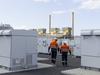
Akaysha Energy, the BlackRock-backed developer behind the $1bn Waratah Super Battery, said two large transformers were damaged during final testing, forcing the company to push back the project’s completion date from late 2025 to 2026.
Transformers are critical pieces of electrical infrastructure found at power stations, substations and large storage projects. They convert electricity between different voltage levels – stepping up voltage so it can travel efficiently across transmission lines, and stepping it down so it can be safely delivered to homes, businesses or batteries.
Without them, large-scale facilities such as Waratah cannot connect or discharge energy into the grid.
Akaysha said the fault occurred as the project entered the final stage of commissioning, when the battery’s control systems were being synchronised with the state’s transmission network. It said the battery was still producing power.
“Akaysha Energy recently notified the energy market of a temporary loss of capacity at the battery due to a transformer outage. The Waratah Super Battery is still operating at 350MW capacity and actively bolstering energy security for NSW’s grid,” it said.
The delay comes at a delicate time for the state’s electricity system. The 850 megawatt Waratah battery – large enough to power about 150,000 homes for an hour – is designed to act as a “shock absorber”.

Industry analysts said the outage increased the potential for higher prices in 2026, particularly during winter when demand peaked and coal generators were prone to unplanned breakdowns.
“Like all years, weather and the availability of coal will be the biggest drivers of wholesale prices,” one energy executive who declined to be named said. “But the Waratah Battery could have been there to lessen the impact of cold days. We will now be more dependent on coal availability.”
NSW’s grid is already stretched, and as Akaysha moves to try and ascertain the extent of the damage, industry expert Josh Stabler from EnergyEdge said replacement transformers were in hot demand and the wait could be lengthy.
“Transformers can be a difficult asset to quickly replace in the energy market. The Waratah Battery is located within the 330kV network so getting a like-for-like replacement might be difficult as it is not a common network voltage across the planet,” he said.
“The Waratah transformers were delivered in May 2024 more than 18 months ago.”
The delay underscores the growing pains facing Australia’s transition to renewable energy. Large-scale batteries, considered vital to smoothing the intermittency of solar and wind-powered generation, rely on complex electronics systems and high-voltage equipment but industry figures said they had never seen two transformers suffer crippling issues simultaneously.
The transition away from coal-fired generation is so uneven that NSW last year struck a deal to extend the lifespan of the Eraring power station, which the Waratah Super Battery was due to partially replace when Eraring was originally scheduled to close this year.
Eraring will now stay open until at least 2027, although the federal government insists the economy is on course to hit its 2030 target of having renewables generate 82 per cent of the country’s electricity.
In a bid to reach the target, federal Labor has promised to use taxpayer funds to underwrite the development of wind, solar and batteries, while it has also introduced generous subsidies to encourage households to install batteries.
But the development of large-scale renewable energy assets is constrained by transmission delays and social licences issues, and many households are not connecting to so-called “virtual power plants” which would maximise the benefits to the wider grid.
The Waratah Super Battery is 100km north of Sydney located on the site of the former Munmorah Power Station. It required extensive work to NSW’s transmission infrastructure to succeed, including upgrades to 22 substations and four existing transmission lines. That work was done by network operator Transgrid.
More Coverage


To join the conversation, please log in. Don't have an account? Register
Join the conversation, you are commenting as Logout