
2026 Porsche Cayenne electric revealed
Ever done something and then wished you hadn’t and the feeling just won’t go away? That’s how this global car giant could be left feeling after its latest questionable move.

Ever done or said something you wished you hadn’t?
The sharp pang of shame is instant, and the regret can last a lifetime.
Who cares if what you said or did was actually right if the punishment dished up is all the same – and that’s exactly how Porsche must feel with the Macan Electric and now all-new Cayenne it has just unwrapped.
MORE: Driving Porsche’s electric Macan

It made perfect sense to switch both to battery power when work began five or six years ago, but today the reward for rolling out two advanced zero-emission SUVs is being punished by slow sales.
Work has already begun behind the scenes to remedy the error which involves rolling out a reskinned Audi Q5 with hybrid power, while the current combustion and hybrid-powered current-gen Cayenne will now be refreshed and live on beyond 2030 alongside the all-new fourth-gen EV that was supposed to replace it.
MORE: Going to racing school with Porsche

It’s a crying shame buyer apathy might tarnish the new Cayenne EV.
Because when they touch down in Australia around July next year, both the base Cayenne Electric and flagship Cayenne Turbo will spearhead Porsche’s latest EV tech that should raise the bar for performance, handling and charging speeds in its luxury performance SUV segment.
In Australia, the base Cayenne Electric sports a dual-motor powertrain that pushes out a so-so 325kW and a thumping 825Nm of torque for a 4.8 second 0-100km/h dash.
So far, so mild – not something you can say for the wild Cayenne Turbo that produces a peak output of 850kW which is accompanied by a frankly outrageous 1500Nm peak torque that delivers performance that verges on the ridiculous.
MORE: The issue with ‘perfect’ Aussie car

How does as 2.5 second 0-100km/h sprint sound?
Or a more unnerving 7.4 second 0-200km/h acceleration. Unnerving if you own the latest hybrid 911 Turbo S because to the more crucial double-tonne the big heavy Cayenne Turbo is a second quicker than its supercar sibling and offers levels of thrust that will trouble some hypercars up to very illegal speeds.
The jaw-dropping performance is accompanied by ultra-fast charging speeds of up to 400kW, with a 0-80 per cent top-up claimed to take just 16 minutes.
MORE: Reborn legend falls flat

Even with Australia’s lower-powered 400-volt chargers, speeds are still impressively high at 200kW but perhaps the biggest advancement is the arrival of new 11kW wireless charging, that is claimed to be 90 per cent efficient compared to the hassle of plugging in.
Combined with the ability of travelling 642km on a charge for the Cayenne Electric and a low-drag body, the new Porsche is set to deliver efficiency of a smaller EV, not least since the Turbo can claw back 600kW of energy under regen – something that is responsible for 98 per cent of all braking.
MORE: EV sales force Porsche discount

For the other two per cent, the Cayenne gets the option of mighty carbon-ceramic brakes capable of withstanding extreme track use – a place, remarkably, the big heavy EV won’t feel too out of place.
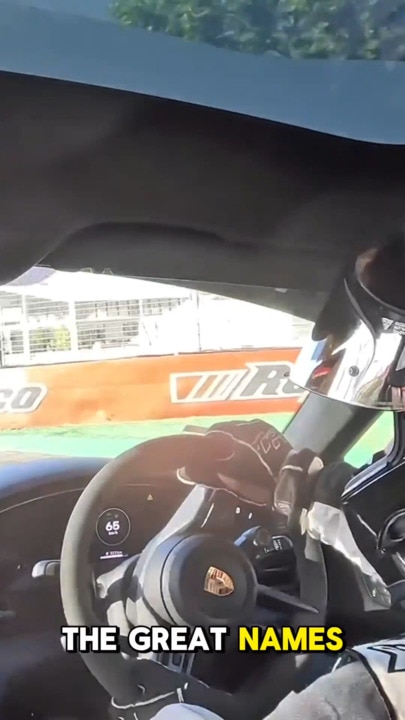
Porsche has engineered the Cayenne to be offered with the option of roll-cancelling active suspension, rear-wheel steering and advanced torque vectoring.
Expect the inbound Cayenne Coupe EV with even more power carrying a Turbo GT badge to set a new Nurburgring lap record.

When you’re not in the mood, the luxurious Cayenne cabin blends yet more state-of-the-art hardware that feels tailored for both the tech-obsessed and perhaps more mature existing audience. We love that designers have included physical buttons for the climate control and volume control for the sound system.
It’s a shame the Cayenne isn’t as handsome as the current model and that the range-enhancing active aero on the Turbo includes a pair of ugly side blades that extend lazily from the rear bumper, but the space and comfort likely to be delivered by the new standard air suspension are a little at odds with the explosive performance on tap in the most glorious way possible.
When it lands Down Under the base Cayenne Electric will be priced from $167,800 (plus on-roads) but it is the Cayenne Turbo ($259,900) that feels like it might be worth the price of admission for those who want to humble silly hypercars on their daily commute.
Porsche might have wished it hadn’t but from our first encounter we think owners will be awfully glad it did.


Originally published as 2026 Porsche Cayenne electric revealed

China’s cash troubles puts bullseye on Aus
