
‘Distraction’: Anti-corruption Commissioner Paul Brereton defends Defence ties
Australia’s corruption tsar has defended his ties with the ADF despite almost 90 complaints of conflict of interest.
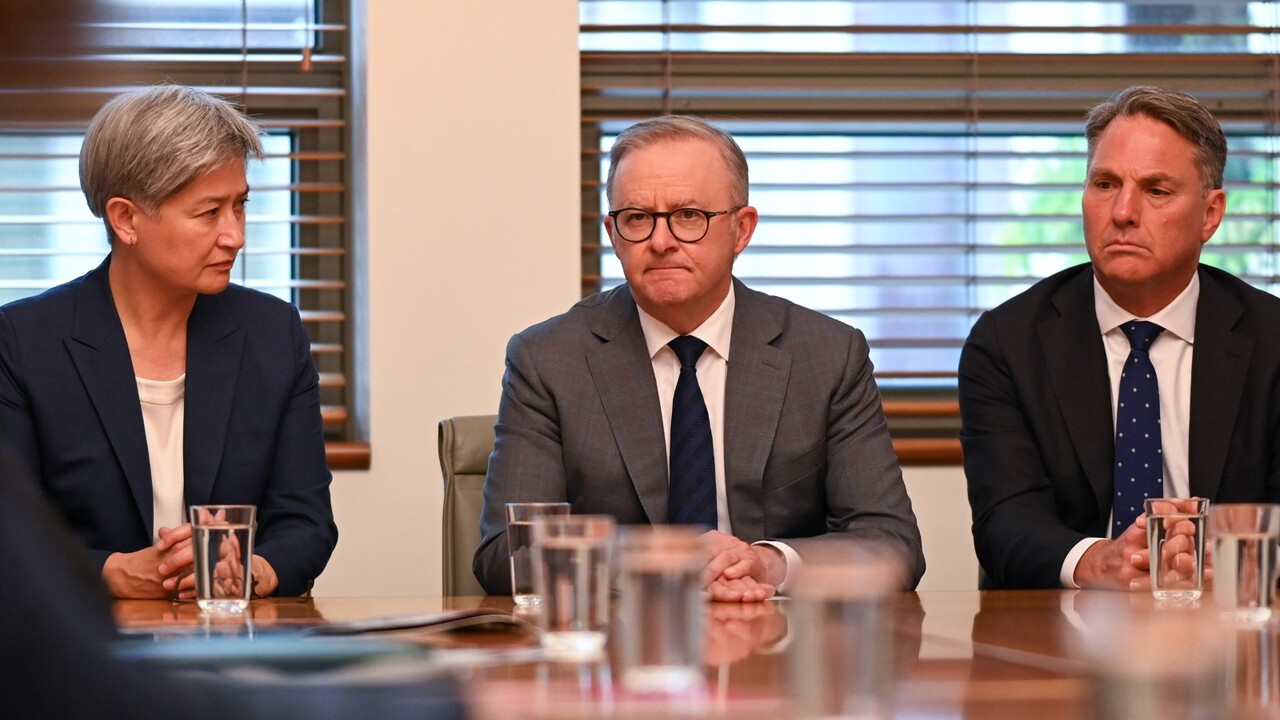
Anti-corruption Commissioner Paul Brereton has defended his ongoing ties to defence despite an inquiry being told almost 90 complaints of conflict of interest have been lodged in just under six months.
Mr Brereton is being investigated by the National Anti-Corruption Commission over complaints about his ties with defence and, specifically, the Inspector-General of the Australian Defence Force (IGADF).
Addressing a Senate inquiry, Mr Brereton said regardless of whether he maintained any ongoing association with defence, “there would necessarily be occasions where potential conflicts would arise”.
“Until my recent announcement that, to avoid the distraction this has become, I would not participate in any defence referrals, I’ve managed potential conflicts in relation to defence referrals,” Mr Brereton said.
Mr Brereton, an ADF reservist, said he had informed the then-Attorney General of his past ties prior to his appointment and had made annual decelerations of referrals involving personnel he may know.

Mr Brereton conducted the IGADF Afghanistan Inquiry into alleged conduct of the Special Forces Task Group and Special Operations Task Group in Afghanistan between 2005 and 2016.
Mr Brereton said his involvement with the IGADF was about 24 hours over 29 months.
“I have, on about 22 occasions over the last 29 months, on a voluntary and completely unremunerated basis, responded to requests from the IGADF for advice and information relevant to the implementation of the Afghanistan Inquiry Report,” he said.
“Most of it (was) outside ordinary business hours, and the approximately eight hours that were in ordinary business hours is offset many, many times over by the time outside ordinary business hours that I spent on my work as Commissioner, which has been my overwhelming focus since the first of June 2023 when I commenced as Commissioner designate.”
Earlier this month, Mr Brereton said he would recuse himself from all defence-related matters.
Mr Brereton said it was a “very difficult and emotional decision”.
“I would have thought that the Afghanistan inquiry demonstrated pretty clearly that I was able to be independent, robust, even fierce, in pursuing misconduct in defence, but because of the risk of that public perception, I have made what for me has been a very difficult and emotional decision to step away.”
Asked of the complaints, Mr Brereton said “it’s a good question to ask to whose benefit” is it made.
A number of complaints also related to Mr Brereton’s procurement of counsel assisting.

He claimed “one particular fringe website” which published information concerning the issue “had a line on there ‘send your complaint to the inspector’”.
“It only takes a minute, and the more complaints you send in, the harder it is for the inspector to ignore them,” he said.
“So, I do think it is very easy to put too much weight on the number of complaints that have been made.
“It is one of the measurements, though, that the committee, I suppose, has to look at how the NACC is being considered, and I presume the inspector also has to take complaints seriously.”
Mr Brereton noted nine complaints were made by a former employee.
NACC inspector Gail Furness SC told the inquiry on Thursday she had received close to 90 complaints since July 1 allegeding conflicts of interest, compared to just 38 complainants about other matters.
The complaints concerned Mr Brereton’s defence ties, his ongoing role with the Inspector-General of the Australian Defence Force (IGADF), and procurement of counsel assisting, Ms Furness said.
“There has been a significantly greater number of complaints, and which is hardly surprising given the various matters that have been raised in the media and elsewhere,” Ms Furness told the inquiry.
“I have asked the Commission to provide me with information covering those three topics I mentioned, and I received the bulk of it last Friday evening, and I received the rest of it yesterday.
“There’s a significant volume, some 400 odd documents, but obviously running to a couple of 1000 at least pages, so I propose to review those documents, and I have engaged … counsel to assist me.”

Ms Furness said the timeline of the probe would be “months, not weeks” and that she expected there would be further material.
“The commentary I receive ranges to personal insults to systemic and policy matters, but generally speaking, the approach of those to me is that their sense of trust and faith, if you like, in the corruption agency dealing appropriately with Defence matters is diminished by what they see and read about Defence connections,” she said.
She continued: “It’s fair to say that it’s the source of material in the media that has resulted in people complaining to me”.
Labor MP Kate Thwaites said she found the complaints “concerning because it suggests there is a public perception that the NACA is not being independent”.
It was previously reported Mr Brereton had continued working for the IGADF while leading the NACC.
Mr Brereton previously conducted the IGADF Afghanistan Inquiry into alleged conduct of the Special Forces Task Group and Special Operations Task Group in Afghanistan between 2005 and 2016, namely Ben Roberts-Smith.
In regard to the IGADF, Ms Furness it was about “how that conflict is managed that is of particular interest to me”.
“For me, in relation to the IGDAF, there was one disclosure, apparently to the then-Attorney-General,” she said.
“The question is other disclosures, and that’s part of the management process.”
Mr Brereton has recused himself from any Defence-related matters.
Ms Furness said the recusal “should have a positive effect”.
“To me, there needs to be public confidence in the decision making of the Commission in respect of all matters, including Defence,” she said.
“If that can be achieved by recusing himself from all defence matters, then that’s a desired outcome.”


