
David Attenborough, 99, says protecting oceans his life goal: This is the role Victoria will play in helping achieve that
An ocean offensive to stop trawlers from China and other nations plundering the seas will be launched from Victoria, with a ship being specially prepared in one of the state’s ports now.
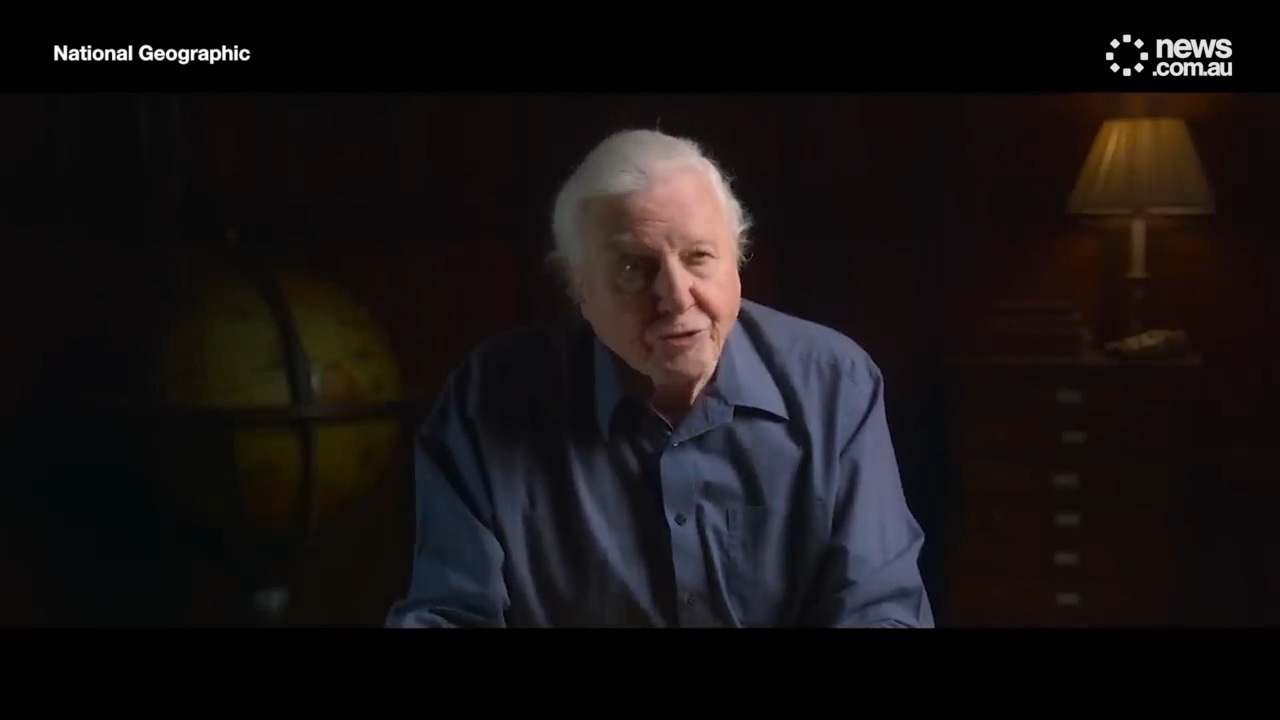
A huge ocean offensive to stop industrial trawlers from China and other nations plundering sea beds for krill in Antarctica will be launched from Victoria early next year.
It comes after legendary conservationist Sir David Attenborough’s new film Ocean — featuring confronting footage that shocked even the filmmakers — revealed earlier this year the devastating impact of mass trawling expeditions on the world’s seabeds.
The Captain Paul Watson Foundation together with Sea Shepherd France announced on Wednesday they were preparing to defend Antarctica’s fragile ecosystem, currently under threat from industrial krill fishing.
Key to the Operation: Krill Wars mission was the ship Bandero, which was currently being refitted in Gippsland’s Port Anthony, a spokesperson for the Captain Paul Watson Foundation said.
The refit was expected to be complete by December and the Bandero set to leave Port Anthony in the beginning of January
The exact date could not be given because “this mission is confidential to a degree”, they said.
“This mission has seen crew from all over the world fly into Victoria to join their local team, coming together to prepare for one of the most challenging conservation campaigns in the Southern Ocean,” they said.

Another ship, the John Paul DeJoria, was also being prepared “to sail into harm’s way” to protect sea life in the Southern Ocean.
“Readying a ship for the Antarctic is no small feat,” the spokesperson said.
“From safety gear to technical tools, our crew has a long list of essential needs before departure.”
The Captain Paul Watson Foundation and Sea Shepherd is hoping to slow and ideally stop industrial strip mining of Antarctic krill, which are small, shrimp-like crustaceans that feed the whales, seals, penguins and seabirds of the Southern Ocean.
“They are the foundation of life in one of the planet’s most vital ecosystems and they are being wiped out before our eyes,” the Captain Paul Watson Foundation said in a statement.
“Industrial trawlers are strip-mining the Southern Ocean, taking krill by the hundreds of thousands of tonnes each season to produce feed for farmed salmon and supplements for human consumption.
“Last season, fleets reached their full quota, 620,000 tonnes, in record time, the fastest harvest in history. Now Norway wants to double that quota to 1.2 million tonnes.”


The krill fishery was dominated by Norway’s AKER Biomarine but China, South Korea, Chile and Ukraine had rapidly expanded their fleets, creating a race to take as much as possible, as fast as possible, before the ocean could recover, it said.
“If the oceans die, we die,” Captain Watson said.
“Krill are the blood of the sea. Without them, the whales, penguins, fish and birds will starve and the ocean will fall silent.”
A High Seas Treaty was set to come into effect in 2026, placing the world at a turning point, Captain Watson said.
But while the Treaty offered hope, without enforcement, it would be meaningless, he said.
Sir Attenborough’s lauded new film Ocean shows industrial bottom-trawling, with a chain or metal boom being dragged across the seabed, turning it into an underwater desert, in a bid to mine krill.
Almost everything else caught in the net is discarded.


In what the 99-year-old British natural historian, broadcaster and documentary filmmaker said was one of the most important films of his long and distinguished career, the brutal footage captured in Ocean sent shockwaves across the world.
“After living for nearly 100 years on this planet, I now understand that the most important place on Earth is not on land, but at sea,” Sir Attenborough said.
Toby Nowlan, who produced Ocean, said the film was not a typical Attenborough documentary.
“This is not about seeing brand new natural history behaviours. It is the greatest message he’s ever told,” he said
The Captain Paul Watson Foundation said mobilising vessels for action in Antarctica presented a huge and urgent logistical task.
“We must resist expansion of this unnecessary and highly destructive fishery and momentum is growing toward truly valuing and conserving life on and in our oceans,” Bandero captain Mal Holland said.
“Australia has always been a truly supportive country of our conservation efforts and Victoria is the perfect base with growing local support for our crews efforts.
“Recently our crew did a clean up in Victoria to thank the local community for their ongoing donations of food and ship supplies.”
More Coverage


How my eyebrow hairs uncovered I had a serious blood condition
