
The ‘game changing’ tactic helping police win underworld war
Police have warned Sydney’s underworld that they have cracked the code in tracking down criminals involved in the city’s gangland war by using a method that has had success in the USA.

After a spate of drive-by shootings across Sydney, police have warned they have cracked the code in tracking down criminals involved in the city’s gangland war.
The rapid investigation deployment model – or RID – was brought in from the United States in 2022 and has meant NSW Police are now narrowing in on their underworld targets within hours or days, as opposed to months or years.
The RID model means that within the first few hours of a major crime, such as a gangland shooting, swarms of specialist investigators are deployed to gather crucial evidence such as CCTV and phone data.
NSW Police Detective Chief Superintendent Jason Weinstein told The Daily Telegraph the RID model had been rolled out recently for the Westfield Bondi Junction stabbing rampage and Wakeley church terror attack, resulting in them making quick progress in investigations.
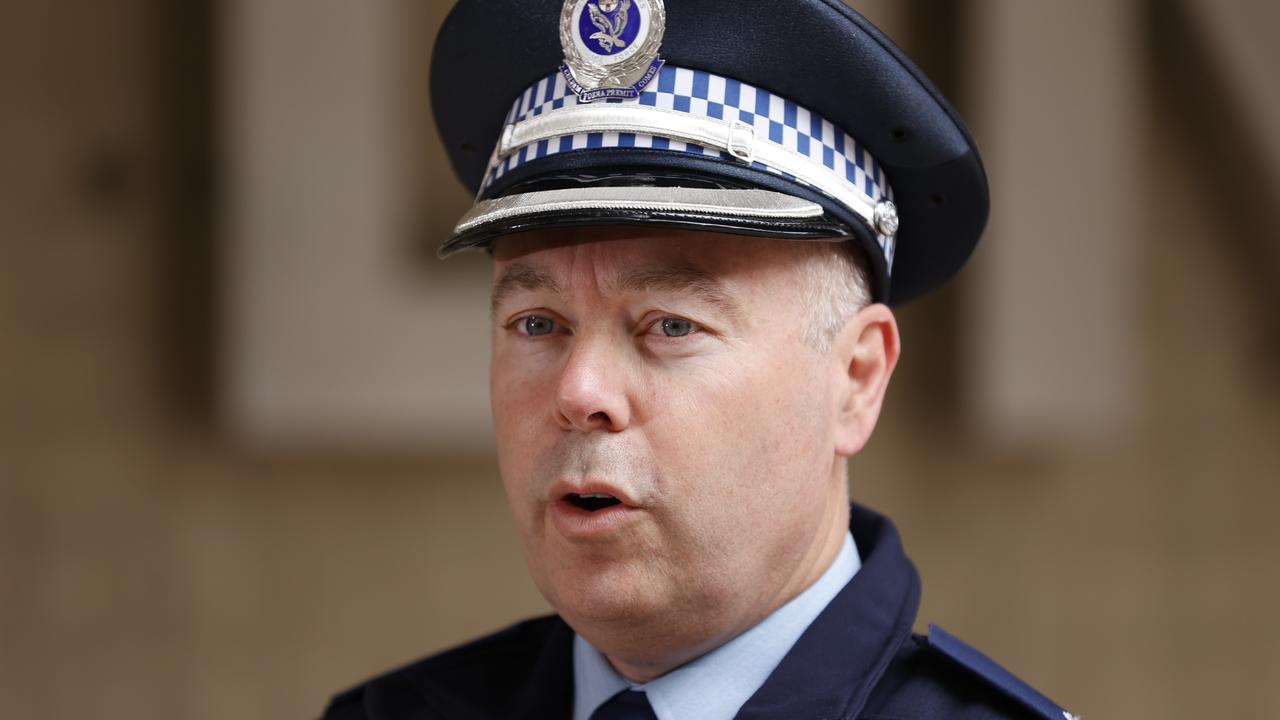
But he said by far the greatest proof of its success was in Taskforce Magnus, set up to investigate a run of fatal organised crime shootings in 2023 and which had resulted in arrests for all five of the incidents they set out to investigate.
“Now in the first 48 hours of a major job, we saturate the scene with investigators and technically trained people with specialist capabilities,” Det Chief Supt Weinstein said.

“Historically what we used to do was, if you had a murder, we would send out a team from the Homicide Squad, three or four from another squad, and then six or so people from the local region.
“And that would be who you would have on the ground. No matter how big, or small, the job was.

“So what happened was those jobs would take us two or three years, to get to a point of piecing it all together, and along the way we would find bits of evidence that if we had known back at an earlier time, it probably would have led us to fast-tracking the investigation.
“For us it’s the game changer.
“If you look at where we were probably 18 months ago and how bogged down we were in multiple organised crime homicide strike forces and the amount of people we had involved in those investigations, versus where we are today, it’s the game changer.”
Det Chief Supt Weinstein said that in years gone by, a much smaller team involved in the investigation would have been unable to quickly examine a crime scene and also collect CCTV and other evidence.
But that has changed with the RID model.

For example, within a few days of the alleged murder of drug kingpin Alen Moradian at Bondi Junction in mid-2023, police had narrowed in on all six getaway cars allegedly used by the gunmen and their associates before and after the shooting.
“If you look at something like (the murder of Alen) Moradian and (the) Strike Force Parachuter (investigation that followed) for example, we definitely deployed the RID model on that and we had 30 investigators that were deployed solely to tracking those six cars (allegedly used by his killers),” Det Chief Supt Weinstein said.
“So within a week, they had tracked all those cars to the final vehicle that collected the (alleged) shooters.
“Most of all of our recent organised crime matters have all been successful to a point where we’re now locking people up within four to six months of a major, complex crime, versus two to three years.”
Do you have a story for The Daily Telegraph? Message 0481 056 618 or email tips@dailytelegraph.com.au

