Why wholesale energy prices fall faster than household bills
Electricity generation costs are finally coming down, but households won't automatically see savings on their bills. Simple steps like calling your retailer can help reduce costs.

If your last power bill made you wince, there's a flicker of good news: electricity generation costs are starting to come down.
Data from AEMO shows wholesale electricity prices in the September quarter – the price generators charge retailers – was 27 per cent lower than the same quarter last year and 30 per cent lower than in the previous quarter.
That's largely due to higher renewable energy output and less volatility in the market.
But that doesn't mean your next bill will tumble straight away.
Why your bill might not budge yet
Wholesale costs are only one piece of the puzzle.
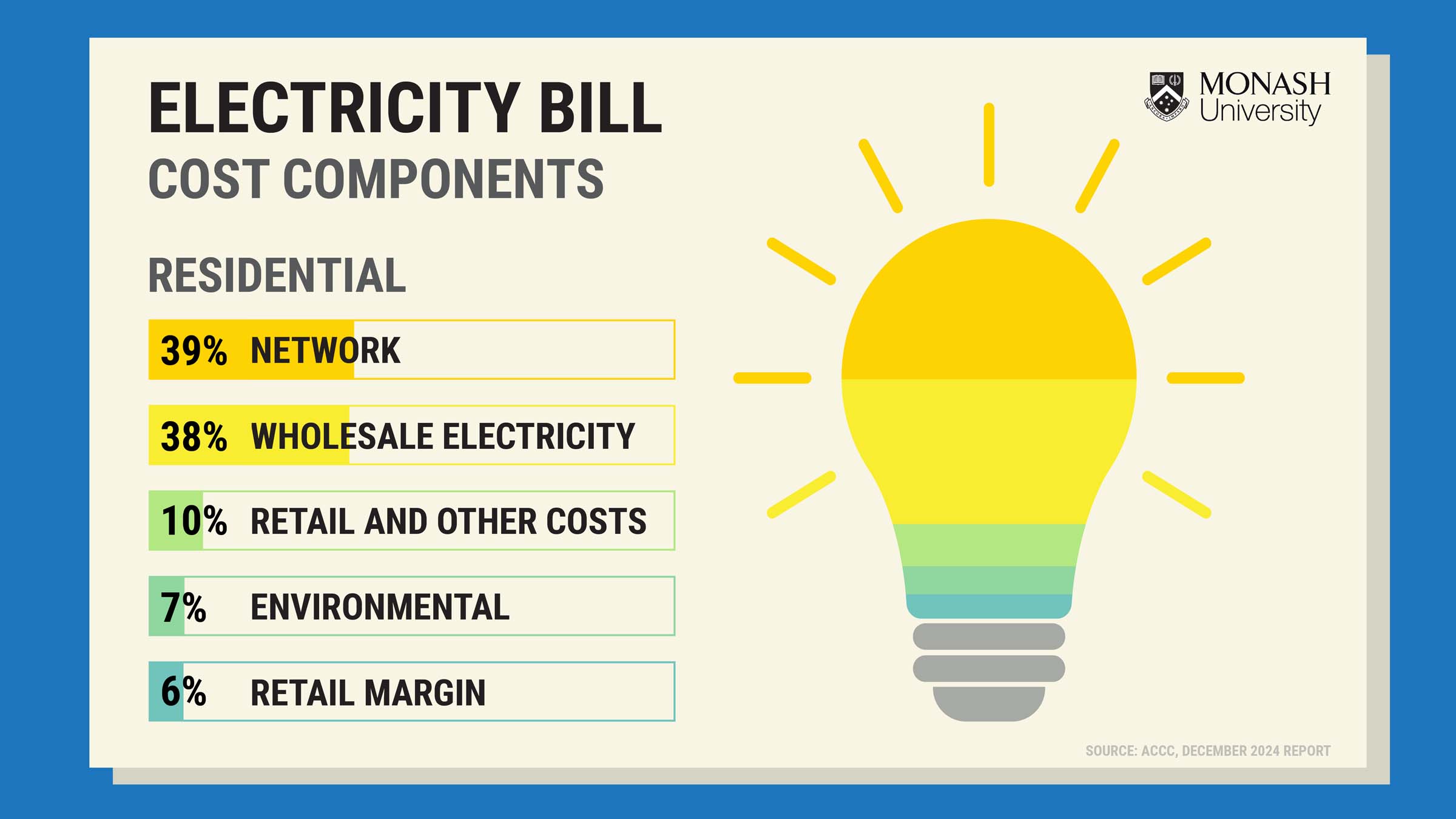
They make up around 38 per cent of an average electricity bill, with the rest mostly going towards poles and wires (network costs) and retailer operating expenses and margins.
That means it can take months for lower generation costs to flow through to households.
Even then, the savings aren't automatic.
In Queensland, the average household currently pays around $508 per quarter.
So to get the best bang for your buck you need to make sure you're on a competitive plan.
Many Australians are still on outdated plans or default market offers, which are rarely the cheapest option.
The ACCC has found that customers on plans over two years old are paying $317 a year more on average than those on newer deals.
With that in mind, a simple first step is to check the government's Energy Made Easy website or call your retailer to see if you're on their best offer – it's quick and could deliver instant savings.
Without solar you could be missing out
The median annual bill for a typical household in 2023-24 was $1565.
Homes with solar paid about 18 per cent less ($1279), and those with a battery too paid around 40 per cent less ($936).
Gas complicates the picture
Bringing electricity prices down isn't straightforward.
The energy market is dynamic, with wholesale prices changing constantly and retailers building that into our bills
When wind and solar have high generation, wholesale prices drop very low.
But at night or during calm, cloudy weather, the grid leans more on coal and gas which are typically more expensive.
As long as fossil fuels fill these gaps, prices will rise and fall with energy demand.
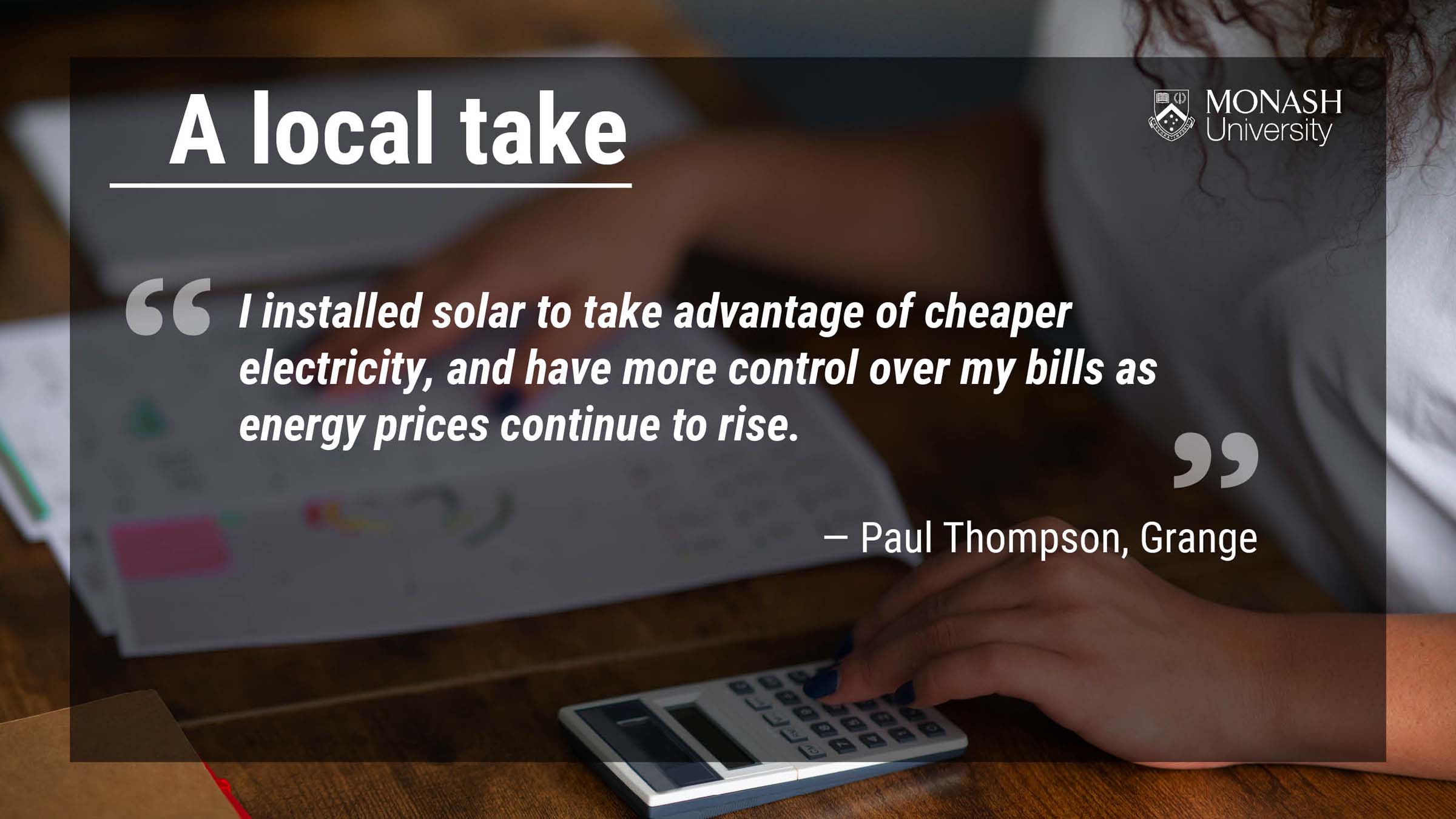
One local residents puts it this way:
This summer will be a key test.
Over the past year, Australia has seen a big boost in renewables, including the installation of
around 100,000 new household batteries since July 1.
However, during periods of extreme heat, low wind and widespread air conditioner use, the grid may still need additional gas-fired power which can push prices up again.
How to save on your electricity bill now
If you have rooftop solar but don't yet have a battery, the Cheaper Home Batteries Program provides around a 30 per cent discount on small-scale battery installations.
Batteries help you store solar power and use it when grid prices are high, cutting the amount of electricity you buy and protecting you from evening price spikes.
If you already have a solar and battery system, consider joining a virtual power plant or a two-way energy deal.
These programs reward households for sharing stored energy or adjusting power use when electricity is cheapest.
There are simple steps you can take now:
1. Check your plan to see if it's competitive by using the government's Energy Made Easy website (*or Victorian Energy Compare if you have a home in Victoria)
2. Call your retailer to see if you're on their best deal
3. Run appliances outside the evening peak
Electricity is getting cheaper to make, but those savings won't automatically appear on your bill.
So taking a few practical steps can help keep more money in your pocket and make the most of the renewables boom.
Want more information on how your climate is changing? Check out the last article in this series.
Amelia Pearson is the Operations Manager at the Monash Climate Change Communication Research Hub.
This column is part of a collaboration between Monash University and News Corp to deliver hyperlocal weather and climate information.