Dreamworld inquest: 18 months on and still no crisis training
MORE than 18 months after the disaster that claimed four lives, Dreamworld still has no emergency training.
- ‘You just had to keep on going
’
- Ride operator ‘told not to speak to police’
- Dreamworld staffer desperately tried to save victims
- Only ‘catastrophe’ training was how to use fire hose
MORE than 18 months after the disaster that claimed four lives, Dreamworld still has no emergency training.
The stunning revelation came on another extraordinary day of evidence at the inquest into the deaths of Kate Goodchild, Luke Dorsett, Roozi Araghi and Cindy Low on the Thunder River Rapids ride in October, 2016.
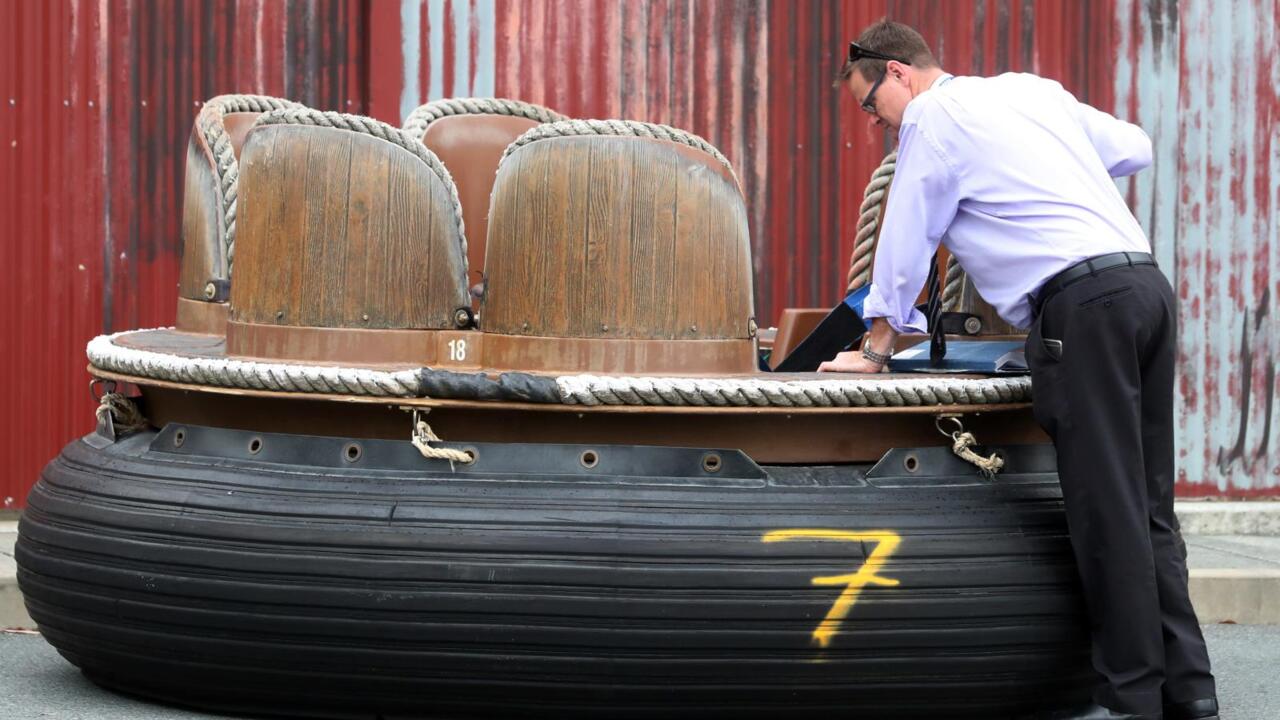
It was also revealed that modifications were made to the ride months earlier so any rafts stuck at the bottom of the conveyor belt for more than 10 seconds would trigger an automatic shut down.

After emotional testimony from Courtney Williams, the young ride attendant stationed just metres from the tragedy, Coroner James McDougall also heard from two senior ride operators who said they had never been trained in CPR, first-aid or any emergency drills — even in the time since the disaster.
Asked by barrister Matthew Hickey, acting for the family of Mrs Low, if Dreamworld had introduced any emergency drills or simulations since the tragedy, Tim Williams, 27, told the inquest that had not happened.
“There has been talk and plans of doing it, but not yet as far as I’m aware,” he said.
Chloe Brix, who has worked as a ride operator at Dreamworld since 2011, also said she had never received any training for handling emergency situations.
Staff were sent a memo in February 2016, informing them of modifications to the ride, including that “in the event of a raft becoming stuck at the bottom of the conveyor belt for more than 10 seconds the conveyor belt would automatically stop”. However, the modification did not extend to the top of the conveyor belt, where two rafts collided on October 25 that year with catastrophic results.

Ms Brix said that the Thunder River Rapids ride was one of the most complex to operate at Dreamworld because of the large number of tasks involved, and she was “quite overwhelmed” when she first started working on the ride.
She said that on busy days, ride operators had to “make do” with limited staff and “not get overwhelmed”.
“You get used to it, you just make do,” she said.
“There wasn’t always another staff member to come over and help out.”
Ms Brix said she would request back-up, but getting help “just depends if someone was available or not”.
The inquest also heard that the Thunder River Rapids ride first-aid kit was not fully stocked on the day of the tragedy.
Mr Williams (inset) told Queensland Workplace Health and Safety investigators this was “very common” across the park and operators had stopped reporting it to supervisors because the issue did not prevent rides from opening.
He also said there was no alarm for when the pumps failed on the Thunder River Rapids ride and staff relied on an amp meter, as well as visuals of a “scum line”, to indicate water levels.
He said there was nothing in the ride operating manual about the unload station’s emergency stop button, which the inquest heard could have stopped the conveyor belt in two seconds.
The inquest continues.
SHATTERED COURTNEY’S RETURN TO COURT
THE ride operator who watched four people die on the Thunder River Rapids says that she “would have done everything she could” to save their lives if she had known about the emergency stop button.
Courtney Williams yesterday took to the witness stand at the inquest into the deaths of Kate Goodchild, Luke Dorsett, Roozi Araghi and Cindy Low for the second straight day as the emotional toll came to the surface.
In contrast to her confident testimony the previous day, the 23-year-old, who never worked at Dreamworld again after the tragedy, appeared visibly distressed and was spared having to watch harrowing footage of the disaster after Coroner James McDougall refused a request from lawyers to play parts of the video.
Ms Williams’ barrister Peter Callaghan opened the day by telling the court his client’s emotional condition was “not good” and she was “highly distressed by having to revisit” the horrific events of October 25, 2016.
He said Ms Williams was mortified to learn her evidence the previous day may have upset families of the victims when she said she would not have pressed the emergency stop button even if she had known its function, because she “wasn’t trained for it”.
Yesterday, she said “I would have done everything I could have to do that” (press the button).