
How SA has changed in the past 10 years in sport, politics, dining and arts
South Australia’s landscape has changed dramatically over the past 10 years — and perhaps no more so than in the sporting, political, dining and arts fields. Here, we take a look back over the past decade.
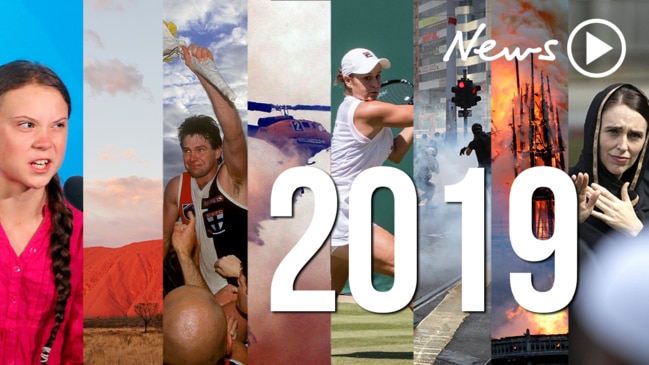
From a tumultuous decade in Australian politics and the rise of women in sport, to a renewed local dining scene and the appearance of world-acclaimed shows, South Australia has changed a lot in the past 10 years.
Here, we look back at how politics, sport, dining and the arts have been shaped in the state over the 2010s.

POLITICS: DECADE OF TURMOIL
If the 24-hour news cycle is a long time in politics, a decade is eternity.
The willingness of the two major parties to discard Prime Ministers in such bitter succession earned us a degree of international scorn – and it is tempting to wonder if the smiling Deputy Prime Minister Julia Gillard who graced would have persisted if she knew what lay ahead.
Nationally, the political landscape has swung to and fro, from Labor to Liberal.
The amount of blood left on the floor has been impressive; we started with Kevin Rudd who was elected in 2007 and held office amid the swirling rumours of meltdowns and micromanagement until the middle of 2010 when he was booted out by his own party in a coup that installed Gillard as Australia’s first female Prime Minister.
She held on for three years until Rudd re-emerged for a brief, desperate stint before being struck down by a surge of national hope that elected Tony Abbott.
He lasted less time than a Labor PM, holding on for two turbulent years – remember “Sir” Prince Philip? – before the more moderate Malcolm Turnbull came in through yet another coup.
The party erupted into chaos again last year which propelled Scott Morrison into facing an imminent election hoping – and succeeding – to be returned as the sixth Australian leader in a decade.
As for prominent South Australians federally, Christopher Pyne held a number of prominent positions after ascending to the Cabinet in 2013, before he retired at this year’s election.

Leaving the dramas aside, the political scene has changed so decisively that other once prominent faces have disappeared.
Nick Xenophon has vanished into the suburbs after a badly misjudged bid to elect candidates to the state Lower House and possibly elevate him to the premiership.
Xenophon’s wildly successful political career, which created its own national party, grew from his exposure as a suburban lawyer to the personal cost of poker machine gambling addiction, and his rise was emblematic of the growing power of Independents.
As political trust has unravelled, so the electorate has walked away from the two-party political divide.
While significant third parties have been with us for a long time, never have the crossbenches, which include SA’s Sarah Hanson-Young, been so heavily populated and so influential — even if South Australian Senator Cory Bernardi’s Australian Conservatives never really took off.
On the state front, Liberal leader Isobel Redmond came and went, former Premier Mike Rann can probably thank his lucky stars the she-said, he-said Michelle Chantelois parliamentary waitress scandal – denied emphatically by Rann – didn’t happen in the less forgiving MeToo era.

He was able to hand over Premiership to Education Minister, Jay Weatherill, whose two SA Weekend covers had charted his quiet ambition.
One former Premier, John Bannon, died in 2015 after a long illness and was mourned at a state funeral attended by a who’s who of politicians, including the former Prime Minister Bob Hawke who called Bannon a decent man of enormous capacity who accepted responsibility for overseeing the disastrous State Bank’s $3.1 billion debt.
Former household names like the Liberals leader Martin Hamilton-Smith and former Labor ministers Kevin Foley and Pat Conlon are nowhere to be seen while Redmond’s replacement, Steven Marshall, hung in there after an unexpected first-time defeat to finally claim his prize.
– Penelope Debelle

SPORT: GIRL POWER DRIVES REVOLUTION
There’s a decent argument to be made that the biggest change in the Australian sporting landscape over the last decade has been the rise and rise of women’s sport.
There has been the advent of the AFL Women’s competition, the birth of the women’s Big Bash in cricket, the increased visibility of the Matildas and soccer’s W League, as well as the growing prominence of sports such as cycling, basketball, tennis and netball.
All that has taken interest in women’s sport to an all-time high — and, many will say, not before time.
New heroes have emerged.
The Matildas’ Sam Kerr is regarded as one of the best players in the world.
In cricket there are household names such as Ellyse Perry and Alyssa Healy. And in AFLW there is Adelaide’s Erin Phillips.
Phillips, of course, was a well-known figure in South Australian sporting circles, before the Crows’ AFLW team played its first game in 2017.
She was a star basketballer who had played in two Olympic Games and carved out a successful career in the United States and Australia.
But her first love was footy.
Her father is Port Adelaide legend Greg Phillips and she had grown up playing and watching footy, hanging in as long as she could until the message was delivered: “Girls don’t play footy”.
Ten years ago The Advertiser interviewed a 23-year-old Phillips.

In a cafe at the Crows’ West Lakes headquarters, Phillips looks at the decade-old picture and laughs at some of her answers.
Especially the one that asked about her “greatest extravagance”. The answer then was Prada sunglasses.
“I definitely don’t buy Prada sunglasses anymore,” she says.
“I don’t really buy anything for myself anymore. Even just (wife) Tracy and I getting a date night, that is probably the most extravagance at the moment.”
But she says when the interview was done 10 years ago, the possibility of playing football was not a blip on the horizon.
Even three years ago, until she received a phone call from Crows’ chief executive Andrew Fagan, she was assuming she would play basketball until she retired from professional sport and was trying to figure out what the next stage of her life would look like.
“It was literally a phone call, two phone calls, and the track just veered,” she says.
“It’s pretty special because it just shows you how unpredictable the future can be and you just never know what opportunities are around the corner. It’s just crazy.
“I was living my football dream at that point through my brother-in-law (Hawthorn champion) Shaun (Burgoyne) and that was my way of staying involved in the game was through him.”
In her first year as a Crow, Phillips pulled off the remarkable treble of winning the AFLW’s best and fairest award, becoming a premiership player and winning the medal for being the best player in the Grand Final.
Now she is hoping the example she, and other women, have set, leads to more girls becoming involved with sport.
“It is so important for girls to be involved in sport, because sport teaches you, not just how to be a great kicker or how to shoot well, it teaches you about life lessons, it teaches how to work in office spaces, of how you work with groups.”
The success of the Crows’ AFLW team stood in contrast to their male counterparts.
It’s now 15 years since Port won its sole flag and 21 seasons for the Crows.
The most significant change for either team in that time was the decision to abandon the ageing facility at West Lakes and in 2014 move into refurbished Adelaide Oval, bringing footy back to the city for the first time in 40 years.
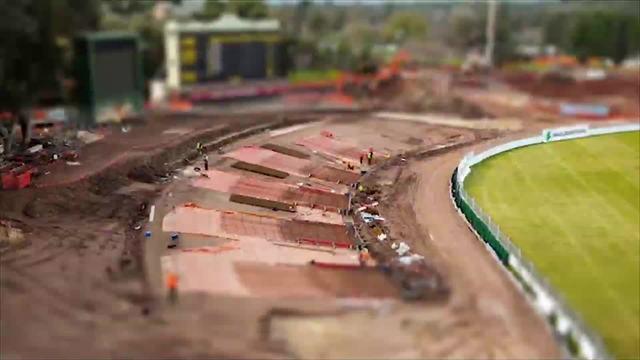
The battle to re-establish football in the CBD was fraught.
The Crows were wary, there was opposition from many quarters about the State Government spending half a billion dollars to modernise the Oval, but once all the whingeing was done, it was acclaimed as a triumph and as probably the most significant infrastructure development in recent SA history.
The Oval was often full, and not just for football, but for Big Bash games by the Adelaide Strikers and for day-night Test matches.
In 2016, Adelaide United claimed its first A-League Grand Final win in front of more than 50,000 fans there.
In short order, Adelaide Oval became the hub of sport in the state, sparking a new way for South Australians to look at their capital city.
– Michael McGuire

DINING: THE CITY THAT WAS HUNGRY FOR CHANGE
Let’s take a stroll down memory lane …
Or, to be more precise, down Peel St, Adelaide.
It’s only seven years ago, and the little walkway between Currie and Hindley that will become known for its rollicking mix of bars and eateries, still looks unloved and devoid of life.
There’s a map shop, a comic store and not much else.
No lights and laughter — just graffiti, cobwebs and abandoned buildings.
“I think that year it was voted the scariest laneway in Australia,” laughs Josh Baker, who took a leap of faith in the potential of the neglected thoroughfare when he opened Clever Little Tailor with partners Crispian Fielke and Dana White in 2013.
“There was no access to Leigh St, which was the golden child of the West End. It had the dirty laneway feel of something in Melbourne. It was perfect for a small bar.”
CLT was the first tenant in a strip of vacant spaces on the western side of the thoroughfare bought by George Ginos and family.
“As soon as George signed the deal, he came over with a purple key,” Baker recalls.
“He took me over to what was this shitty little building and we did a handshake deal then and there.”
Carpets and false ceilings were torn out, layers of paint stripped to reveal the bluestone of the original walls.
The finished bar, with its gorgeous cabinet work and mezzanine booths, was packed from day one. Peel St, the restaurant, followed soon after to similar acclaim.
And the rush was on.
Peel St, of course, is only a small slice of the transformation of the city centre in particular, and the state more broadly, in the past 10 years.
But its seemingly overnight shift from ghost town to hotspot is symbolic of how profound the change has been for those with an interest in how they eat and drink.
So what sparked this evolution?

The answer, perhaps, is a happy coincidence of timing, where government, a few key provocateurs and, critically, the public were all pushing the same way.
Some industry types say the redevelopment of Adelaide Oval, and the shift of footy from West Lakes, was one trigger.
Alongside this came the push from the State Government and Adelaide City Council to reduce big bureaucratic and financial hurdles for smaller venues.
“They got rid of the red tape for young operators and people who couldn’t touch anything to do with food and beverage unless you were going to be a restaurant, nightclub and hotel,” Baker says.
“With that we noticed how many good operators Adelaide breeds. It has given everyone an opportunity.”
It was the promise of crowds from the oval that lured Simon Kardachi to expand from the suburbs to Waymouth St, where he opened Press Food & Wine, in 2011.
“It was a hunch at the time about the benefits the oval would bring to business in the city,” Kardachi says.
“That and the (licence) change for small venues has resulted in hundreds of outlets than can serve liquor in the city, and half of those would also offer food. For the consumer, Adelaide is a way, way better place than it was 10 years ago. But it is as hard as ever to do business here. The population hasn’t grown, there is no more money, but there is a lot more competition.”

The split-level Press was something of a trailblazer, for Adelaide at least, showing that high-quality food could be served without formality, in contrast to the elite restaurants of the time such as Magill Estate, Auge, Chloe’s, The Grange and Windy Point, which topped the ratings in The Advertiser Food Guide of 2010.
This dining revolution accelerated with the arrival of two fiercely determined, wildly creative chefs who saw the state with fresh eyes.
Jock Zonfrillo and Duncan Welgemoed would become much-needed ambassadors for this new era, both around the country and on the world scene.
Scotsman Zonfrillo has given us Orana, where his original approach to native ingredients and indigenous food culture has been widely acclaimed, and seen the restaurant ranked the best in Australia.

A few doors away in the East End, Welgemoed established Africola, the high-spirited, wholehearted exploration of his homeland in South Africa and beyond.
So what did these globetrotting chefs see in Adelaide?
“When I arrived (in 2010) the dining scene was plastic fantastic … there was nothing really happening in the city food-wise,” says Welgemoed.
“But it encouraged me to do my own thing. I saw how beautiful the produce and the landscape was. And it was an interesting, quirky city and a perfect place to raise a family.”
Welgemoed and his restaurant became central to a network of freethinking entrepreneurs, producers and particularly natural winemakers, mostly based in the Adelaide Hills, who have become “rock stars internationally”.
And these new endeavours have found fertile ground.
Food and beverage has become a major consideration in the state’s tourism, employment and regional growth. Markets and mobile vendors are everywhere.
The calendar is filled with festivals and other events that, even if not focused on food, recognise its power in attracting a crowd.
Is it all sustainable?
“We’ve cultivated the SA style,” says Welgemoed.
“Now we need to keep stepping away from what is going on anywhere else in the world and become known as a capital of food internationally.”
– Simon Wilkinson

ARTS: THE SHOW MUST GO ON
An opera performed on a giant rotating sculpture of a nude woman in Le Grand Macabre. Waltzing violinist Andre Rieu transforming AAMI Stadium into his own Viennese palace, complete with horse-drawn carriage. Six hours of Shakespeare performed in Dutch as a multimedia political epic called Roman Tragedies. The twilight quarry setting for a clash of indigenous and colonial cultures in The Secret River. Aspiring former Cirkidz performers conquering the international circus world as Gravity & Other Myths. French masterpieces from the Musee d’Orsay attracting record attendances at our Art Gallery to see the Colours of Impressionism.
From the stylish scintillation of US burlesque artist Dita Von Teese to the explicit brutality of sex trafficking on an actual semi-trailer in Hungarian theatre work Hard to Be a God, SA has experienced some memorable moments over the past 10 years.
It has also been a decade of often tumultuous change for the arts industry.
After the successful transition from biennial to annual formats of both WOMADelaide in 2003 and Fringe in 2007, the Adelaide Festival of Arts became a yearly event with the appointment of Liverpool-born impresario David Sefton as artistic director from 2013-15 (later extended for a fourth event in 2016).

The annual Festival has since gone from strength to strength, with new artistic directors Rachel Healy and Neil Armfield reinforcing its focus on contemporary opera, dance and theatre, and Sefton’s influence spinning off into events like the experimental Unsound music festival and now a new RCC Fringe program at Adelaide Uni.
In 2015, the Fringe broke through both the 1000 acts mark and two million attendances, securing its position as the largest arts event in the southern hemisphere.
Over the past decade, Festival Centre chief executive Douglas Gautier has not only rebuilt its programming – from the point where it was a frequently dark venue-for-hire to now be bursting at the seams with activity – but is also rebuilding its venues. The refurbished Dunstan Playhouse and Festival Theatre foyers now open out on to the Torrens as part of the wider, ongoing Riverbank redevelopment, and work is now also underway on a massive expansion of Her Majesty’s Theatre.
The 2010 appointment of Nick Mitzevich, then 40, as the youngest-ever director of the Art Gallery of SA also signalled a big turnaround in its direction and fortunes. During his eight-year tenure, attendances grew from 480,000 to almost 800,000 a year, and more than 4200 works were added to its collection. Mitzevich also introduced the successful Tarnanthi indigenous art festival across multiple city venues and the Ramsay Art Prize for contemporary Australian work, before being poached by the National Gallery in Canberra last year.

Also in the visual art world, a major retrospective of Adelaide-born Jeffrey Smart – then still widely regarded as Australia’s greatest living artist – was mounted across two venues, Samstag Museum and Carrick Hill, in 2012 and featured the last painting he completed before his death the following year.
Adelaide Cabaret Festival farewelled its founding director Julia Holt with the introduction of celebrity artistic directors who crossed between roles as performers and programmers, starting with singer David Campbell from 2009-11, who passed the reins to Kate Ceberano (2012-14), then Barry Humphries, Eddie Perfect and Ali McGregor, and now Julia Zemiro.
Funding cuts at both a national and state level threatened to devastate the industry – particularly small-to-medium sized companies – in 2015 after then federal arts minister George Brandis stripped the Australia Council of more than $104 million to create his own elite grants program.
– Patrick McDonald