
Australians given new guidelines for safe tap usage to avoid lead poisoning
Australian households have been warned that lead poisoning concerns are worse than originally thought, with authorities issuing new guidelines for safe tap usage. This is how you can protect yourself.
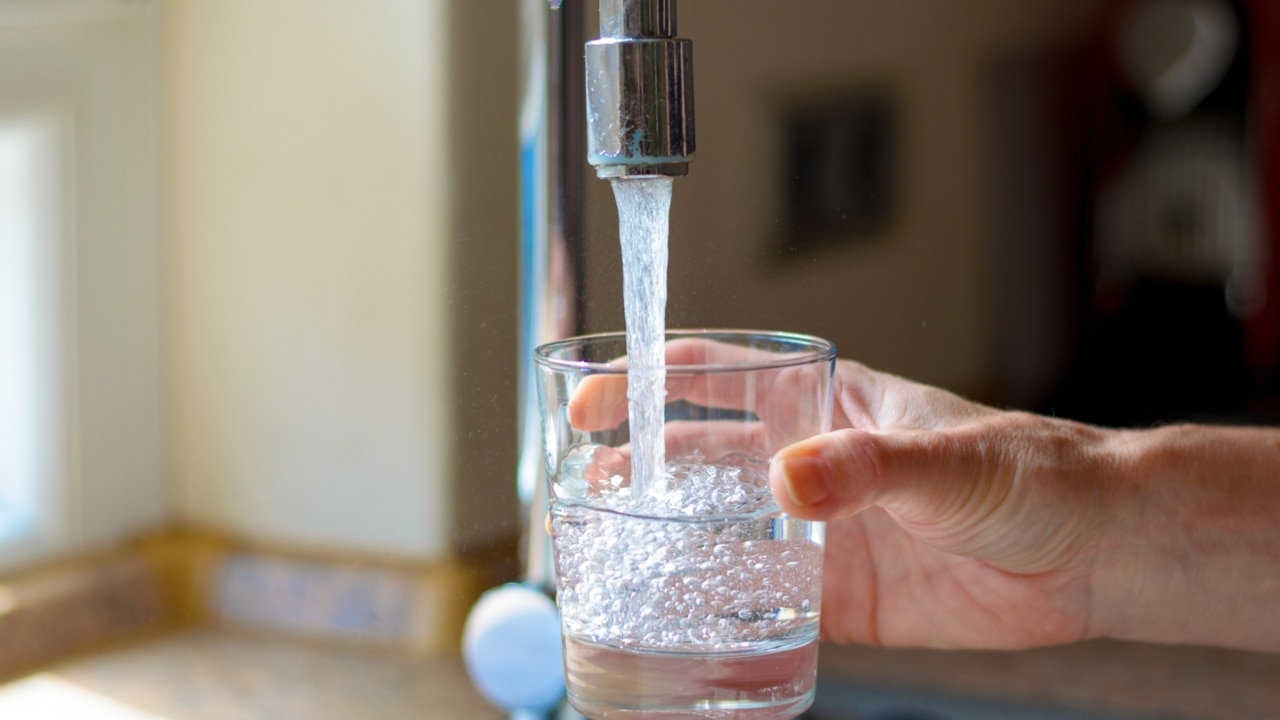
Exclusive: Households have been officially warned to run taps for 30 seconds in the morning before using water for drinking or cooking amid growing concern about lead poisoning, with bottle-fed babies most at risk.
An investigation by News Corp Australia can also reveal the limit on lead in brass plumbing fittings will be slashed by as much as 94 per cent.
The moves have been made by the Environmental Health Standing Committee or enHealth, which represents the Commonwealth, state and territory health departments plus the National Health and Medical Research Council.

The committee’s actions were triggered by contamination scares involving Geelong’s bubblers and Perth’s children’s hospital.
In another, Queensland’s building commissioner declared a kitchen mixer, containing lead, bought by 12,000 households nationally to be unsafe.
A federal health department spokesman said enHealth’s “guidance statement” to not use hot tap water for drinking or cooking and to flush cold-water taps in the morning “acknowledges the risks associated with lead and the need to minimise an individual’s exposure as much as possible”.
It was released nearly six months ago but not publicised.
The statement’s strongest warning is for new parents, declaring “infants who drink formula prepared with lead-contaminated water may be at a higher risk because of the large volume of water they consume relative to their body size”.
“Infants and children are especially vulnerable as lead can impair brain development,” enHealth says.
Lead can also damage digestive, cardiovascular, renal and reproductive functions — not just in the young. It dissolves into water from brass plumbing fittings after lengthy contact. The leaching can be more significant in hot water.
In 2016 Macquarie University Dr Paul Harvey found lead in more than half of water samples from hundreds of household taps. One in 12 had levels above the maximum allowable level of 0.01 milligrams per litre.
That limit was set in the 1990s. The World Health Organisation has since said no level of exposure is safe.
Australia permits up to 4.5 per cent lead content in brass fittings – 18 times higher than the US and Canadian standard of 0.25 per cent.
Following questions to Federal Health Minister Greg Hunt’s office about this discrepancy, a department spokesman revealed “enHealth has recommended that the allowable level of lead in plumbing products in Australia be reduced to align with international standards”.
No decision has been made about what Australia’s new limit will be.

But Dr Harvey said: “It will probably be to 0.25 per cent. It’s well and truly long overdue.”
That would be a 94 per cent reduction from the current limit.
When News Corp Australia asked Mr Hunt’s office why there had been no awareness campaign to draw attention to the new warning to flush taps, the inquiry was referred to the health department which said the “dissemination” was “appropriate”.
Mr Hunt’s office did not respond when asked why there had been no awareness campaign to draw attention to the need to flush taps.
Dr Harvey said more should have been done to inform the public.
Levels of lead in water was “something that’s been a problem for years”, he said.
“We are catching up with the rest of the world.”

Sydney mother Laura Halliday said she had no idea there was a need to flush water taps.
“But I’ll be doing it from now on, that’s for sure,” Mrs Halliday, of Castle Hill, said.
In May the City of Greater Geelong said it discovered 80 water fountains with lead levels above safe limits. However, last month it cleared all but one, which was removed.
The opening of Perth children’s hospital was delayed by nearly three years until May this year due to lead in tap water from brass fittings. The hold up cost $115 million.
And in July last year, testing for the Queensland Building and Construction Commission found Aldi’s Easy Home spiral spring mixer gave off as much as 15 times the maximum allowable level of lead.
A QBCC spokesman yesterday said it had done further tests and “at this stage will not be pursuing any regulatory action against Aldi for this particular product”.
Would you like us to test your water? Contact john.rolfe@news.com.au
Originally published as Australians given new guidelines for safe tap usage to avoid lead poisoning
Join the conversation

Urgent alert after deadly disease detected
Read more

US scraps newborn jab advice in huge move
Read more