
New national soft plastics recycling scheme launches but will only tackle one per cent of waste
Australia has launched a new soft plastics recycling scheme three years after REDcycle’s collapse, but the program expects to recycle less than one per cent of the nation’s waste.
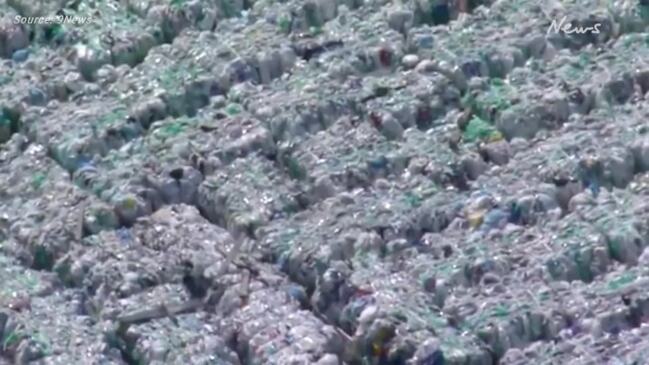
Australia has a new national recycling program for soft plastics – more than three years after the devastating collapse of packaging scheme REDcycle - which is now collecting from more than 500 supermarkets.
However, the replacement scheme, named Soft Plastic Stewardship Australia (SPSA), is largely restricted to capital cities in four states and is only set to recycle 4-5 per cent of the nation’s soft plastic waste by 2033.
REDcycle left behind 12,000 tonnes of soft plastics in 44 warehouses around Australia when it went into liquidation in November 2022.
It also left most Australian households and businesses with no way to recycle almost half a billion tonnes of soft plastic packaging which are pouring through the country every year.
As of the latest liquidator’s report, in May this year, the company behind REDcycle still owed more than $5.8m to unsecured creditors and $100,000 to employees.
The cost to clean up their stockpiled mess is now tipped to cost more than $25m, with Coles and Woolworths so far footing much of the bill.
Thousands of tonnes of soft plastic waste left behind by the failed recycler are still waiting to be processed, with around 3000 tonnes sitting in shipping containers in South Australia.
It’s due to be cleared early next year, with the other 43 sites around Australia already emptied.
The replacement program was approved by the competition watchdog in November and took effect on December 4 – but it expects to recycle less than one per cent of the nation’s soft plastic waste in the next two years.
That figure is projected to increase to 4-5 per cent by the 2033 financial year.

How does it work?
Registered not-for-profit organisation SPSA was set up by a taskforce including government and supermarkets in the wake of REDcycle’s collapse.
Soft plastics collection resumed earlier this year under the temporary arrangements.
The scheme will introduce a voluntary company membership system, with levies of $160 for every tonne of soft plastic waste collected from stores for the next two years, increasing to $380-$420/tonne by 2029.
Participating businesses with 10 tonnes or less will be charged a flat rate of $1600 per year.
So far, 42 brands and retailers have signed on – including Coles, Woolworths, Aldi and Metcash, along with other big names like Pepsico, Nestle, Mars, P & G and L’Oreal.
Collection points have been established in supermarkets in Victoria, NSW, the ACT and Queensland, with more on the way.
There are no soft plastics recycling programs in Western Australia, Northern Territory or Tasmania.

What happens to the recycled plastic?
SPSA interim CEO Barry Cosier said new technology developed since REDcycle’s collapse had increased capacity and created an end product that was in higher demand.
While REDcycle only turned soft plastics into C-grade plastic – suitable only for extrusion into things like bench seating and asphalt, the SPSA scheme would produce high quality B-grade plastics as well as A-grade or “virgin” plastic, that could be re-used for food packaging.
“This means the recycling rate goes up, but so does the cost,” he said.
“What the co-operation of (Coles and Woolworths) has enabled is innovation.”
Mr Cosier said the organisation had intentionally set low expected recycling volumes as it did not want to collect more than it could process – a trap REDcycle had fallen into.
“The good news is that right now we have more capacity than there ever was when REDcycle was operating.”
Soft plastics collected by SPSA will be processed at the IQrenew facility near Taree in NSW, while an Australian Plastic Recyclers facility is also under construction in Victoria.
“There is a global shortage of that A-grade product, so whoever makes it will be able to sell it,” Mr Cosier said.
“We have more demand than collection at the moment.”

Is it enough to solve the pollution crisis?
More than half a billion tonnes of soft plastics are pumped into Australian homes and businesses every year, according to the Australian Packaging Covenant Organisation.
Plenty doesn’t even make it to landfill.
According to Clean Up Australia’s Litter Report, soft plastics are the dominant form of rubbish left on our streets, beachs, parks and oceans, representing 31.8 per cent of all reported litter last financial year.
More than 130,000 tonnes of plastic pollution winds up in rivers and oceans each year, killing an estimated 100,000 marine mammals including dolphins, whales and more.
Despite the apparent progress at the waste stage of the soft plastics cycle, environmental groups worry the scheme could be used as “greenwashing”, where big companies advertise their eco credentials as a distraction from their otherwise destructive practices.
They believe more should be done to reduce the amount of soft plastics being circulated in the first place.
In its submission to the ACCC, Zero Waste Victoria said the scheme overlooked systemic waste drivers and risked locking in inefficient practices.
“The scheme does not account for upstream production of soft plastics and does not reflect full life cycle accountability, contravening the polluter pays principle and risks greenwashing consumers,” their submission said.
“Manufacturers and retailers that place soft plastics on the market should be accountable for the cost of waste management.”
Cleanup Australia CEO Jenny Geddes said, while the resumption of widespread soft plastics recycling was necessary and exciting, more could be done to produce and use less of it.
Supermarkets should reduce unnecessary plastic wrapping on fresh food where
possible, and give customers opt-out options for plastic produce bags for online orders.
They should also develop more strategies to provide refillable container options for some foods and invest in consumer awareness on soft plastics recycling.

Scheme relies on voluntary levies
Ms Geddes said a mandatory scheme was needed to require all producers to take responsibility for packaging and soft plastics throughout their life cycle.
“The full scheme should be developed using levy funds … with raised funds invested to develop effective recycling infrastructure to meet capacity needs,” she said.
“Funds can also be invested into reuse infrastructure, and the scheme should incorporate targets for reduction and reuse alongside recycling.
“Producers should be required to incorporate recycled content in soft plastics packaging.”
Other critics worried the levies paid by supermarkets and food producers would ultimately be funded by consumers and the public through higher prices.
Under the approved scheme, Coles and Woolies will be able to set off $16m of their levies over eight years, to go towards the costs of removing the REDcycle stockpile.
SPSA also flagged the possibility it would seek State and Federal funding on top of the levies.

What are the supermarkets doing?
A statement from Woolworths – sent on behalf of task force members which include their key competitors Coles and Aldi – said the biggest challenge to the scheme was capacity.
“There is simply not enough soft plastic recycling capacity in Australia to support full, nationwide collections, so it’s important not to exceed limited local recycling capacity as we work with the broader industry to responsibly rebuild the soft plastic recycling system,” the statement said.
“We’re in close contact with soft plastic recyclers as they rebuild, and expand their operations, with a number of new recyclers starting to open their doors over the last year.”
Woolworths said it was working on reducing its impact on packaging of its own-brand products, but could not require packaging changes from its suppliers.
“Packaging is a delicate balancing act to reduce plastic without compromising shelf life, which can lead to more food waste (and associated methane emissions) in-store or in customers’ homes,” it said.
“We’ve removed more than 20,000 tonnes of virgin plastic from our Own Brand packaging since 2018, and achieved an average recycled content for packaging of 52 per cent meeting the National Packaging Target set by the Federal Government,” the company said.
“We know recycling is important for our customers and 86 per cent of all our Own Brand packaging is also kerbside recyclable.
“We know there is still more to do, and we will continue to publish our packaging data to hold ourselves accountable for our progress, while encouraging our suppliers to do the same.”
The three major supermarkets have phased out the thicker reusable plastic bags, and plastic bread tags on their own brand bread.

What about kerbside collection?
As well as restarting soft plastics collection in store, kerbside collection trials – with specific soft plastics bins – have also taken place in nine council areas in the past two years.
The results found people were far more willing to recycle their soft plastics in a household bin than to bag them up and take them to a supermarket.
“It’s feasible, it’s operationally possible and the community loves it,” Mr Cosier said.
“REDcycle collected less than two per cent of what was placed on the market – with kerbside collections, the participation rate immediately hit 30-35 per cent.”
As far as Clean Up Australia is concerned, it can’t come soon enough.
“We hope to see continual rollout of kerbside collections and return to store collections, alongside community education,” Ms Geddes said.
“(And) we need to see reduction of soft plastics produced in the first place – reducing waste at the source.
“Consumers can also be mindful and take small actions like using reusable shopping/produce bags.”
Clean Up Australia Day is on March 1.
More Coverage
Originally published as New national soft plastics recycling scheme launches but will only tackle one per cent of waste

Celebrity boxing gym chain punched into administration
